
Skokie rolls back fees, restrictions on certain Airbnbs
The Skokie Village Board is poised to roll back some of the regulations it imposed earlier this year on owner-occupied short-term rental properties.
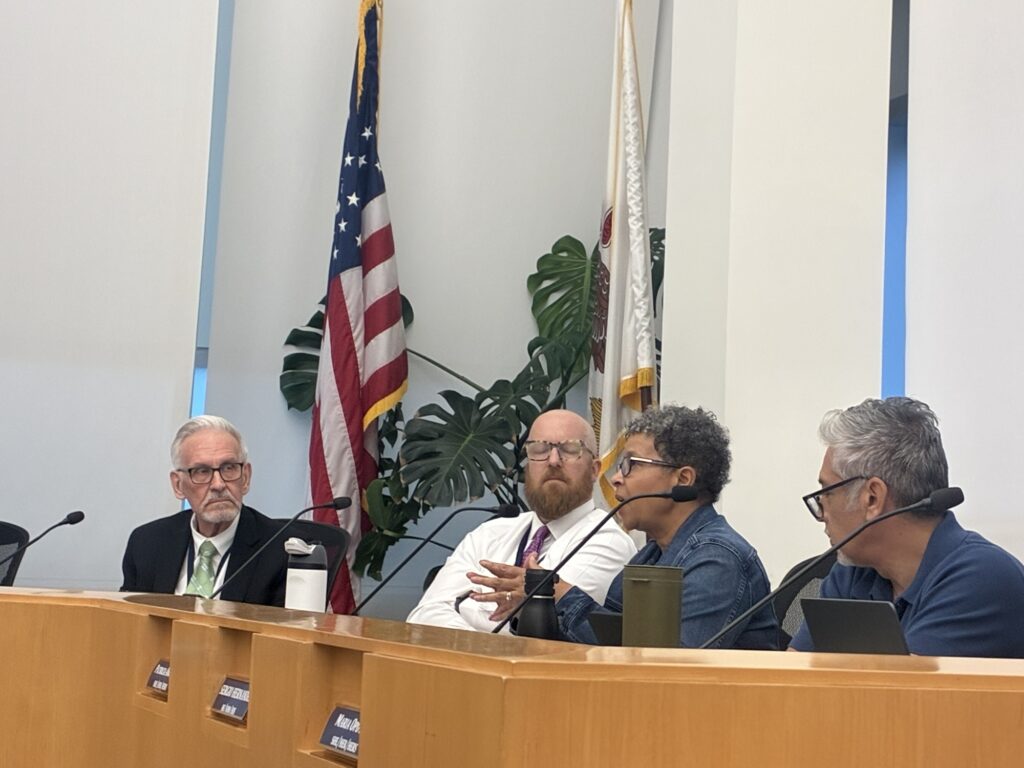
The trustees voted 5-1 on Sept. 8, in favor of revisions to its short-term rental pilot program that will allow local Airbnb hosts to pay the village less in licensing fees, offer guests one-night stays and accommodate an uncapped number of bookings a year.
Trustees Kimani Levy, Alison Pure Slovin, Lissa Levy, Jim Iverson and Keith Robinson voted for the modifications. Trustee Gail Schechter voted against them. The Village Board is set to issue a final determination on the changes during it next meeting, Sept. 22.
The trustees voted on those same lines in February to create a pilot program governing short-term rentals after residents expressed concerns about how mismanaged properties were causing significant nuisances and altering “neighborhood character,” The Record reported.
But the ordinance also generated complaints from short-term rental operators who argued the changes made it too difficult to operate a rental property and did not fairly distinguish between investor-owned short-term rentals properties and resident-owned short-term rentals.
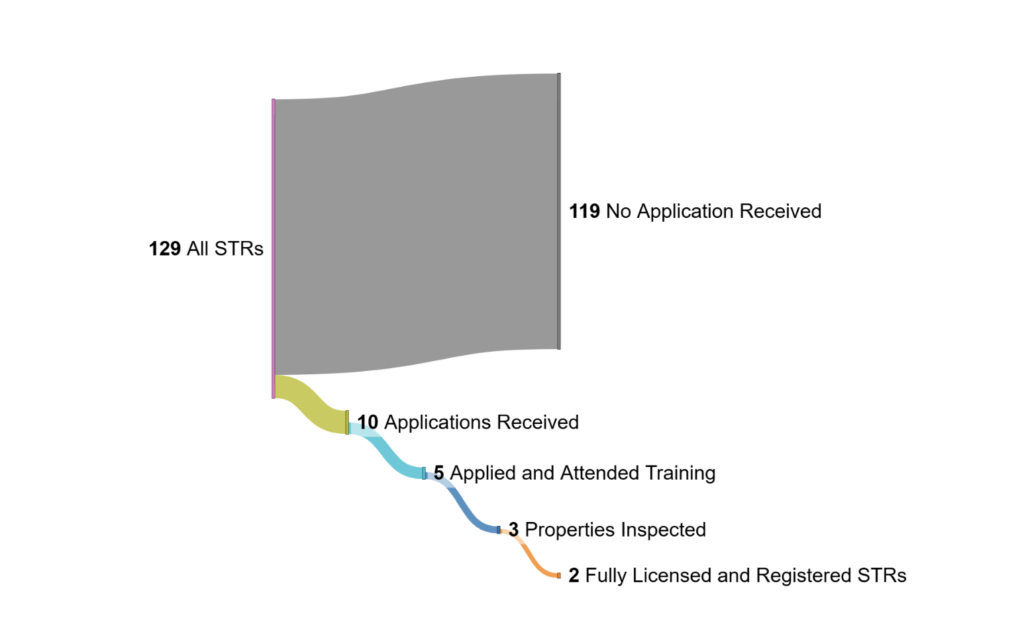
Johanna Nyden, Skokie’s director of community development, said that 129 short-term rental properties were operating in the village earlier this year but only 10 have applied to the pilot program, which required operators to pay $1,200 for a license and at least $2,450 in fees.
Out of the 10 short-term rental operators who applied, five attended training, three had their properties inspected, and only two are currently fully licensed and registered, Nyden said. Some operators reportedly said they weren’t applying because of the high registration fees.
The Sept. 8 Village Board meeting provided the trustees’ first official review of the regulations since they went into effect in May. The board agreed in February to revisit the effectiveness of the pilot program at the six-month, 12-month and 18-month marks.
Some elements of the pilot program — like limiting short-term rentals to one per block, requiring operators to give notice to surrounding properties and preventing any new investor-owned short term rentals from operating in Skokie — are set to remain intact.
The slated revisions to the pilot program will make it so owner-occupied short-term rental operators must pay $550 to license and register a unit, are no longer required to offer five-night minimum stays and are no longer limited to 18 bookings a year.
“What we have in this situation is we have many people that have significant benefit from short-term rentals, and then we have many people who have been severely harmed by short-term rentals, and many of our actions are hurting one group to benefit the other and splitting that difference is obviously difficult,” Iverson said on Sept. 8.
Feedback, fees and enforcement
Joaquin Mejia, a “Skevanston” resident, informed the trustees on Tuesday that he and his wife ceased operating a short-term rental out of their home after the Village Board created its pilot program, and so they supported the proposed changes to the law.
“You will be safeguarding a legitimate lawful business activity, and also strengthen the links between Skokie and the national and international community alone,” said Mejia, who often rents visiting artists or people involved with Northwestern University.
“Make no mistake. Genuine, heartfelt, old-fashioned hospitality offered by real people who open their homes is in short supply here and anywhere else in the world.”
Howard Sproull, another Skokie resident who said he ceased operating a short-term rental after the Village created its regulations, argued that the pilot program has wasted too much staff time while failing to weed out bad operators.
“Its inception, composition, implementation and continued enforcement is proven pointless, destructive, and futile. Why? Because it solves nothing about the few bad apples while destroying everyone else,” Sproull said. “Moving forward, modifications won’t fix it. Scrap this pilot now.”
As of Aug. 1, 68 active short-term rentals were active in Skokie across 89 listings, Nyden said.
Within that 68 noncompliant short-term rentals, 24 were owner occupied and 17 were investor owned short-term rentals, she said.
Village staff reportedly have sent out 63 violation notices to noncompliant short-term rentals since July and issued five tickets. The number of noncompliant short-term rentals has decreased from 129 before the pilot program to 54 as of Sept. 8, Nyden said.
Enforcing noncompliant short-term rentals, however, can be like “whack-a-mole,” Nyden said, because operators can delete their listings and make it difficult for the Village to monitor listings.
While some operators did not apply to the pilot program because fees were cost prohibitive, others said they did not have enough time to understand the program and guests typically seek one- or two-night stays when the law requires a five-night minimum, village documents say.
Operators also reportedly noted that other municipalities’ fees to short-term rental operators are lower. Highland Park charges operators $30 a year, Berwyn charges $100 a year, Lake Bluff charges $150 a year, Schaumburg $300 a year, according to village documents.
Evanston reportedly charges a $150 application fee and $250 annual renewal fee on top of a $250 license; though the city invested in a short-term rental monitoring tool like Skokie did. Operators in Skokie were only required to pay $25 a year before the pilot program went into effect.
‘With some creativity we can figure this out’
The slated revisions to the pilot program would decrease the cost of licensing and fees for owner-occupied short-term rental operators from $3,650 to $550.
That said, Nyden did not recommend reimbursing the two operators who registered with the pilot program because of the time “expended” by village staff to work through that process.
“I think that’s terribly unfair,” Trustee Levy said. “I know that you have spent many, many, many hours working on this and I’m grateful for that, but it doesn’t incentivize people who are early adopters in going through this process in good faith to have basically been the guinea pigs of it and then later other operators can come in and have a much reduced fee.”
Mayor Ann Tennes made a point to distinguish owner-occupied short-term rentals from resident-owned short-term rentals and investor-owned short-term rentals.
The mayor and other trustees indicated they supported favoring owner-occupied short-term rental operators — i.e., operators like Mejia who stay in the Airbnb while it is being rented.
Nyden said, however, the two short-term rental operators who have registered with the pilot program are both resident-owned operators who do not stay in the unit while it is rented.
Village Manager John Lockerby also said it would be “very difficult” for staff to enforce the law depending on whether owners occupy or don’t occupy their short-term rental while it is rented.
“I think with some creativity we can figure that out,” Tennes said. “I think there can be spot testing. I think maybe the ordinance gets tightened up that, you do that twice and you’re out.”
Trustee Schechter reminded the board she voted against the pilot program in February because research shows short-term rentals are commercial enterprises that transform residential stock into “investment property” that can displace permanent residents.
Schechter proposed the trustees appoint the Village’s Housing-Sub Committee or Economic Development Commission to collect data and look at tools that, in reference to short-term rentals, could help homeowners or ensure Skokie has enough hotel rooms.
Tennis argued, “I don’t think we’re there yet,” and Lockerby noted that it adds time and workload if every program the Village oversees is reviewed by a commission. He argued it wouldn’t be helpful to have another “set of inputs” on the pilot program.
Regardless, the Village Board voted 5-1 to amend the pilot program so that data collected on short-term rentals over the next six months is assigned to an advisory commission. Pure-Slovin voted against sending data to an advisory commission.
“I don’t see how we can begin to make rules changes without knowing who we’re trying to serve and what our vision is,” Schechter said.
The Record is a nonprofit, nonpartisan community newsroom that relies on reader support to fuel its independent local journalism.
Become a member of The Record to fund responsible news coverage for your community.
Already a member? You can make a tax-deductible donation at any time.

Samuel Lisec
Samuel Lisec is a Chicago native and Knox College alumnus with years of experience reporting on community and criminal justice issues in Illinois. Passionate about in-depth local journalism that serves its readers, he has been recognized for his investigative work by the state press association.
The Record is a nonprofit, community news site from former editors of 22nd Century Media
Our daily coverage of your government, schools, businesses and neighbors is not possible without your support.
Latest

The Record: Shortcut
Related Stories