Northfield leaders break down TIF alternatives, while also still pushing TIF
While a potential TIF district in Northfield is the talk of the town, it is not the only option to potentially rejuvenate the village’s downtown, village officials said on Tuesday.
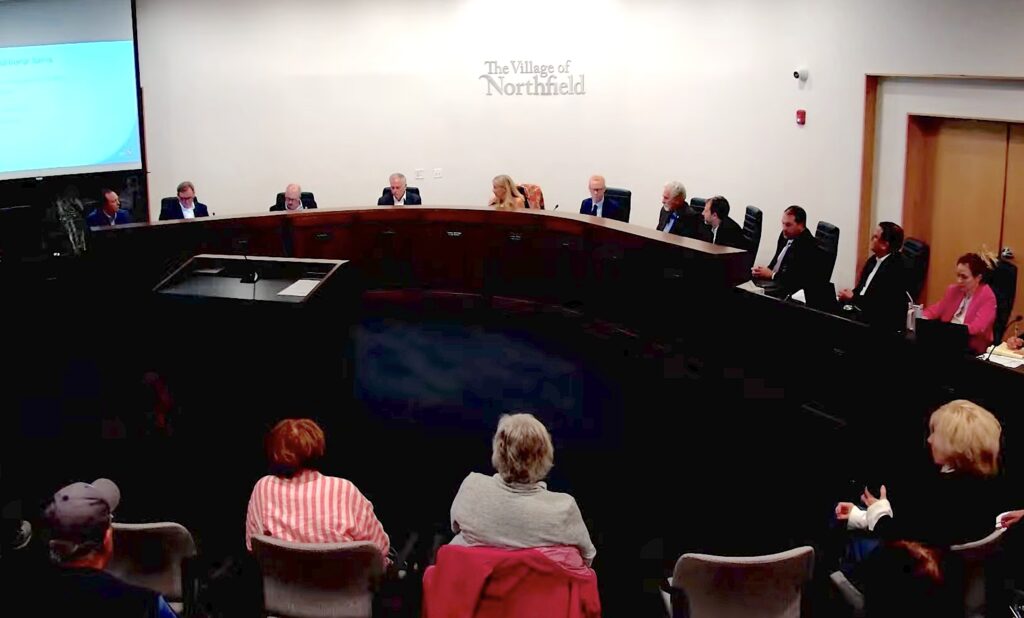
During a Committee of the Whole meeting, Village trustees and staff continued the ongoing TIF district conversation and discussed alternatives.
Terry Dason, president of the Winnetka-Northfield-Glencoe Chamber of Commerce attended the recent Joint Review Board meeting on July 15, and during public comment on Tuesday, questioned if Northfield has “fully explored” other ideas to boost economic vitality.
“I did not hear a single speaker (on July 15) express support for moving forward with the TIF as proposed,” Dason said. “Instead I heard a compelling presentation from our school districts outlining alternatives to a TIF. … The common message was clear: Why is this moving so quickly and have all of the alternatives been fully explored?”
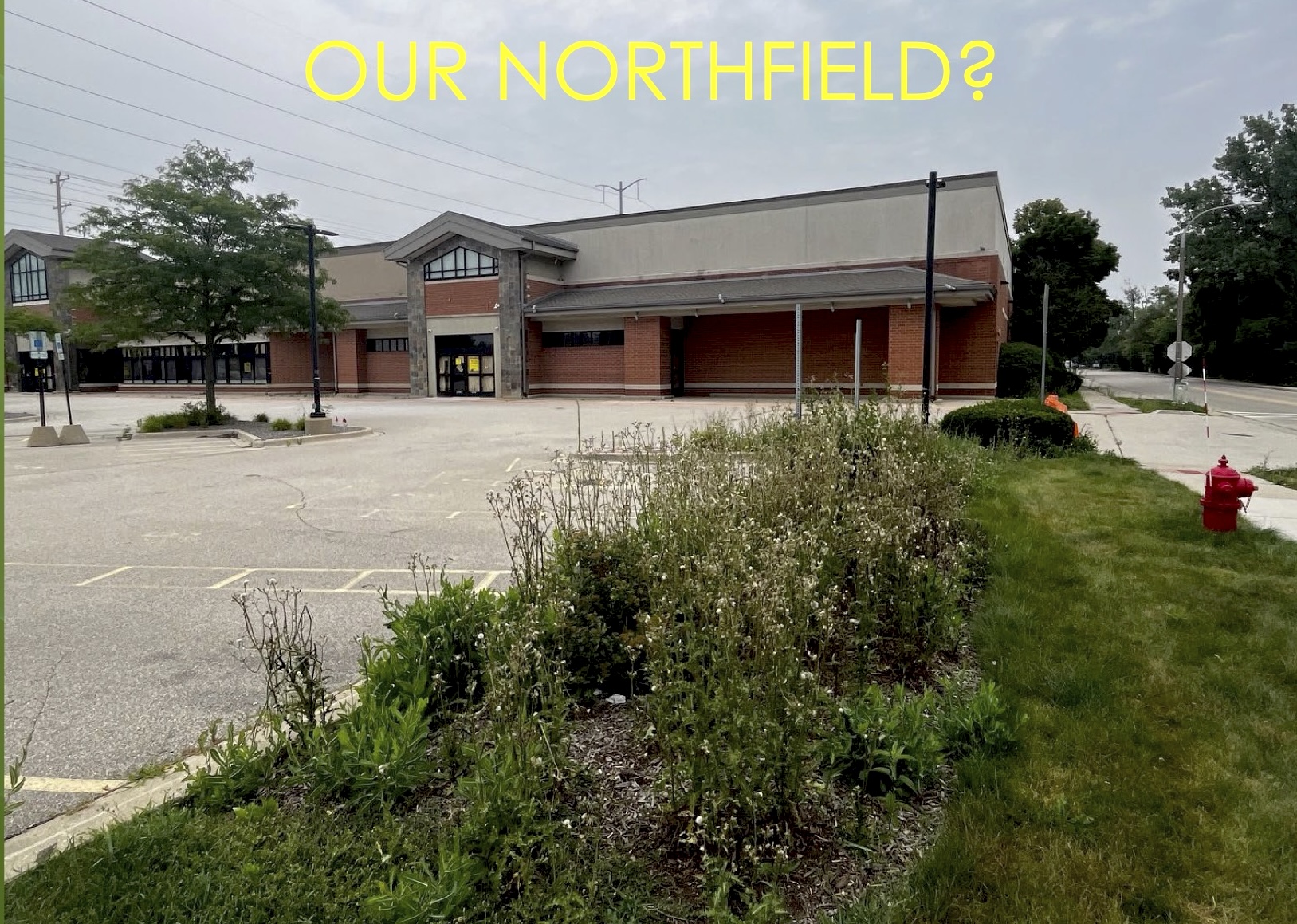
Village manager Patrick Brennan then delivered a presentation that included several slides depicting rundown portions of buildings, empty storefronts and overgrown vegatation under the heading “Our Northfield.”
The presentation also included information on several TIF alternatives, which are summarized below.
Special Service Area
At the Joint Review Board meeting, Joe Pilewski, a financial advisor hired by the school districts, recommended several TIF alternatives, focusing on a Special Service Area.
In an SSA, property owners in the designated improvement area pay an additional property tax to fund a specific service.
Brennan said that while an SSA can generate long-term revenue streams, it can also be an additional financial burden on struggling businesses. The revenue potential from an SSA for the village would be moderate, according to Brennan.
Business Development District
Business Development Districts operate similarly to TIF districts. They are also designed to revitalize underperforming commercial areas, also last for 23 years and also must meet specific criteria to be eligible for certain project costs.
A Business Development District would levy a new 1% tax on retail sales and allow for access to federal and state grants.
Brennan said, because the option is tied to retail sales, the revenue potential is small. In an area that potentially could have many offices, he said it may not be the best option.
Trustee Ed Elfmann stated his stance against any of the taxing options, as he believed they would steer away potential business owners.
“Why would we make our businesses less competitive than other villages when we’re trying to bring businesses into our district?” Elfmann said.
Rebates
The ideas of rebates was introduced as way to benefit both current and future businesses.
A property tax rebate program would refund all or a portion of property tax to each specific parcel in an area.
Officials said, though, that the village would not make revenue from this system and would not be able to fund new infrastructure, such as road improvements.
Sales tax rebates could be designed to attract new businesses by promising a refund to a percentage of sales-tax revenue.
Through sales tax rebates, again, the village would produce no new revenue to support the district.
Cook County 6B and 7B
Pilewski on July 15 also encouraged the Village to consider Cook County 6b and 7b programs.
The 6b program is for the expansion of industrial uses and includes temporary property tax reductions that are phased out over the following 20 years.
“I don’t know how many folks in here would rather have a small manufacturer come into the Mariano’s property than a grocery store,” Elfmann said. “Frankly I can’t believe that was put up as an option — that we could use 6b – when our biggest problem is getting a grocery store.”
Cook County 7B is similar to 6B but for commercial uses. Multi-family developments and offices, however, are unlikely to qualify for the 7B program.
Property tax increase
Northfield’s “last resort” is raising property taxes, Brennan said.
By raising property taxes, Northfield residents could fund 100% of downtown redevelopment and the method also supports public schools and parks.
But Brennan said he would rather have the revenue also come from more than just Northfielders through what he referred to as “exported taxes.”
“When you raise property taxes, that is what we call an ‘imported tax,’” Brennan said. “Your residents pay 100% of that fee. Exported taxes are things that you can put on … people coming in from Wilmette, Kenilworth, Winnetka (and) shopping at the store, paying sales tax.”
Mendrek added that she is against imposing higher property taxes, as a part of a promise she made years ago as a co-chair on the home rule committee.
“We did include an option to the Village Board that they … pledged to never raise taxes above the CPI,” Mendrek said. “Every board has (followed) that and I’m not interested in being the first one that doesn’t. So that’s, in my view, off the table for us and doesn’t help any of us.”
TIF district
At the end of the presentation, Mendrek made another case for moving forward with a TIF district.
“I believe as we’ve laid out here, it’s the financially responsible approach,” Mendrek said of TIF. “ … We don’t have room in our budget to help developers in the ways that we’re talking about without this approach.”
The village first entertained the idea of a TIF district in April in hopes of improving the downtown’s infrastructure and economic growth. Village officials brought in consultants from SB Friedman to assess the area’s specific needs.
When a TIF district is initiated, the property taxes collected from that district area are frozen at a specific time. As property values increase, any extra tax dollars (the increment) is kept within the district, funding improvements to roads, buildings and more.
Since April, the TIF proposal has received strong backlash from residents and local school districts, in fears that TIF would negatively impact students, since new development may result in more students but no school funding.
Brennan said that if a TIF district results in student growth, the village will likely be in a position to assist schools and parks by declaring a surplus from the TIF fund.
The Joint Review Board is set to meet again on Aug. 13 at 2 p.m., and the village has a public hearing on the TIF district scheduled on Aug. 25.
The Record is a nonprofit, nonpartisan community newsroom that relies on reader support to fuel its independent local journalism.
Become a member of The Record to fund responsible news coverage for your community.
Already a member? You can make a tax-deductible donation at any time.

Penelope Roewe
Penelope Roewe is a reporting intern at The Record. In the past, she has reported on Skokie news as an editor for Niles North's student newspaper, North Star News. She is currently a sophomore studying journalism and political science at the University of Illinois Urbana-Champaign and writes for The Daily Illini.
The Record is a nonprofit, community news site from former editors of 22nd Century Media
Our daily coverage of your government, schools, businesses and neighbors is not possible without your support.
Latest

The Record: Shortcut
Related Stories