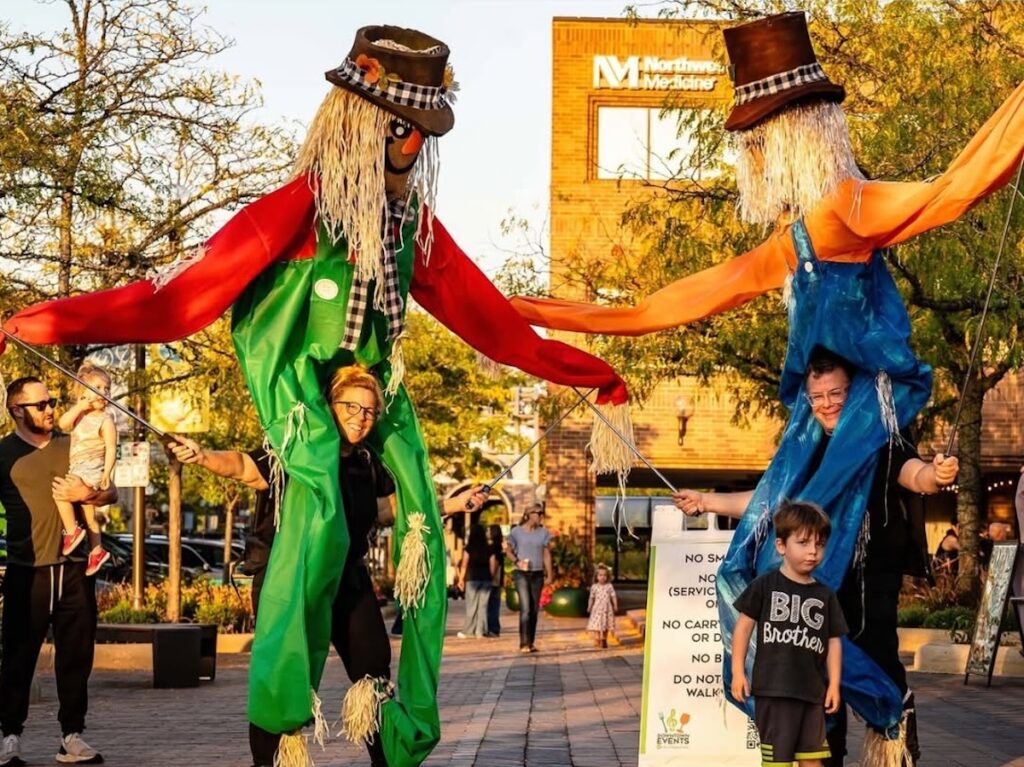

Behind Bitter Jester’s 20-year mission to support young musicians
Twenty years ago, the Bitter Jester Music Festival was simply an ambitious way to unite the community through music. Today, it serves a much larger purpose.
The annual competition has become a vital platform for young artists, offering performance opportunities, mentorship and music education to musicians ages 14 to 24 in a music landscape where many traditional venues remain out of reach for them.
The multi-day summer event celebrating its 20th year this summer, will kick off on Friday and Saturday, June 5-6, and continue June 12-13 and 27 at Port Clinton Square.
“For 20 years, the Bitter Jester Music Festival has been the place to be on Friday nights in downtown Highland Park — a place to spend time with neighbors, enjoy dinner and a treat, and, of course, ‘discover your next favorite band,’” Highland Park Mayor Nancy Rotering said in a statement.
Festival founder Nic DeGrazia added, “I’m really happy it’s still happening in Highland Park, especially after the 2022 shooting. It’s cool to be part of something that’s lasted so long.”
Where to begin
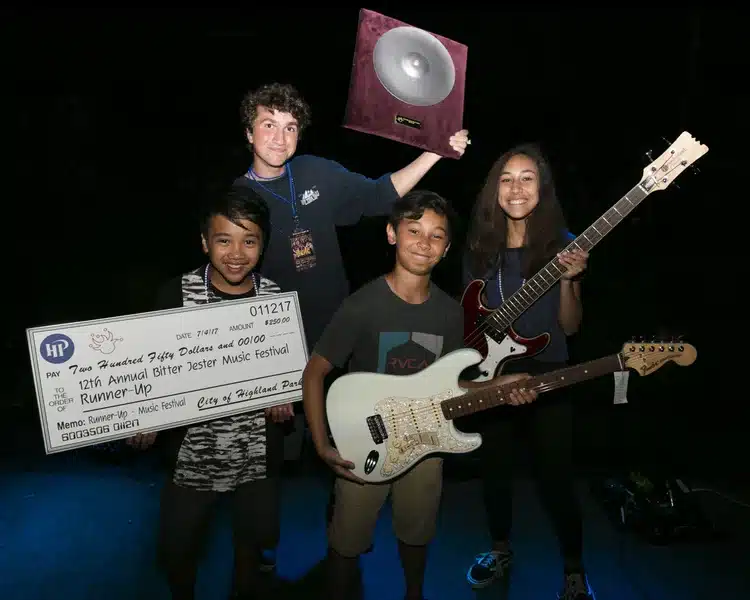
A product of the nonprofit Bitter Jester Foundation for the Arts, the festival is dedicated to serving young musicians and to “empower young people at a critical time in their development and serve the community with free, high-quality shows that bring new faces to the community,” said DeGrazia.
DeGrazia said the festival “started as an accident” in 2026, when he pitched a comedy competition to then City Manager Dave Limardi. Limardi came back by suggesting a battle of the bands.
Though hesitant, DeGrazia obliged. He put together a proposal, the city accepted it, and Bitter Jester was in the works.
“It started as this hyperlocal battle of the bands with Highland Park, Lake Forest and Northbrook high schools,” DeGrazia said. “Never in a million years would I have imagined that it would have grown this much.”
The festival went from five submissions in 2010 to 93 in 2025. And this year, DeGrazia and his team welcomed 145 submissions from 28 states.
The name Bitter Jester goes back to the festival’s sketch-comedy roots and is based off a character DeGrazia’s friend played on stage — a jester wearing an ill-fitting costume who would get angry when the audience laughed.
The Bitter Jester Foundation formed in 2016 with three main programs: The Purple Shirts performance ensemble, The Comic Threat comedy troupe, and the music festival.
The festival’s slogan is “discover your next favorite band.”
“If someone comes to the festival for the first time, chances are they will leave with some new music they like because every 30 minutes, it’s a completely different style of music,” DeGrazia said. “We jump around from solo acoustic country to death metal and everything in between.”
How it works
The festival takes applications from all across the country. This year, the festival invited 24 of the 145 applicants into the competition.
To participate in the festival, solo artists must be 21 or younger, and at least half of any band must be under 22. Nobody can be over 24.
The age restrictions align with the festival’s mission of filling a gap in the music scene for young performers.
“We are tailored to young musicians that can’t do a lot of 21-year-old-and-up shows. That’s a big checkbox,” DeGrazia said. “There aren’t a lot of 17-year-old-and-up performance opportunities because a lot of them take place in bars, so that is just giving youth an opportunity to perform.”
In the preliminary rounds on June 5-6 and 12-13, judges will pick a winner each night to advance to the finale at the end of June. Four wild cards will also be selected to play the final date.
An overall winner is selected following the grand finale on June 27.
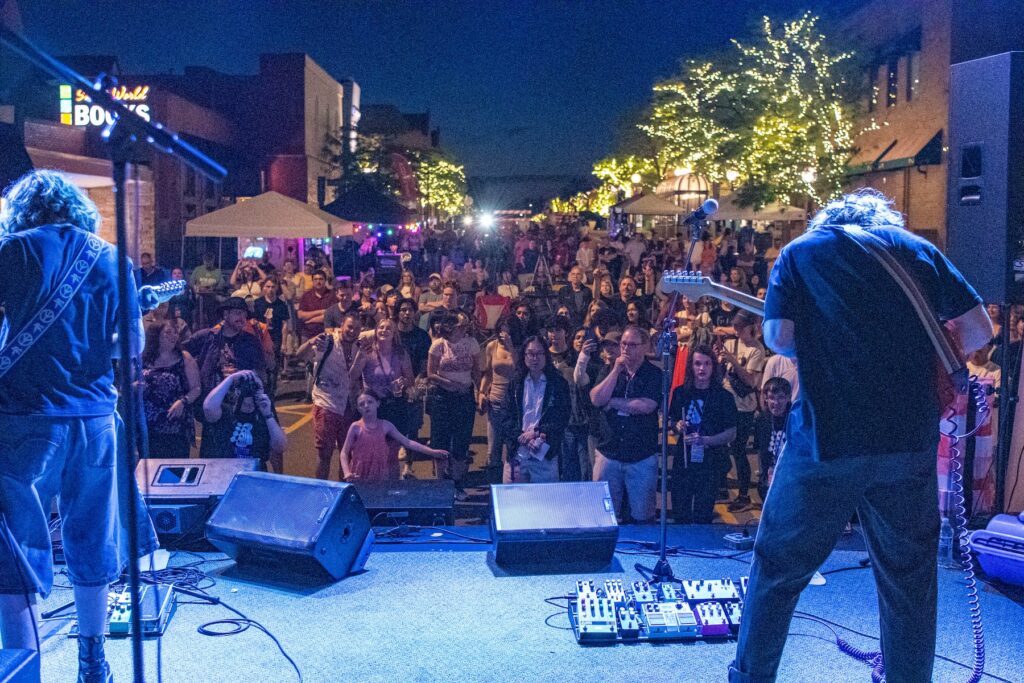
Awards are given to the top three finalists, and each artist in the finale will receive a cash prize between $1,000-$3,000 from First Bank of Highland Park. Additional prizes include studio recording time, a collection of microphones and drum cases.
One of the eight musicians who advance to the finale will open for a national headliner at Ravinia Festival.
When the festival hit its 10th year, it “aged out” a bunch of previous performers, DeGrazia said, and those performers often come back to judge the festival.
This year, all of the on-site judges are alumni at the festival. Adam Beck’s band Drive was the first Bitter Jester champion, and he will cast a vote on the final day this year.
“I thought it would be cool if 100% of our judges were people that were on this stage experiencing what it’s like to win and lose and to still be in touch with us after two decades,” DeGrazia said.
Bitter Jester judges reportedly spend approximately 250 hours of review time to select the artists that make the finale.
This year, the festival will feature country, indie rock, pop punk and metal music.
NPR’s Peter Sagal, host of “Wait Wait… Don’t Tell Me!”, is returning for his third year hosting the festival, a volunteer gig in which he interviews the bands between sets.
To mark the 20th season, the Highland Park Community Foundation awarded Bitter Jester a grant to support Bitter Jester Musical Festival banners around town, a yearslong dream of DeGrazia.
Making an impact
Bitter Jester is also a community attraction. Last year, between 1,000 and 3,000 attended the finale and between 400 and 600 came per night in the earlier rounds.
The festival has always been at Port Clinton, which makes the festival “recognizable,” DeGrazia said, and also allows spectators to come and go as they please.
“You can enjoy yourself, leave whenever you want and not have to feel like you dropped 50 bucks on something you didn’t enjoy,” DeGrazia said.
Rotering is proud of the festival’s growth and how that growth has affected the city’s economy.
She said that impact is a big reason the city gave Bitter Jester the Highland Park Arts Award in 2024.
“Year after year, it has been inspiring to see the festival grow, attracting thousands of music-lovers from across the Midwest to Highland Park each summer,” she said, adding, “The festival culminates in a bigger-than-ever grand finale concert that turns part of Second Street into a dynamic block party atmosphere … encouraging guests to explore our fabulous restaurants and shops.”
Bitter Jester creates a professional mixed vinyl album every year, called “Live at Bitter Jester Music Festival.” It contains performances as well as interviews with Sagal, available for sale.
Bitter Jester musicians get “so much value from getting recordings, educational materials and meeting new people,” DeGrazia said of the festival; though, he added he hopes to pay them one day.
The festival provides participating musicians with training on how to show up, work with an audio crew, tighten up their set and create a setlist, DeGrazia said.
That preparation pays off.
“When [participating musicians] leave our program, they go off to bigger festivals and we get phone calls from other festival directors who tell us that every Bitter Jester band that’s come through plays a tight show and everyone loves them,” DeGrazia said.
The Bitter Jester Foundation also supports those with special needs and invites many to come out and enjoy the festival.
“You’ll see a lot of people in wheelchairs, with different developmental or mental disabilities in the audience,” DeGrazia said. “That is important because they deserve to have a good time. I think it’s also equally important for our musicians to see people who look different in the crowd having just as much fun because it opens their minds to being more inclusive with their own shows.”
What dreams may come
In the future, DeGrazia would love to be able to compensate bands at least for travel, food and lodging, since he does take applications from acts nationwide.
The nonprofit would need more funding to accomplish that, he said.
“I need generous people, especially a big company that believes in what we are doing, a sponsor that is going to love what we are doing,” DeGrazia said. “It’s more than just putting together a community concert, it’s all the education we are doing for young musicians.”
In the community, the festival partners with local businesses, such as Harmony Cafe, Curt’s Cafe, Secret World of Books, Judy’s Pizza, Sunset Foods and Steep Ravine Brewing Company, to support the event and the bands.
DeGrazia dreams of running the festival in four different regions of the country. Then the winners can compete for bigger prizes, like a record deal.
DeGrazia would also, eventually, love to turn the finale into an expo, with professionals sharing their expertise, which can be possible with sponsors, according to DeGrazia.
The Record is a nonprofit, nonpartisan community newsroom that relies on reader support to fuel its independent local journalism.
Become a member of The Record to fund responsible news coverage for your community.
Already a member? You can make a tax-deductible donation at any time.

Alessia Girardin
Alessia Girardin is a community reporter focused on stories out of Highland Park and Highwood. A Chicago native and Regina Dominican alumna, she has published work for local and New York City publications and earned a master's degree from New York University.
The Record is a nonprofit, community news site from former editors of 22nd Century Media
Our daily coverage of your government, schools, businesses and neighbors is not possible without your support.
Latest

The Record: Shortcut
Related Stories