
Skokie Parks referendum passes, paving way for a new park and property-tax hike
The Skokie Park District will move forward with its largest capital campaign in decades after residents voted in favor of raising property taxes to fund developing 46 acres worth of parkland.
With all precincts counted in the Cook County Clerk Office’s unofficial results on Tuesday evening, 60.7% of voters supported the Skokie Park District issuing $53 million in bonds to renovate the Skokie Sports Park, 3459 Oakton St., and transform a vacant industrial site nearby into a new park.
With voters apparently giving the green light, the district will move forward, which will result in an annual property tax increase of approximately $0.129 per $100 in home value for the next 20 years. Residents can estimate how much their property tax bill will increase by visiting the park district’s website.
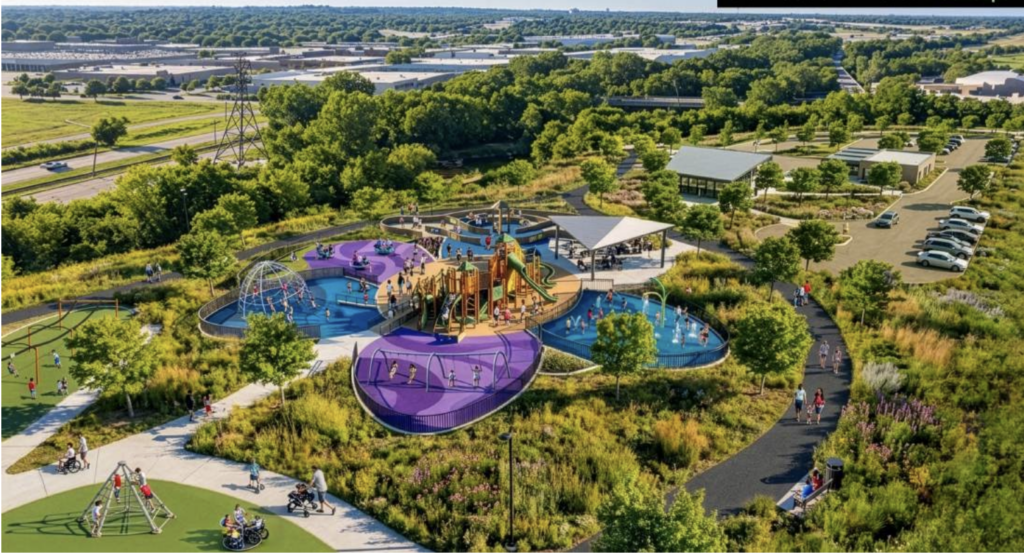
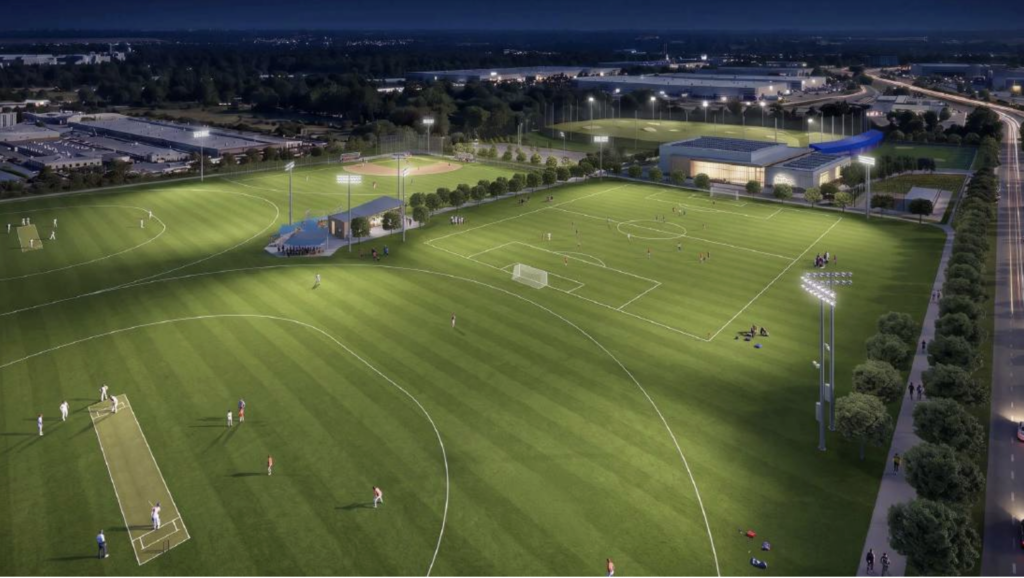
The funds reportedly will go toward creating multiple lit sports fields, an indoor recreation center, outdoor bathrooms and other enhancements at the Skokie Sports Park. A vacant stretch nearby will be transformed into Channelside Park South with an accessible playground, bandshell and walking path.
“It’s just an exciting opportunity for the district and for the community,” Director Michelle Tuft said on Wednesday.
“They voted for it and, you know, we’re excited to get going on the projects. They’re going to provide new opportunities, improve our facilities, etcetera, and it’s going to be around for a long time.”
Park district staff will now meet with a bond counselor to establish a timeline in issuing the bonds, Tuft said, and construction could begin as early as late spring 2027.
The Skokie Park District first began working on the project proposal in 2024, and the Park Board voted in July to add the referendum to the midterm ballot, Tuft said.
Leading up to November, district staff argued the project would provide amenities residents have requested, support new programming, improve park accessibility, and offer the landlocked district a unique opportunity to expand and correct a deficit of 152 acres, according to national benchmarks.
Tuft attributed the measure’s approval in part to the many public surveys and community meetings the park district facilitated before going to referendum — surveys and meetings that collected input on what residents would like to see developed on the two parcels of land.
In the unofficial results, 11,019 residents voted in favor of the bond and 7,269 residents voted against it. The Skokie Park District boasts more than 63,000 people as it encompasses all of Skokie and parts of Evanston, Morton Grove and Chicago. Voter turnout was 40.76% as of Tuesday night.
The proposal was possible in part because the district has entered into a 50-year lease with the Metropolitan Water Reclamation District of Greater Chicago to maintain the property where the two parks are located for the exclusive purpose of public recreation. The lease cost $10.
During public informational sessions and on social media, residents expressed concerns about how Channelside Park South could smell given its proximity to a nearby sewage treatment plant, whether the park is easily accessible and the financial burden of raising property taxes.
Residents expressed concerns about the district investing heavily in developing the park properties because the district’s agreement with the Metropolitan Water Reclamation District allows the MWRD to issue only a one year notice before breaking its lease.
Tuft noted the MWRD is required by ordinance to maintain its property along the North Shore Channel as recreational space, and the MWRD has not exercised its one-year termination clause in its 32-year-long lease lending the district the property underneath the Skokie Sports Park or Hamlin Park.
The Skokie Park District would not have proceeded with the project if district staff had serious concerns about the MWRD breaking its lease for the park properties, Tuft said, and the MWRD communicated to district staff that the likelihood of the agency breaking its lease with the district is “highly unlikely.”
Residents also expressed concerns that the referendum question did not explicitly state on the ballot that a vote for the park project would be a vote in favor of a property tax hike.
After hearing that criticism, Tuft said the district shared information in the district’s weekly Oct. 23 e-newsletter about how the referendum will raise taxes.
The district’s website dedicated to the proposal has “all along” contained a tax increase calculator as well, Tuft said, and “a lot of people know that a referendum means that there is a tax increase.”
Corrie Guynn, superintendent of Skokie’s parks and facilities, previously said the district will apply for grants if the referendum passes but could not secure grant funding for the project before the referendum.
If the Skokie Park District does secure grant funding to help fund the project, the agency does not have to levy the full $53 million bond, Tuft previously said. If construction costs increase, staff will cut certain amenities from the plan as they will not exceed the $53 million issuance, she said.
Tuft said the district does not anticipate needing additional full-time staff for the new properties and the district would budget their operational expenses outside of the $53 million bond.
“We’re just excited to provide this opportunity to the residents of Skokie,” Tuft said. “That’s been the goal all along, to get the residents of Skokie these recreational opportunities and let them decide if they want them, and then, we’re excited then to proceed and give them what they want.”
Joe Nowik, a former candidate for the Skokie Village Board, was one of many people who shared information about the park district referendum on social media and urged residents to vote against it.
“While I had concerns about the size, scope, and long-term financial impact of the proposed project, I also believe we must respect the democratic process. The responsibility now is to make sure the project is managed responsibly and delivers the benefits promised to the Skokie community,” Nowik said via text.
The Skokie Park District last put a referendum on the ballot in 1982, and, though results are difficult to locate, Tuft said in an email that she thinks it failed.
Before then, residents voted in 1955 to back a $1.75 million bond to fund the acquisition of parks and the construction of the Devonshire Community Center. Voters also approved a 1951 referendum that allowed the district to levy a tax for programming, a Skokie Park District website shows.
The Record is a nonprofit, nonpartisan community newsroom that relies on reader support to fuel its independent local journalism.
Become a member of The Record to fund responsible news coverage for your community.
Already a member? You can make a tax-deductible donation at any time.

Samuel Lisec
Samuel Lisec is a Chicago native and Knox College alumnus with years of experience reporting on community and criminal justice issues in Illinois. Passionate about in-depth local journalism that serves its readers, he has been recognized for his investigative work by the state press association.
The Record is a nonprofit, community news site from former editors of 22nd Century Media
Our daily coverage of your government, schools, businesses and neighbors is not possible without your support.
Latest

The Record: Shortcut
Related Stories