
Highland Park voters will decide in November whether to adopt term limits
Highland Park voters this November will weigh in on a measure that, if approved, will dramatically reshape the future of elected office in the city.
City councilmembers during their Monday, June 29 meeting formally approved a resolution to place a referendum on the ballot asking if Highland Park should establish term limits for the offices of mayor and city councilmembers.
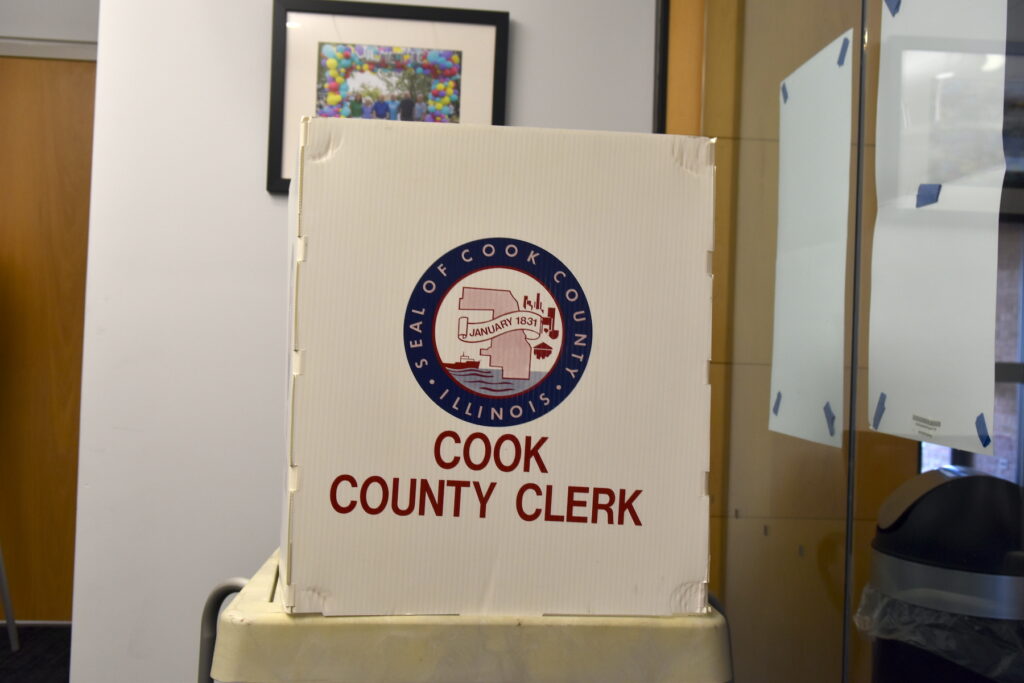
The referendum, which will be binding, will appear on the upcoming Nov. 3 general election ballot, city officials decided.
The topic of term limits came to the forefront in mid-May when city councilmembers devoted a Committee of the Whole session to a preliminary policy discussion on the matter. And while no binding action was taken, a narrow-enough majority of four councilmembers signaled their support for exploring the measure further, as previously reported by The Record.
During that May session, Councilmembers Annette Lidawer, Yumi Ross, Jon Center and Andrés Tapia favored moving forward with a voter referendum on term limits while Barisa Bruckman, Anthony Blumberg and Mayor Nancy Rotering voiced misgivings about the potential policy.
Councilmembers used the Committee of the Whole session that preceded their June 29 regular meeting to flesh out the specifics of the resolution voters will see later this year, mainly determining the number of terms, and years, an individual may serve.
The board ultimately landed on a limit of two, cumulative, full four-year terms for each office; however, the resolution would allow a maximum of 10 years — two full terms plus two years — of service for each office in the event an elected official takes office via a two-year term.
Councilmembers also determined that the term limits, if approved by voters via referendum, will begin with the April 2027 consolidated election.
If term limits are advanced, they would not impact the terms of current councilmembers given that, per Illinois law, term limits can only be prospective.
The potential limits would only apply to elected officials of the City and not to offices in the other governmental bodies throughout Highland Park, including the park district or public school boards.
Despite the board’s split stance on the topic, the council ultimately gave the resolution unanimous approval — but cases on both sides of the aisle were made across the two meetings Monday night.
Split council has clashing views on voter choice
Mirroring the proceedings of May’s meeting, councilmembers on Monday each shared their stance on term limits.
Rotering, who also commenced commentary among the council during the May meeting, started by expressing her opposition to term limits.
“Voter choice is probably one of the most important democratic principles that we have and I really believe in our voters,” said Rotering, who is amid her fourth four-year term as mayor.
Rotering continued to express her belief that “elections themselves are term limits,” while also arguing that there is value in institutional knowledge. She also noted the challenges in adjusting to the role that are present for first-time councilmembers.
“I think everyone around this table will agree that this is a steep learning curve,” she said.
Annette Lidawer, in both public sessions thus far, has been a strong advocate of term limits. She stated on Monday a different perspective of on voter choice.
“To me, voter choice is giving the voters the ability to have on the ballot the choice of do we want term limits or not, and by doing that, that’s their choice,” she said.
“The referendum is voter choice as much as electing candidates is voter choice,” she later added.
A key aspect of Lidawer’s support, she said, is rooted in the power of incumbency, arguing potential new candidates face a “perceived inevitability when running against an incumbent.”
Term limits also restrict one candidate “from remaining indefinitely and they expand the number of people realistically willing to participate,” she said, later adding that “predictable leadership turnover encourages broader participation and engagement.”
Councilmember Jon Center, who was elected in 2025 on a two-year term, acknowledged the steep learning curve cited by Rotering but said he believes “all good organizations have leadership changes.”
“I fully recognize there is a steep learning curve but I think planning for that is just a good change management process, in ensuring that there’s the right coaching and development and pipeline in place to ensure good handoff and continued operation at a really strong level.”
Anthony Blumberg, who was first elected in 2011 and is currently serving his fourth term on the council, said he believes that “term limits by legislation are undemocratic.”
He noted that he’s “completely opposed” to the resolution and said he’s always been in opposition of term limits prior to being elected.
If ultimately passed by voters this November, Highland Park will join Skokie and Wilmette as municipalities within The Record’s coverage area to have term limits.
Skokie most recently adopted them when voters approved a series of updates to elected office during the November 2024 election.
Winnetka, Glencoe and Kenilworth all have what was described as “informal” term limits, meaning that while municipal codes contain no formal ordinances, elected officials typically step down after two terms.
Nearby Highwood, Deerfield and Libertyville do not have any formal or informal term restrictions.
The Record is a nonprofit, nonpartisan community newsroom that relies on reader support to fuel its independent local journalism.
Become a member of The Record to fund responsible news coverage for your community.
Already a member? You can make a tax-deductible donation at any time.
Martin Carlino
Martin Carlino is a co-founder and the senior editor who assigns and edits The Record stories, while also bylining articles every week. Martin is an experienced and award-winning education reporter who was the editor of The Northbrook Tower.
The Record is a nonprofit, community news site from former editors of 22nd Century Media
Our daily coverage of your government, schools, businesses and neighbors is not possible without your support.
Latest

The Record: Shortcut
Related Stories