New Glencoe measures protect historic homes
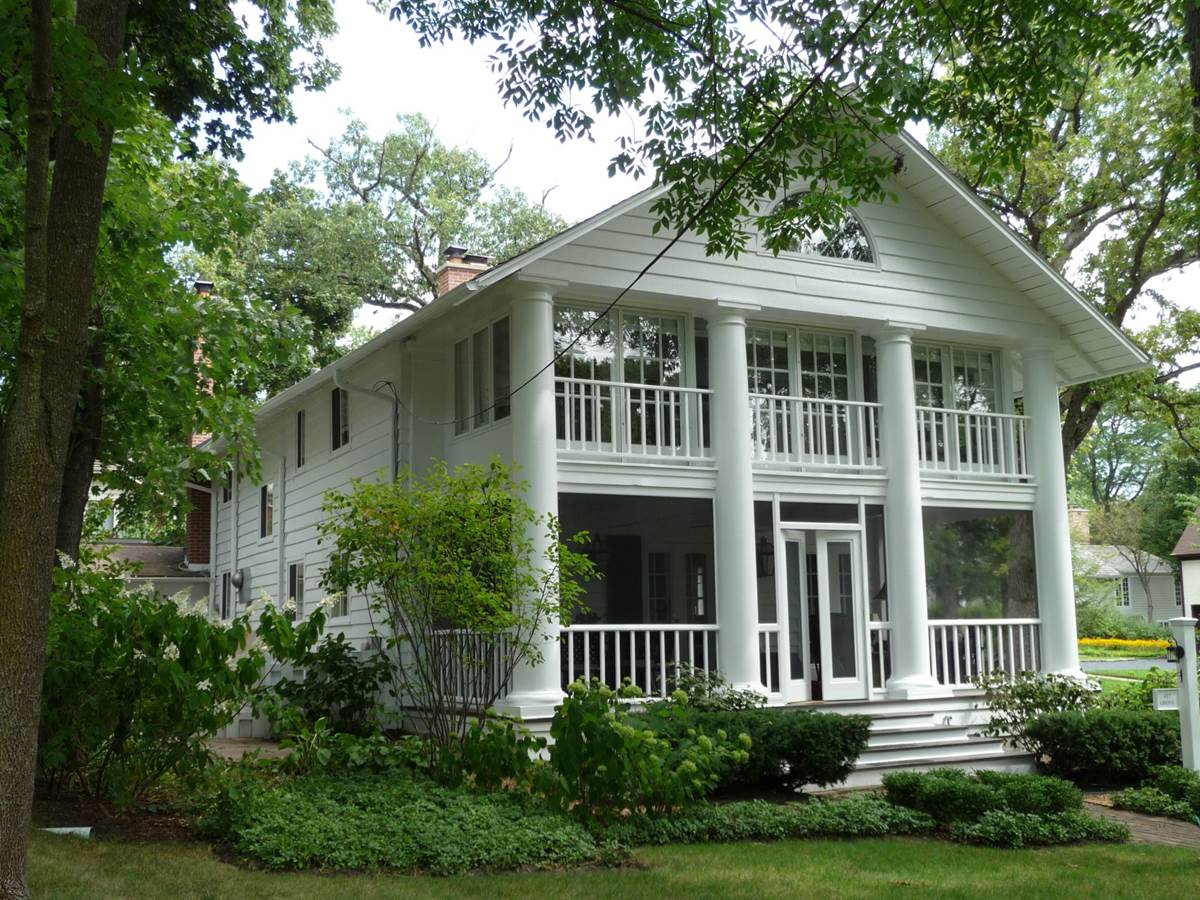
History now has more protection in Glencoe.
Glencoe trustees on Thursday night passed four ordinances aimed at preserving historic properties and discouraging demolition, actions that Village President Howard Roin said have been discussed for some time.
“We’ve come a long way,” he said.
In a presentation to the board, Assistant Village Manager Adam Hall reviewed the changes, which include rewriting some village ordinances and creating new programs.
One of the new ordinances repealed a chapter of the Village Code regarding florists, which Hall said was “obsolete,” and replaced it with a chapter on historic preservation. This led to two previous chapters of the code on historic preservation and historic recognition being repealed because of “unnecessary complexity, duplication and potential for confusion” throughout the village, according to the ordinance.
A second ordinance amended the Village’s Zoning Code to create new variations for historic properties. Per Hall, the ordinance increases the setback variation cap from 20% to 30%; the gross floor area variation for honorary landmarks from 15% to 25%; and the gross floor area variation for certified landmarks from 15% to 35%.
“The proposed increases are intended to give landmark owners more flexibility to adapt and invest in their properties,” he said.
The changes also create a pilot rebate program for landmark properties, which Hall said takes effect Jan. 1, 2027, and allows for a rebate of building permit fees with a cap of up to $10,000 for projects that are more than $50,000. He added that each property is limited to a single rebate and applications are subject to approval and funding on an annual basis.
The final ordinance creates a new demolition fee for residential structures, which will be used to fund the pilot program. The dollar amount of the actual fee will reportedly be determined during the Village budget process, but Hall said it’s being proposed at $3,000 for a standard residential structure and $5,000 for an honorary landmark.
Residents praise changes — but want more
Six community members spoke during public comment, with many of them celebrating the ordinances, but also adding that more could be done to protect historic homes and prevent demolitions.
Clare Rosean, who had previously shared her concerns with the Village Board during a meeting in February 2025, started an advocacy group called Save Glencoe’s Historic Homes in response to historic home demolitions.
“On behalf of my group … we are very happy to see that the preservation incentives are being formally reviewed by the board today,” she said. “I know the Preservation Commission has been working towards this for some time, and we fully support their proposals.”
Rosean went on to suggest more changes for the board, including “broadening the base of qualified properties beyond just certified and honorary landmarks. Maybe saying any home that is past a certain age could be eligible for these incentives.”
Julie Harris, who reportedly moved to Glencoe in 1998, said she’s seen so many demolitions since coming to the village, “I don’t recognize the street anymore.”
She said the Village shouldn’t be placing the emphasis on the residents to save historic properties.
“I think it’s an unfair burden to place on people who’ve lived in the community for 30 years … and are now thinking of downsizing and handing their home over to someone else,” she said.
Harris asked if there were a way the Village could postpone turning over homes to developers.
Bonnie Phoenix said that while she appreciated the proposals, she didn’t feel that they discouraged demolitions and asked that the Village Board “allocate some resources to explore ways that we can encourage preservation and discourage the bulldozing of historic homes.”
‘We’re doing the best we can’
Roin thanked the Preservation Commission for its role in creating the ordinances, before addressing the concerns that were brought up during public comment.
“I agree, personally, with the sentiment of folks that say ‘I would like it if we saved all these historic homes,’“ he said while adding that there are questions about if the Village Board can tell a homeowner to whom they can sell their home.
“We’re doing the best we can, but it’s very hard for us to compete with that kind of dollars,” he said, referring to what developers can offer. “And we recognize that, but we’re doing what we can, and the ordinances that have been proposed are as far as we could go at this point.”
He also said it’s “unfortunate” that the burden falls on the residents, but he said the best the Village can do is offer the incentives and make them known to the community, while adding that larger communities may have more money available to offer for more expansive programs.
After the vote to adopt the ordinances, Roin thanked the residents who have spoken up and contributed to the process of creating the ordinances.
“I hope we’re moving in the right direction,” he said.
The Record is a nonprofit, nonpartisan community newsroom that relies on reader support to fuel its independent local journalism.
Become a member of The Record to fund responsible news coverage for your community.
Already a member? You can make a tax-deductible donation at any time.

Peter Kaspari
Peter Kaspari is a blogger and a freelance reporter. A 10-year veteran of journalism, he has written for newspapers in both Iowa and Illinois, including spending multiple years covering crime and courts. Most recently, he served as the editor for The Lake Forest Leader. Peter is also a longtime resident of Wilmette and New Trier High School alumnus.
The Record is a nonprofit, community news site from former editors of 22nd Century Media
Our daily coverage of your government, schools, businesses and neighbors is not possible without your support.
Latest

The Record: Shortcut
Related Stories