
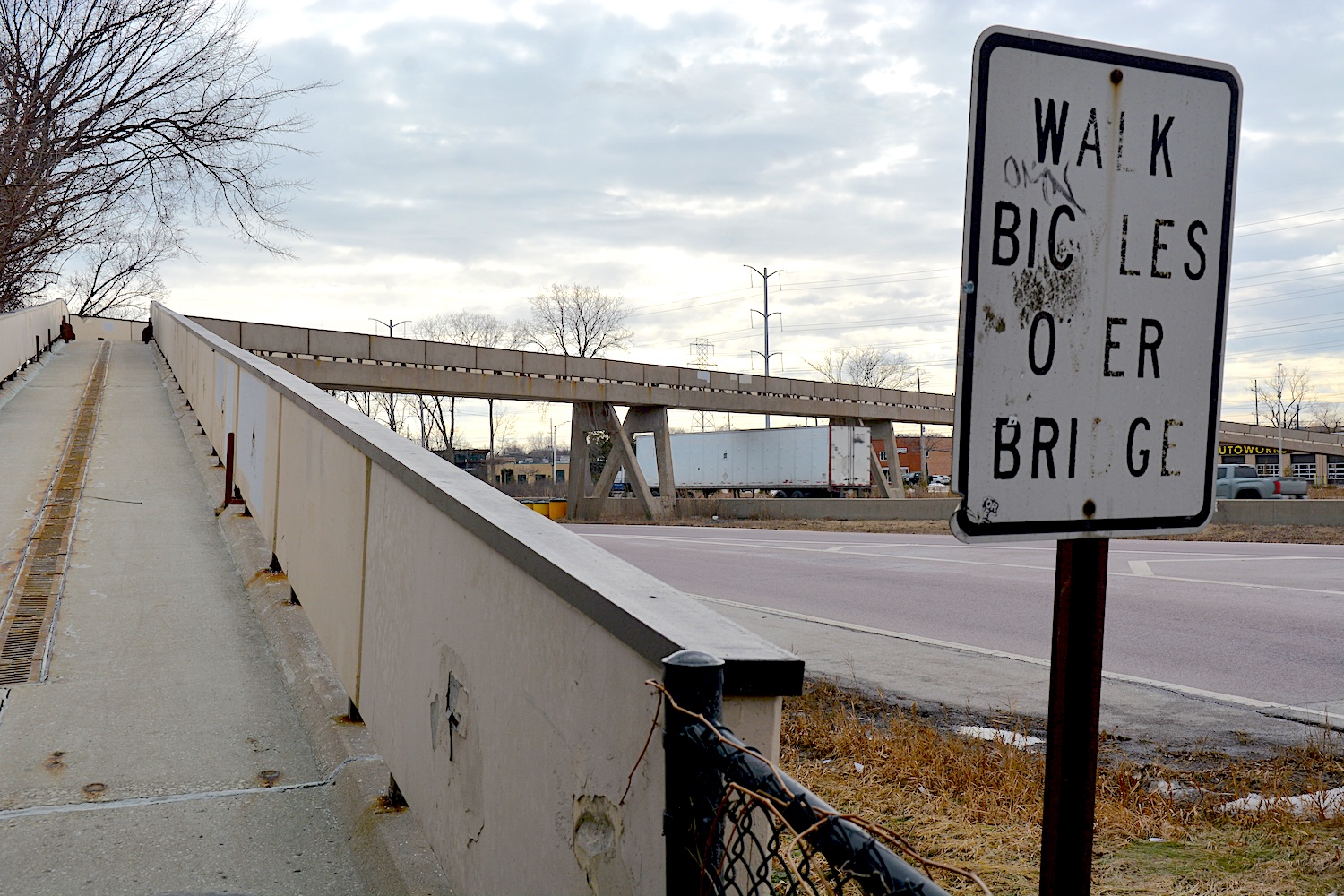
Highland Park officials considering options for pedestrian bridge: $10M rebuild or $2.4M fix
A pedestrian bridge in Highland Park needs fixing. How to do that — via rehabilitation or reconstruction — is currently up for debate.
During a City Council Committee of the Whole session on Monday, Feb. 9, Duane O’Laughlin, chief operating officer of Ciorba Group, detailed the two plans for the U.S. Route 41 bridge between Old Skokie Road and Fredrickson Place, just south of the Deerfield Road underpass.
As proposed by O’Laughlin, a rehab for the bridge is estimated to cost $2.4 million, while a rebuild could total more than $10 million.
The concrete pedestrian bridge was built in 1964 because “there is no safe crosswalk over highway US 41,” O’Laughlin said, and pedestrian and bicycle facilities are a priority of the City of Highland Park’s nonmotorized transportation plan, Bike-Walk HP 2030.
While use of the bridge is difficult to track, Amanda Bennett, Highland Park communications manager, said that the proposed project highlights the importance in the connectivity between east and west Highland Park as well as the longevity of the bridge, which are factors in the ultimate decision.
Supported by Ciroba Group, the City inspects the bridge every two years — the last in May 2025 — and while the structure is safe for public use, the inspections have led to three primary concerns: minor broken and cracked areas, the narrowness of the bridge; and failing drains in the middle of the structure.
If no changes are made to the bridge, O’Laughlin said, it could last five to 10 more years.
The City Council is expected to continue its discussion of this topic during a Committee of the Whole session on March 30.
A rebuild
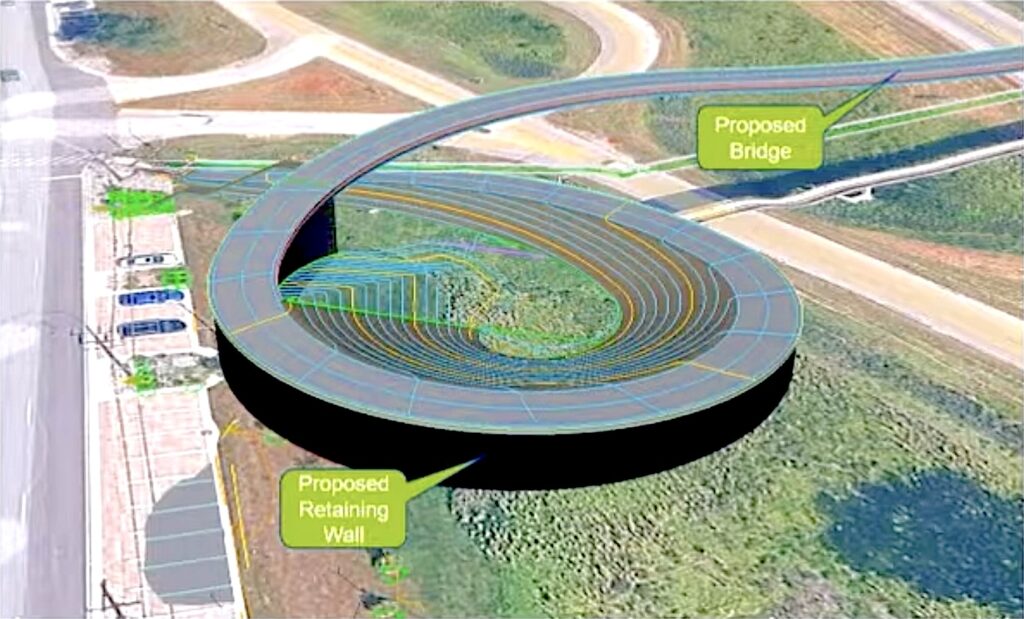
The plan to reconstruct the bridge involves breaking down the current structure and building a new extended bridge with stairs near the Skokie Valley Trail on the west side, a looped ramp, and a long ramp to Fredrickson Place on the east side.
Ciorba Group will coordinate with the property owners on the east side of the bridge, since the project approaches residential properties.
The geometry of this bridge is so complex, O’Laughlin said, because the current bridge was built very steep.
“The existing bridge was a 12% steep slope going up,” O’Laughlin said. “The current standards are to meet the Americans with Disabilities Act Accessibility Standards, which is that it cannot exceed a 5% slope. Essentially, that loop ramp connected to the long ramp is what is getting us to achieve that 5%. We would build it to 4.5% giving it some room, which I think is smart as an engineer.”
In addition to not meeting ADA standards, the current bridge’s clearance over Route 41, 16 feet 3 inches, does not satisfy Illinois Department of Transportation guidelines (17-3), according to O’Laughlin.
“The proposed bridge, therefore, has to go a foot higher than the existing bridge,” he said.
The existing bridge, at just 6 feet wide, does not accommodate bikers as well as pedestrians.
“The proposed bridge would be 14 feet wide, allowing for 7 feet on both sides, which will provide adequate space for pedestrians and bikers on either side,” O’Laughlin said.
In response to a question about decreasing the width to save costs, O’Laughlin said that he has tried that; however, the 14 feet is “as tight as it can be” while maintaining the loop structure.
O’Laughlin projects a reconstruction would cost approximately $10.3 million, about $2 million of which would come from an Illinois Transportation Enhancement Program grant. The city would be responisble for the remaining $8.3 million.
A new bridge would have 75 years of service life, according to the Ciorba Group.
A rehab
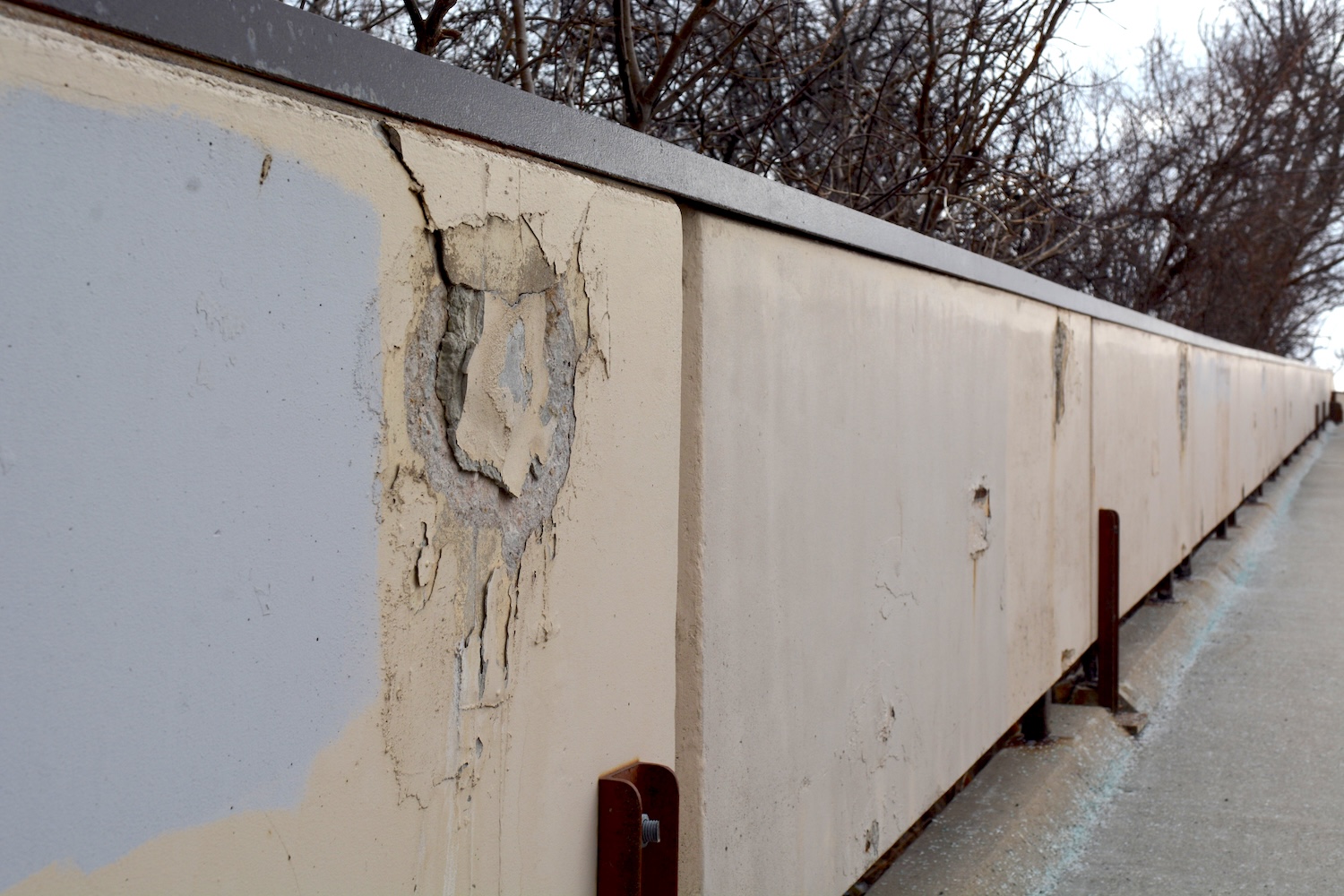
The second plan is to fix the current bridge, which would entail replacing the bridge deck with a larger one, repairing the piers, and adding a bicycle railing that is IDOT compliant.
Bikers could then bike at their own risk, O’Laughlin said.
The rehabilitation reportedly would cost approximately $2.4 million but would neither be bicycle friendly, nor ADA compliant. Because of that, it would also not be eligible for the $2 million Illinois Transportation Enhancement Program grant, meaning all funding would likely come from City coffers.
A rehab will last 25 years of service life, O’Laughlin estimates.
Since the bridge would not be ADA compliant, federal funding will not be accessible and could face fines in the future.
In response to a question about other grant or funding options, O’Laughlin said his team “chased after any grant that was available and came close to getting them, but didn’t.”
Councilmember Andrés Tapia pointed out that the rehabilitation had a lot of “No’s,” such as ADA compliance, the ITEP Grant, and cyclists, and concluded that he was leaning more toward reconstruction, as were his colleagues, who agreed to again discuss the plan in March.
The Record is a nonprofit, nonpartisan community newsroom that relies on reader support to fuel its independent local journalism.
Become a member of The Record to fund responsible news coverage for your community.
Already a member? You can make a tax-deductible donation at any time.

Alessia Girardin
Alessia Girardin is a community reporter focused on stories out of Highland Park and Highwood. A Chicago native and Regina Dominican alumna, she has published work for local and New York City publications and earned a master's degree from New York University.
The Record is a nonprofit, community news site from former editors of 22nd Century Media
Our daily coverage of your government, schools, businesses and neighbors is not possible without your support.
Latest

The Record: Shortcut
Related Stories