Highland Park raises the bar for protecting historic homes
The owners of a house designed by the famous architect Howard Van Doren Shaw may move forward with demolishing the building next year after Highland Park City Council voted on Monday to make it more difficult for homes to become designated as part of a unique historic district.
Highland Park City Council voted 4-3 to amend the city’s code to require the local Historic Preservation Commission to gain the approval of all owners of property within a proposed “noncontiguous historic district” before the commission can apply to create such a district.
While city code allows for creating individual landmarks and historic districts for key buildings clustered together, the Historic Preservation Commission can also seek to establish noncontiguous historic districts for buildings that are geographically dispersed but thematically related in historical importance.
The Historic Preservation Commission previously only needed the support of 25% of property owners in a proposed historic district, contiguous or noncontiguous, to nominate its creation.
Once nominated, the commission would then have to circulate notices, hold a public hearing, issue a recommendation and request a report from the city’s Department of Community Development before Highland Park City Council would vote on the historic district.
A majority of councilmembers expressed support for the amendment on Monday as it would ensure the government cannot meddle with the rights or intentions of individual property owners.
But other councilmembers and members of the public emphasized the number of homes designed by notable architects in Highland Park and argued the amendment will prevent the city from preserving parts of its unique legacy.
“I understand that it is an imposition on an individual’s property rights, but it is not a taking and I say that in the absolute backing of the U.S. Supreme Court,” Councilmember Tony Blumberg said on Monday in favor of sending the amendment back to the Historic Preservation Commission for review.
“By amending this law we have made it increasingly difficult to preserve important historic homes in our community,” Blumberg said.
Councilmembers Jon Center, Barisa Bruckman, Yumi Ros and Annette Lidawer voted in favor of requiring 100% of property owners to consent to proposing a noncontiguous historic district. Mayor Nancy Rotering, councilmembers Blumberg and Andrés Tapia voted against the amendment.
175 Prospect Ave.
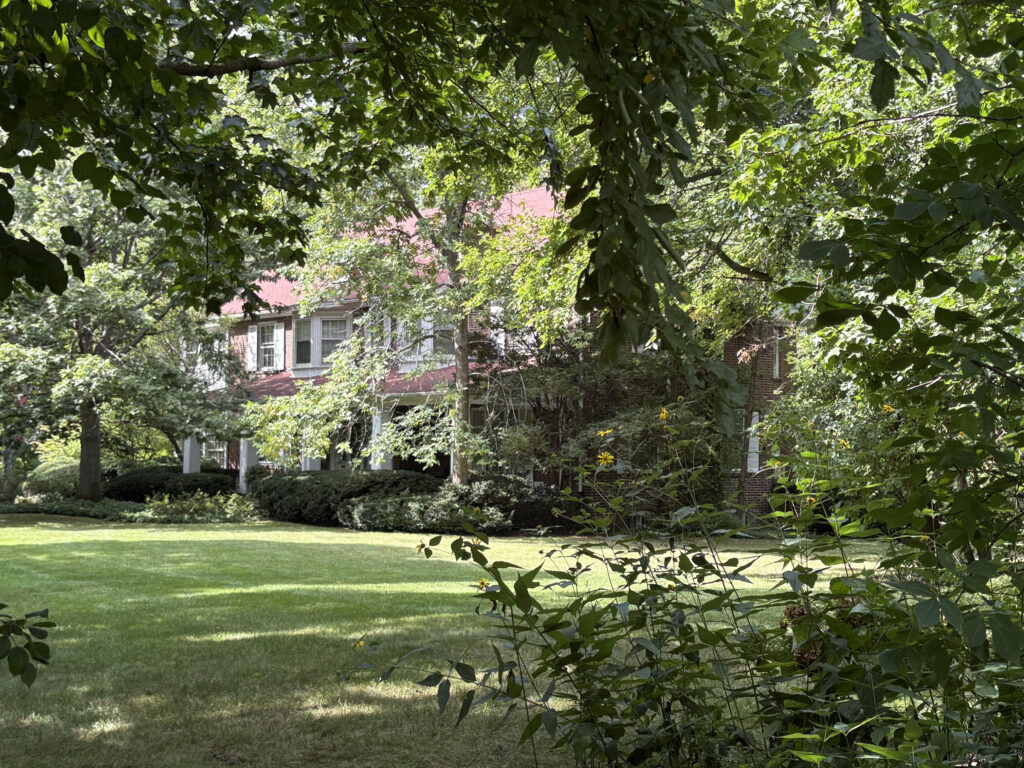
According to the Historic Preservation Commission’s proposal, Shaw designed the large brick colonial revival-style house located at 175 Prospect Ave. in Highland Park around 1909. An online real estate listing shows the building boasts six bedrooms across 6,760 square feet on a one-acre lot.
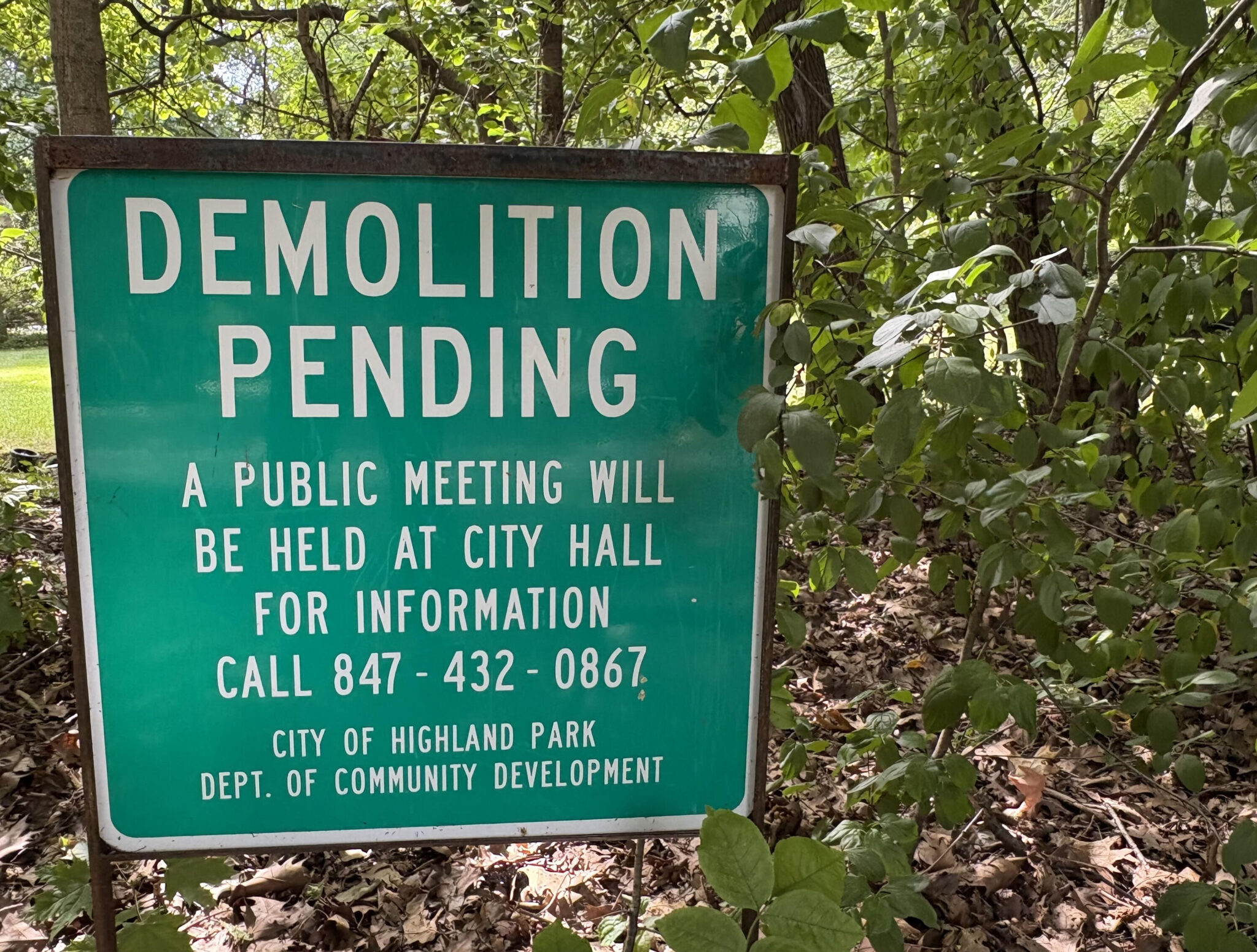
In February 2025, the owners of the house applied for a demolition permit from the city.
In March, the commission considered the application, unanimously determined the Shaw house met seven criteria to be considered a landmark and imposed a 365-day delay on the demolition ending Feb. 14, 2026.
After the commission’s decision, a group of neighbors notified city staff they intended to apply to create a noncontiguous historic district that would include 175 Prospect Ave., a city memo shows.
Buildings in historic districts cannot be demolished and changes to their exterior must be approved by the Historic Preservation Commission, according to the commission’s proposal. The buildings also become eligible for certain property tax benefits.
The neighbor group informed all the property owners within the proposed noncontiguous historic district about their intent via a letter on Aug. 13 and met with property owners on Aug. 26, a city memo said.
The noncontiguous historic district would be the city’s first; it already has three contiguous ones.
On Sept. 3, Jean Sogin, former vice chair of the Historic Preservation Commission, then submitted a formal nomination to the city that included 25% of the property owners’ consent and outlined a noncontiguous district that would landmark nine homes designed by Shaw and three designed by Frank Lloyd Wright.
The proposal outlines that the district would preserve the influence the Arts and Crafts Movement had on the work of “two giants of 20th century architecture” in Highland Park. Two houses designed by Shaw in Highland Park have already been demolished and only one by Wright bears landmark status.
‘Fundamentally unfair’
During Monday’s public comment section, several individuals voiced concerns about the amendment, arguing it will prevent the city from ever gaining applications for noncontiguous historic districts and lead to Highland Park’s history gradually disappearing.
“The common argument in involuntary landmarking as part of a historic district, or taking away the freedom to take away a historic home, is homeowner’s rights. I hear it all the time,” said Patrick Schwarz, who identified himself as living in a house designed by Wright in Highland Park. “What’s happening over here is that homeowners’ rights, which have to do with money and power, are overruling Highland Park’s history and Highland Park’s architecture.”
City staff recommended amending the noncontiguous nomination process in line with its landmark designation process, which the council similarly pared back in 2018 to remove the public’s ability to nominate local buildings to become “involuntary landmarks” without property owners’ consent.
Cal Bernstein identified himself on Monday as the lawyer representing a party engaged in purchasing the property at 175 Prospect Ave. He noted that since Highland Park created the ordinance allowing for noncontiguous historic districts in 2005, there have been no previous applications for one.
Bernstein argued this noncontiguous historic district was only nominated earlier this month to stop this particular real estate transaction from going through, and he is aware of no previous demolition permits ever being denied in Highland Park since the noncontiguous historic district ordinance was created.
“Since the last seven months that (demolition) application was pending, both the seller and the contract person have expended substantial sums preparing the redevelopment of that property,” Bernstein said.
“So to include 175 Prospect without the consent of the owner or, in this situation, also the contract purchaser, would fundamentally be unfair,” Bernstein said.
‘I understand the goal’
Before Highland Park City Council approved requiring all property owners consent for noncontiguous historic districts, Blumberg forwarded a motion on Monday to delay the council’s vote to Sept. 25 so that the Historic Preservation Commission could issue their own evaluation on the amendment.
To vote on the amendment now would be an affront to the Historic Preservation Commission as it’s important for the body to address substantive matters of policy and issue their own recommendations, Blumberg said. Lidawer said she agreed as the city government is based on a structure of boards.
But after Bernstein informed the council that the parties involved with selling and purchasing 175 Prospect Avenue have scheduled to close on the transaction next week, Lidawer changed her mind about continuing the vote, saying she can’t support delaying a real estate transaction.
“I think it’s highly inappropriate for us to get involved in a personal real estate transaction that people have been utilizing the current zoning and law to make decisions on,” Center said.
“I understand the goal here of trying to get this in front of the Historic Preservation Commission globally speaking, but to hold up this transaction does not make logical sense,” Center said.
The council voted 4-3 against Blumberg’s motion to delay voting on the amendment. After the council then voted on the same lines to approve the amendment, two members of the public gallery left the meeting calling “shame” on the council.

Samuel Lisec
Samuel Lisec is a Chicago native and Knox College alumnus with years of experience reporting on community and criminal justice issues in Illinois. Passionate about in-depth local journalism that serves its readers, he has been recognized for his investigative work by the state press association.
The Record is a nonprofit, community news site from former editors of 22nd Century Media
Our daily coverage of your government, schools, businesses and neighbors is not possible without your support.
Latest

The Record: Shortcut
Related Stories