Wilmette trustees disagree on grocery tax with final vote coming soon
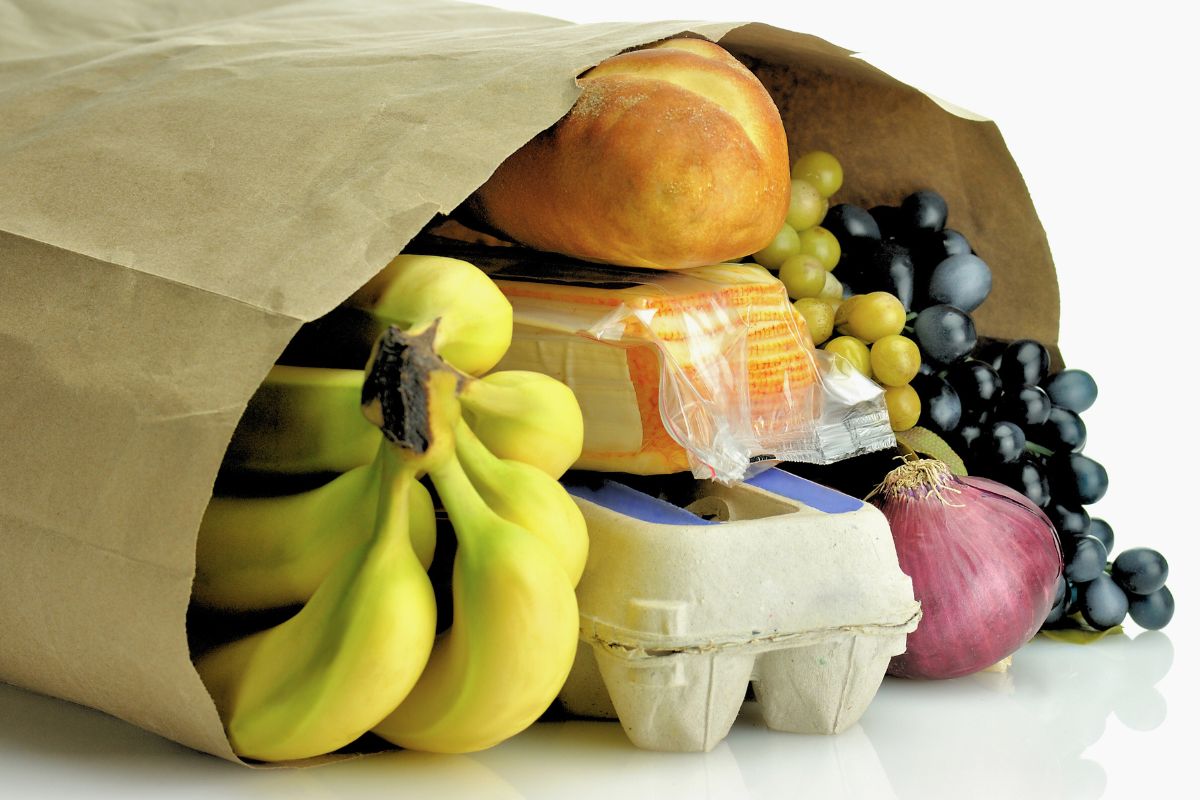
It was clear on Tuesday, Sept. 9, that Wilmette trustees would not be on the same page when it came to adding a 1% local grocery tax.
As the Village Board discussed the pros, cons and ethical quandaries surrounding the tax, Trustees Gina Kennedy and Mark Steen rallied against it.
Much of the meeting served as a forum for trustees to voice their opinions to the Wilmette public and for public comment as well. The conversation was a preamble for the Sept. 25 meeting, when the board will officially vote on whether to go ahead with the tax.
As of 1990, the state of Illinois has traditionally imposed a 1% sales tax on qualifying food, drugs and medical appliances. A portion of the tax dollars generated were dispersed to municipalities. But the state budget eliminated the grocery tax in 2025, effective in January 2026, and the projected revenue loss for Wilmette is $600,000, officials say.
“When did Noah build the ark?” Trustee Michael Lieber said during the meeting. “Before the flood. So, we have to plan in advance.”
He used the parable to back up his stance in favor of making up for this revenue loss and building up reserves in preparation for potential financial surprises, such as recessions.
On the question of excess reserves and whether Wilmette has enough, Trustee Steve Leonard added, “The reserves in excess of targeted minimums are earmarked for projects coming up in 12 to 18 months,” suggesting that these short-term reserves should not be looked at in conjunction with long-term grocery tax revenue.
Thirty-six of the 43 communities in the Northwest Municipal Conference reportedly have already enacted a replacement grocery tax, which will go into effect on Jan. 1, 2026. For implementation on this date, Wilmette must file the ordinance to the state by Oct. 1.
What the trustees did agree upon was that the grocery tax is a regressive one, and the village would like to minimize regressive tax programs in its tax system.
As the village faces the question of how to make up this $600,000 in revenue, the alternative discussed to the grocery tax is a $59 average increase in property taxes.
Holding off on any additional taxes, as Wilmette resident Jonathan Marshall encouraged during public comment, appeared to be off the table.
“In our last meeting, we spent a lot of time talking about, ‘Do we really need it?’” Trustee Justin Shepherd said as he kicked off the discussion. “To me, that kind of muddies the issue … because, at the end of the day, we’re going to set a revenue number that we need to achieve to bring in through taxes and fees, and the discussion is: What is the best way to do that?
“So even if that number is just ‘x’ right now, it’s an unknown variable, the discussion tonight is whether $600,000 of that should come from a continuation of the grocery tax, albeit in a new form, or via switching it to the property tax. We’ve kind of pushed out the other options.”
Shepherd spoke in favor of the grocery tax.
“While property taxes are less regressive, it would represent a higher absolute cost borne by Wilmette residents since visitors to our community currently shoulder a significant portion of the grocery tax,” he said.
While Wilmette passed on a $25,000 study on grocery shopping and spending habits, including who shops in Wilmette and where, trustees noted that the west side of Wilmette does not have grocery stores, which has led some trustees to presume those residents are shopping elsewhere in suburbs like Northbrook and Skokie, which have already implemented a 1% grocery tax.
With that in mind, trustees suggested that a significant portion of the grocery tax collected in Wilmette would come from nonresidents.
If implemented, the 400 Wilmette families participating in SNAP will receive a credit, ensuring the tax would not apply to them. Low-income families not on SNAP would still have to pay the tax.
Shepherd and Leonard were on the same page: They agreed shifting the grocery tax to property taxes would burden low-income residents who would end up shouldering some of the property taxes and then would face the 1% grocery tax in other municipalities if shopping outside Wilmette.
While the majority of trustees seemed to echo these sentiments, Trustees Kennedy and Steen disagreed.
“Nothing is more regressive than a tax on an essential product that everybody has to buy, and that’s what we’re doing,” Kennedy said. “It disproportionately affects families with children because, the larger your household, the more groceries you’re buying. That, for a so-called ‘family-friendly suburb’ is not a good look.”
In a similar vein, Steen later added, “A regressive tax disproportionately burdens people with less economic ability, and all of us agree this is a regressive tax.”
He pointed out that the revenue of $600,000 is a small portion of Wilmette’s annual budget, with the 2025 general budgeted revenues coming out to $44.1 million, per the village’s annual budget report.
Steen spoke in favor of shifting the grocery tax to property taxes, which he said would shift the burden to those who have more money so as to not further burden lower income residents.
After the trustees wrapped their discussion, three Wilmette residents offered public comment. All of them spoke in opposition to the grocery tax and asked the village not to merely follow suit with other municipalities.
“The price of food keeps going up and up and up, and we’re just going to add to it by doing this tax,” resident Anne Sullivan said. “I understand putting it away for a rainy day or building the ark before the floods come, but we do have an opportunity, as Trustee Kennedy said, to be a leader and set an example for other communities on the North Shore that we are inclusive and that includes income inclusion.”
Next, the Wilmette Village Board will vote on this grocery tax on Sept. 25.
The Record is a nonprofit, nonpartisan community newsroom that relies on reader support to fuel its independent local journalism.
Become a member of The Record to fund responsible news coverage for your community.
Already a member? You can make a tax-deductible donation at any time.

Zoe Engels
Zoe Engels (she/her) is a writer and translator, currently working on a book project, from Chicagoland and now based in New York City. She holds a master's degree in creative nonfiction writing and translation (Spanish, Russian) from Columbia University and a bachelor's in English and international affairs from Washington University in St. Louis.
The Record is a nonprofit, community news site from former editors of 22nd Century Media
Our daily coverage of your government, schools, businesses and neighbors is not possible without your support.
Latest

The Record: Shortcut
Related Stories