Skokie Village Board wants to hear from residents before allowing, regulating accessory dwelling units
The Skokie Village Board recently voted to keep alive a discussion about accessory dwelling units, rejecting an advisory commission’s recommendation to strike down amendments to a law regulating them.
The proposed amendments aim to add restrictions to how accessory dwelling units — defined as an attached or detached residential unit on the same parcel as a single-family home, such as coach houses — may be built and used, village documents show.
The Skokie Plan Commission voted unanimously in July against the amendments in part because they urged the Village Board to wait for pending state and federal legislation that reportedly will regulate such units, according to the documents.
But the Village Board voted 5-1 on Tuesday, Sept. 22, to reject the plan commission’s negative recommendation. Trustee Keith Robinson was the only trustee who voted in step with the Skokie Plan Commission.
The Village Board then voted unanimously to revisit the proposed amendments at a Nov. 16 meeting, and the trustees directed village staff to gather more public input on accessory dwelling units in the meantime.
Trustee Alison Pure Slovin said she voted against the recommendation because she wanted to learn residents’ thoughts on accessory dwelling units before making a final decision.
If the Village Board concurred with the commission and rejected the proposed amendments, corporation counsel Steven Elrod said, then the village would have to restart a months-long process if it wanted to regulate accessory dwelling units.
By rejecting the recommendation, the Village Board can consider more modifications to the ordinance on the accessory units, Elrod said.
The discussion stemmed from a directive the Village Board sent the Plan Commission in November 2025 that requested the advisory board define accessory dwelling units and propose regulations for their development in residential zoning districts.
Johanna Nyden, Skokie’s director of community development, said the Plan Commission held five public meetings about the topic and at least four residents expressed a “pretty significant urgent need to build” an accessory dwelling unit on their property.
In one example, a resident reportedly said their parents live out of state but are selling their home to move to Skokie. The resident wanted to build a structure on their property to accommodate their parents, Nyden said.
Skokie already had some language in its village code regulating accessory buildings, including that they cannot be taller than 15 feet, cannot occupy more than 30% of the rear yard, and must be set at least 3 feet back from the edge of property and 5 feet back from an alley.
The proposed amendments state that accessory dwelling units cannot be used as a short term rental, only one is allowed per zoning lot, they may not exceed 1,000 square feet of livable space, they shall not be taller than 28 feet and they must have a fire-sprinkler system.
Accessory dwelling units would also need a Certificate of Appropriateness from the Village’s Appearance Commission, to bear a posted address and to feature no more than one pedestrian entrance on the front of the building.
The Illinois General Assembly introduced four different bills between January 2025 and February 2026 that proposed regulations to accessory dwelling units, but none advanced out of committee, according to the Skokie Plan Commission.
Congress in July enacted into law the Final 21st Century ROAD to Housing Act, which reportedly will help fund the development of accessory dwelling units and encourage municipalities to loosen restrictions on them, the plan commission wrote.
While village staff provided research on accessory dwelling units, “the Commission concluded that additional input from the Community is warranted, as well as conclusion of ongoing considerations by state and federal legislative bodies information would be beneficial before considering amendments to the Zoning Code,” a report from the Plan Commission says.
“Additional evaluation could include the potential demand for (accessory dwelling units) in Skokie, neighborhood compatibility, infrastructure and parking considerations, administrative impacts, and experiences from municipalities that have adopted similar regulations.”
Trustee Gail Schechter, a longtime housing advocate, referenced information the American Association of Retired Persons has circulated about accessory dwelling units and said she supports the dwellings because they allow for more extended families on one parcel.
Nyden noted that the village’s environmental sustainability plan encourages the study of accessory dwelling units “and the potential to increase rental and home ownership opportunities compatible with both established neighborhoods and new development.”
The housing chapter of Skokie’s comprehensive plan also encourages promoting “a variety of housing types and sizes within Village constraints to meet the housing demand of growing and changing population demographics.”
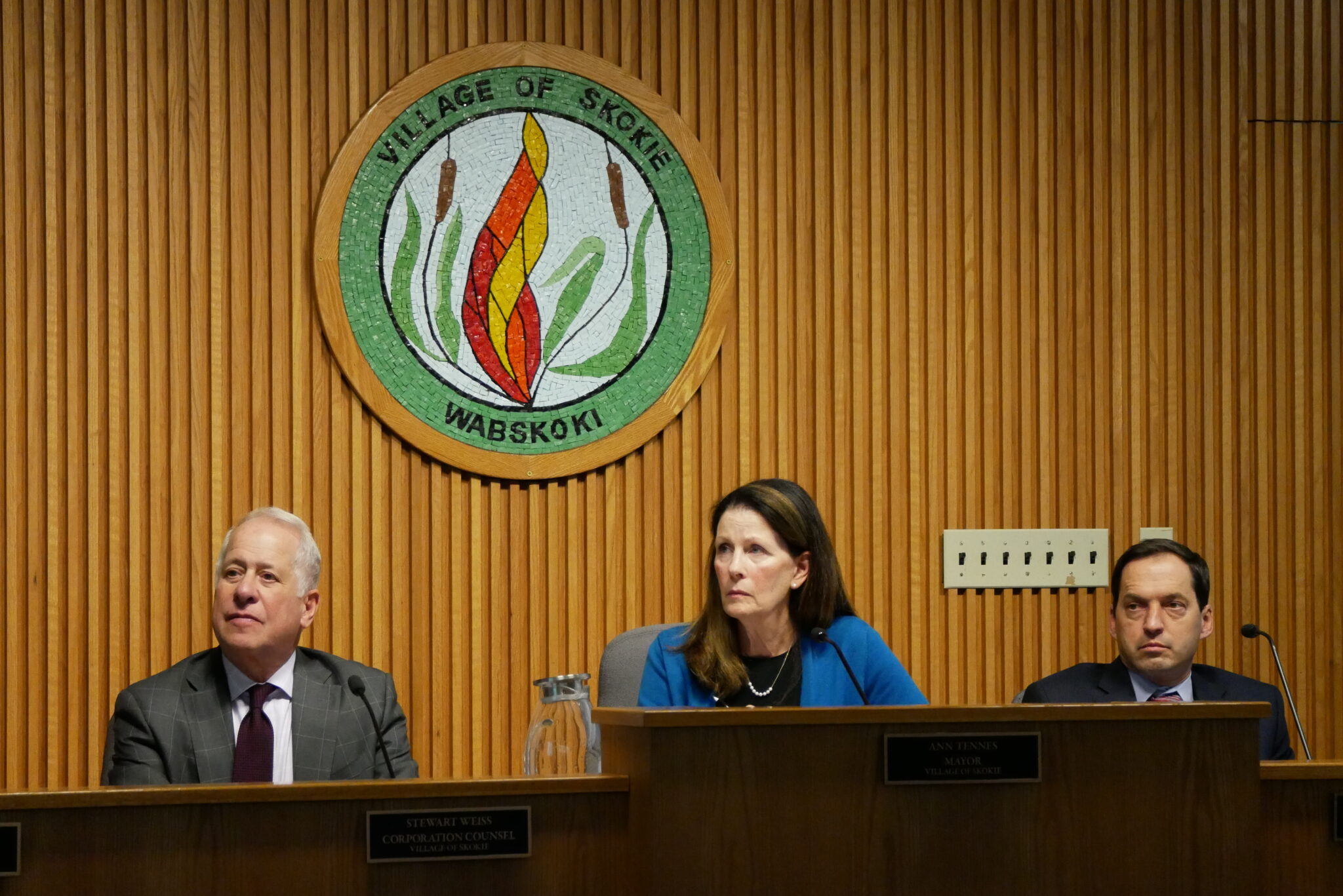
Mayor Ann Tennes said the Skokie Plan Commission’s 7-0 recommendation against the proposed amendments was “kind of unprecedented,” but in terms of waiting for Springfield to act, “we don’t know what’s going to happen there.”
Echoing Slovin and the Plan Commission, Tennes highlighted the need for more public input ahead of the board formally revisiting accessory dwelling units in November.
The Record is a nonprofit, nonpartisan community newsroom that relies on reader support to fuel its independent local journalism.
Become a member of The Record to fund responsible news coverage for your community.
Already a member? You can make a tax-deductible donation at any time.

Samuel Lisec
Samuel Lisec is a Chicago native and Knox College alumnus with years of experience reporting on community and criminal justice issues in Illinois. Passionate about in-depth local journalism that serves its readers, he has been recognized for his investigative work by the state press association.
The Record is a nonprofit, community news site from former editors of 22nd Century Media
Our daily coverage of your government, schools, businesses and neighbors is not possible without your support.
Latest

The Record: Shortcut
Related Stories