The Record joins local peers for panel on local news
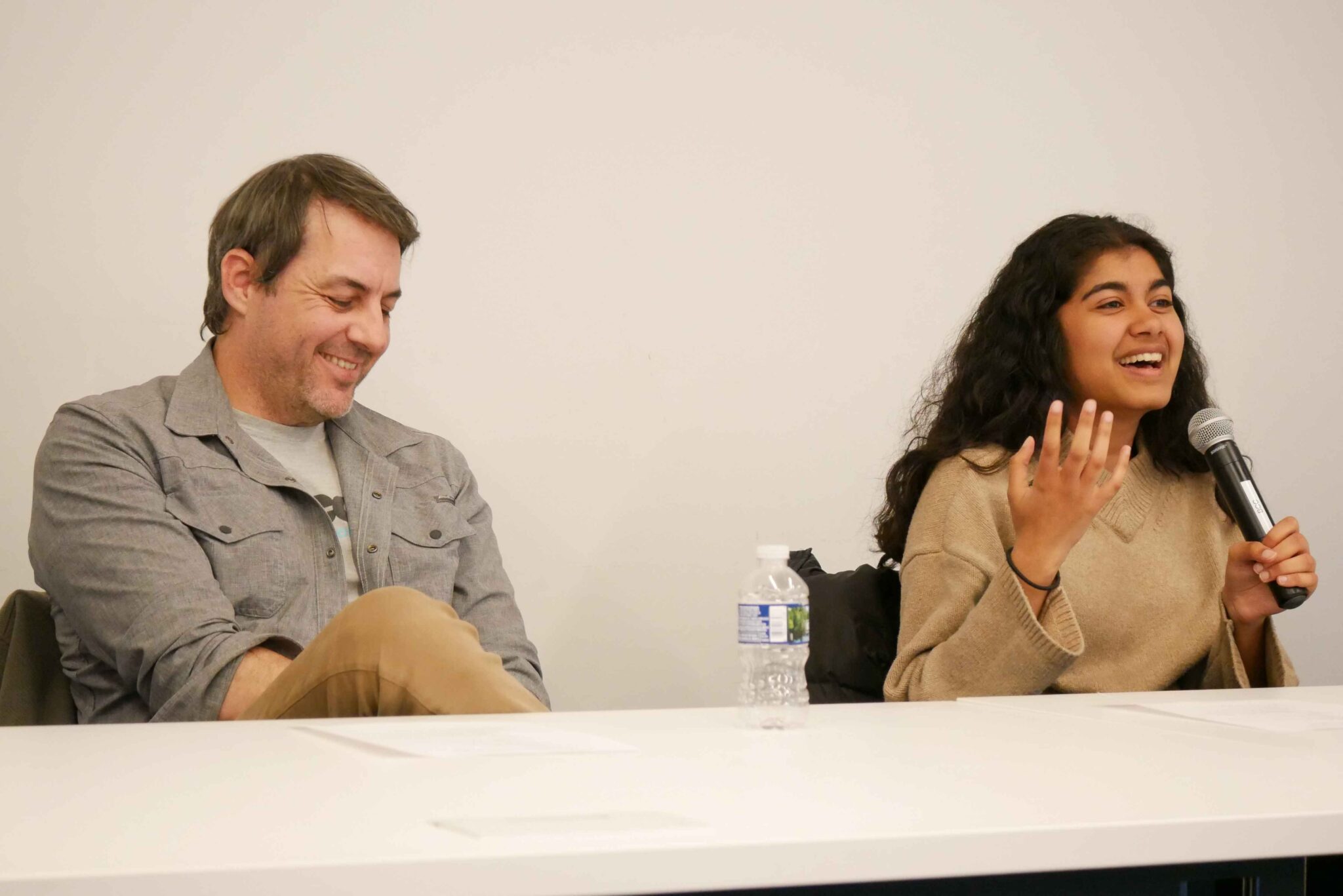
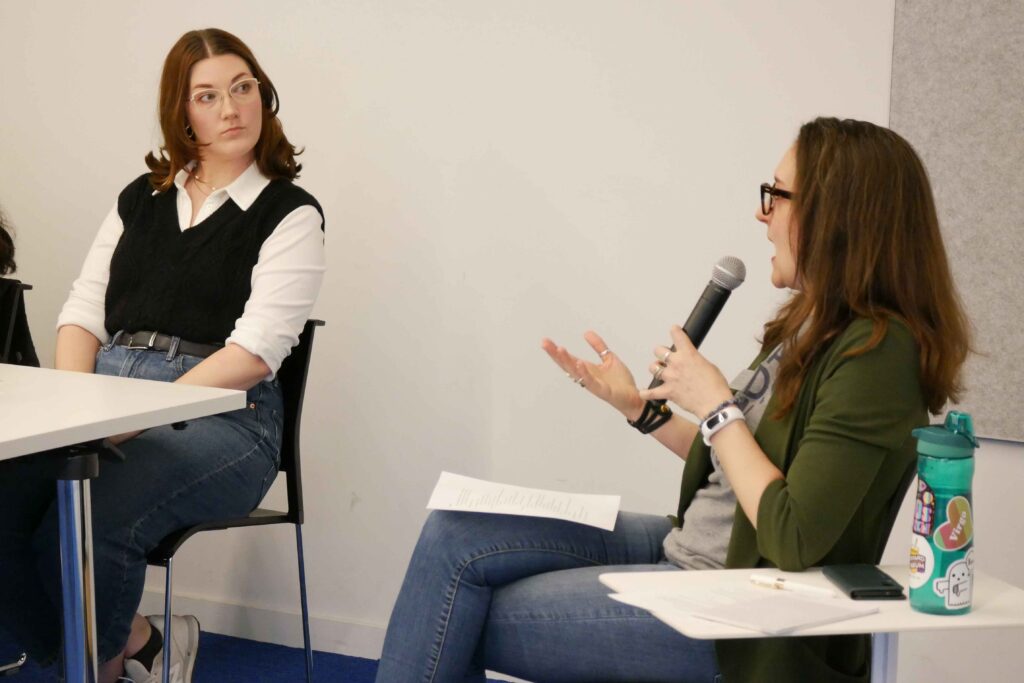
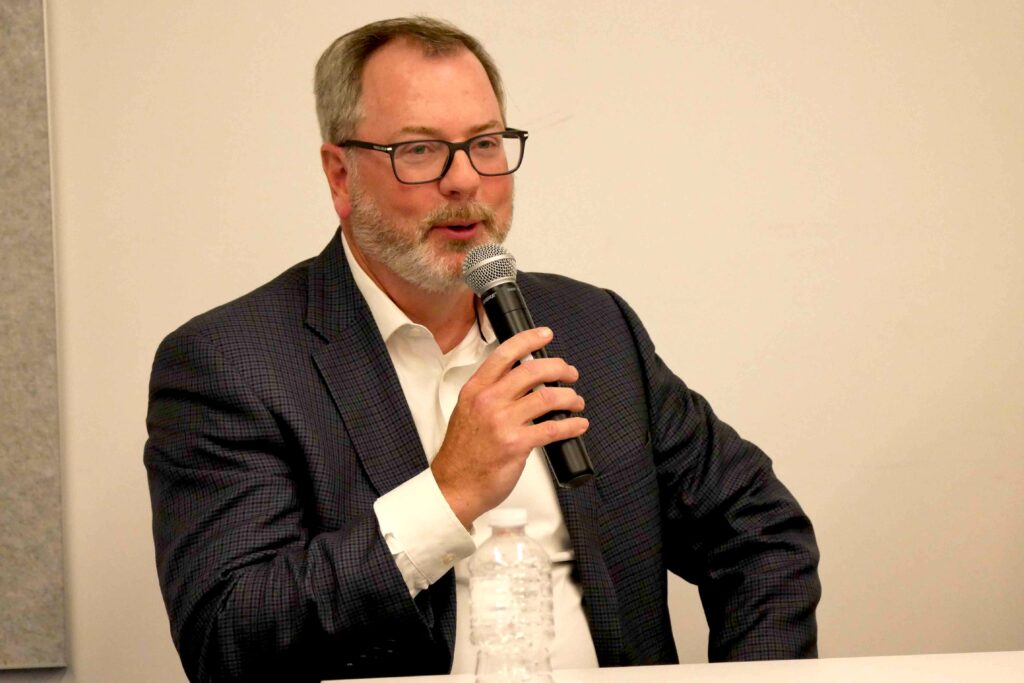
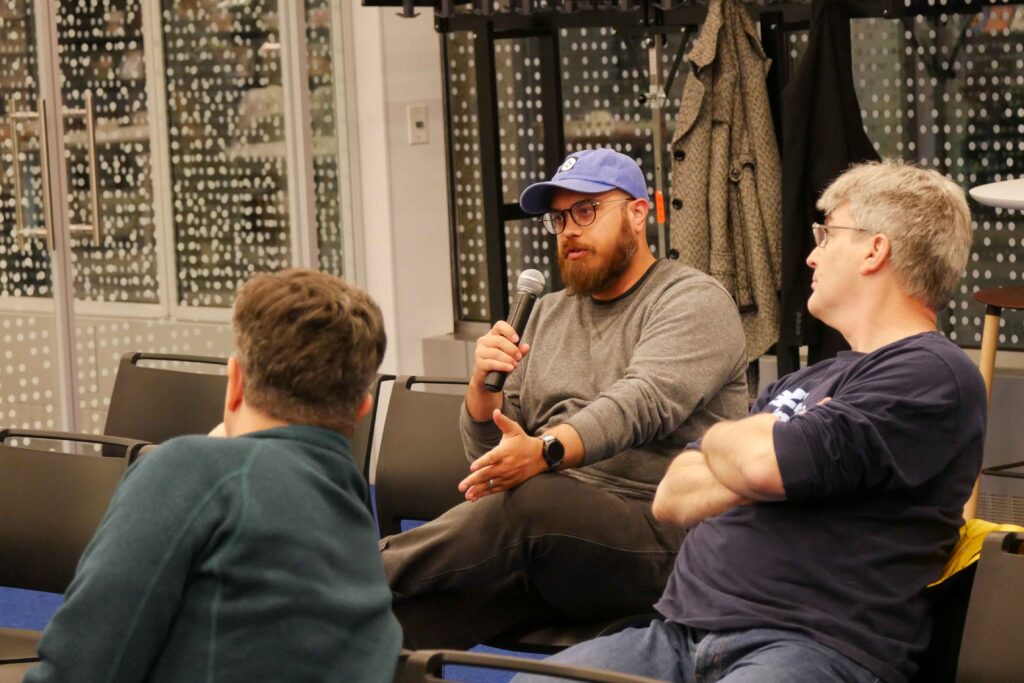
Editors from The Record North Shore, Block Club Chicago, Patch and The Daily Northwestern all gathered at the Skokie Public Library last week for a panel discussion and behind-the-scenes talk on how the publications navigate local news.
During the event on Wednesday, May 6, the news outlets’ explained how they find stories, fund their operations, consider artificial intelligence and maintain trust with the readers.
“Going around and seeing the for-sale signs, talking to people, seeing something that makes you tilt your head and go in and ask questions about it, whether that’s construction on the street or a dog climbing a tree,” Joe Coughlin, co-founder and editor-in-chief for The Record, answered about how he and his reporters spot subjects in the community to write about.
“Anytime I think of hyperlocal news, that’s one of the stories I think of all the time, like, ‘Dog climbing a tree? I’ll be there in five.’”
Jane Hanna, Skokie Public Library’s communications manager, kicked off the talk in front of a modest crowd of 15 to 20 by asking each publication to talk about their unique newsroom models
Shamus Toomey, the publisher and co-founder of Block Club Chicago, explained how technology disrupted the financial viability of more traditional media outlets, and so he helped start Block Club after his previous local newsroom, DNAinfo Chicago, went under.
In that way, nonprofit organizations like Block Club and The Record represent a “new wave in local news around the country,” Toomey said, as they operate off the financial support of philanthropy, grants and readers who want to see their communities covered.
The key to Block Club’s model, Toomey said, is shirking a top-down design and empowering reporters who are in the Chicago neighborhoods they cover — and are ideally from the neighborhoods they cover — so that everything they see each day can be a potential story.
Rachel Barnes, an editor for Patch, touched how the website is unique as its executives oversee nationwide networks but employ reporters focused on the “hyperlocal.” Her coverage area starts in Skokie and stretches north along the shore to Lake Forest, she said.
Anavi Prakash, the editor in chief for The Daily Northwestern student newspaper, said the outlet covers the university and Evanston, but operates under a board of directors independent from the university so it’s funded by donations from alumni and local residents.
Its roster of reporters include dedicated journalism students, but also students from all kinds of majors who want to get trained in newswriting and write about their campus and the community they might graduate and live in, Prakash said, adding that she has about 80 editors.
Notably, The Daily Northwestern was the only publication at the panel that produces a weekly print edition.
Pivoting to how the publications handle social media and an ever-changing landscape for media technology, Prakash said fielding websites like Reddit were crucial to the paper’s coverage of federal immigration enforcement in and around Evanston.
Likewise, Barnes said she reads through Facebook groups to garner stories, Toomey said online posts with lots of engagement can inform reporters about things the community is interested in, and Coughlin said a lot of info is posted “recklessly” online, so the reporter’s job is to follow up on what happened and provide more context
In employing technology, Prakash said she’s noticed that posting their articles on Facebook and X can draw greater attention to the paper’s coverage of local city council news, while posting stories about campus issues on Instagram can better drive up engagement with their younger readers.
Barnes noted she doesn’t have control over how Patch aggregates newsletters, but all of the editors said they do not employ artificial intelligence beyond using programs to clear background noise in recordings or transcribe interviews (which are then vetted by a person) or research documents.
Artificial intelligence can easily erode trust with readers if they think articles were generated by it, Toomey said; however, he conceded, the new technology is here to stay — just as many print newspapers in 1998 thought that the internet wasn’t going to “eat our lunch” and it did, Toomey said.
The Record is a nonprofit, nonpartisan community newsroom that relies on reader support to fuel its independent local journalism.
Become a member of The Record to fund responsible news coverage for your community.
Already a member? You can make a tax-deductible donation at any time.
Samuel Lisec
Samuel Lisec is a Chicago native and Knox College alumnus with years of experience reporting on community and criminal justice issues in Illinois. Passionate about in-depth local journalism that serves its readers, he has been recognized for his investigative work by the state press association.
The Record is a nonprofit, community news site from former editors of 22nd Century Media
Our daily coverage of your government, schools, businesses and neighbors is not possible without your support.
Latest

The Record: Shortcut
Related Stories