
Wilmette waiting on state lawmakers to make e-bike, e-scooter policies
Unusually swift action from state legislators may push back Wilmette’s plans to regulate select electric-powered mobility devices.
Wilmette trustees had targeted late April to potentially approve an ordinance that would bring the town up to speed with its neighbors regarding electric-bike and -scooter safety measures. But trustees are now in a holding pattern as Illinois leaders are “moving at a fast pace” in Springfield to put in place regulations that would apply to communities throughout the state.
Wilmette officials during the Village Board’s Tuesday, April 14 meeting updated the community on the town’s progress while also further detailing how potential legislation might play out.
Village Manager Michael Braiman opened the briefing by describing the state legislation under consideration right now as “comprehensive,” adding that it would “address all components” of what the village is discussing.
The state bill made its way out of the state Senate’s transportation committee earlier this week and is slated for a full house vote as early as this week, Braiman noted. From there, the bill would need approval from the Illinois house before moving forward.
“It certainly looks like something is going to pass at the statewide level that is going to apply across the board to all the communities,” Braiman said.
Wilmette officials said during the Tuesday session that the state’s bill would preempt home-rule authority almost entirely, meaning that a home-rule municipality like Wilmette would essentially be restricted from adopting its own regulations.
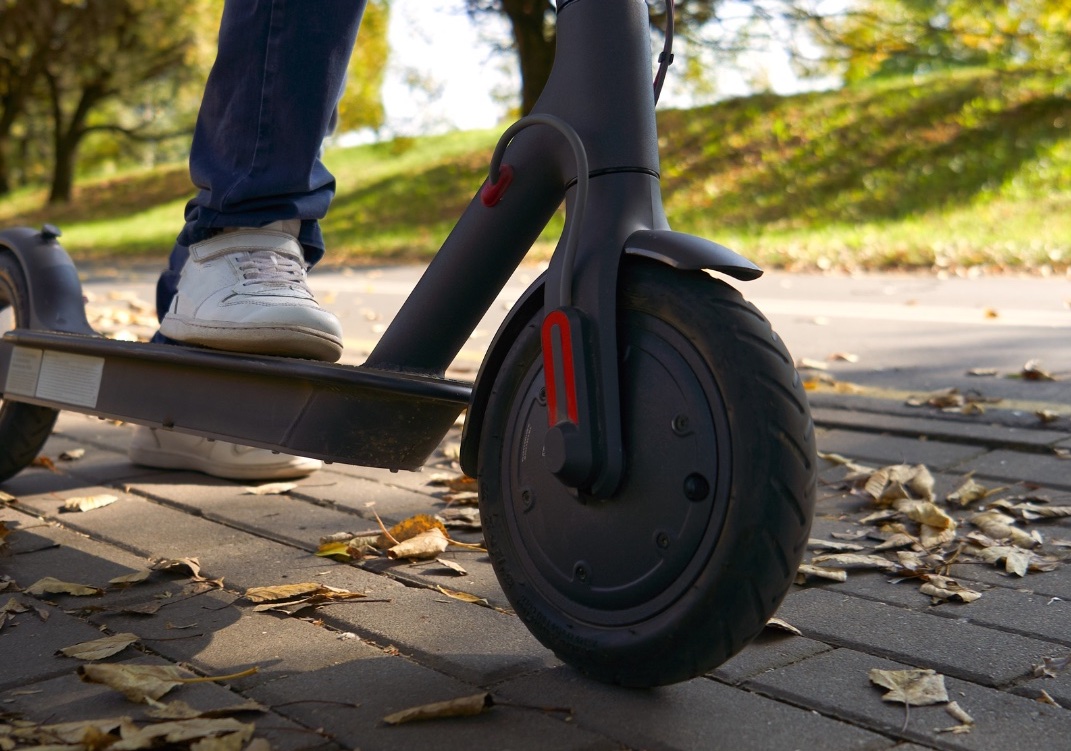
According to Sara Phyfer, assistant to Wilmette’s village manager, the state’s bill would place a 16-or-older age restriction on the use of what it classifies as “electric micro-mobility devices.” That category would include the popular e-scooters.
Under the proposed bill, these devices would be allowed on bike paths but prohibited on sidewalks.
The tentative bill also includes regulations for e-bikes, proposing that they would be permitted on bike paths and that Class 1 and 3 vehicles would require an age restriction of 15 years or older. They would also be prohibited on sidewalks.
Lastly, motor-driven cycles, out-of-class devices, sometimes referred to as e-motos, under the state’s bill would be required to be titled and insured and operated by a licensed driver. They would be permitted on public streets but banned on sidewalks and bicycle lanes and paths.
The state’s bill, however, if ultimately passed, would not go into effect until July 1, 2027.
As previously reported by The Record, Wilmette officials first formally considered the topic in late January, determining that they first wanted to seek additional community feedback before putting the wheels in motion on any new laws.
Village trustees directed staff to solicit feedback through a survey to the community, which officials said opened in early February and ran through March 20.
Just under 600 residents responded to the survey and that group showed clear support for regulating e-mobility devices.
Approximately 81% of respondents said devices that can be operated at faster than 10 mph should be restricted to ages 16 or older. About 80% of respondents said e-bikes should not be allowed on sidewalks while 55% did show support for allowing them on paths and trails at a low speed.
Survey respondents indicated to the tune of 71% that e-scooters should be prohibited on sidewalks while a slight majority favored their use on paths.
As part of the feedback process, village staff also discussed the devices with members of the Bike Walk Wilmette advisory committee in late March. That group advised allowing e-mobility devices on bike paths if they are traveling under 15 mph but prohibiting them on sidewalks, citing pedestrian safety concerns.
Wilmette’s approach to regulation, as previously detailed by The Record, differs from several of its neighbors as the village is exploring what officials described as a “speed enforcement model.” Phyfer detailed this during the January meeting as a “simple and practical approach” where the framework “uses familiar concepts like speed limits, rather than regulating based on the type of device being used.”
If state officials were to act in the immediate future, it would likely come before the end of the spring session of the state legislature, which will be over by the middle of May.
Citing legal advice, Wilmette trustees will likely wait until at least May to move forward with any of village-specific regulations. But the board was clear that it will look to act to establish some ordinance prior to the proposed July 2027 start date from the state.
“I think we should wait to see what the sense is from the (state) House in Springfield … and hold off for our next meeting in April,” Braiman said. “But if we’re getting a clear indication that they’re not going to act, then at our first meeting in May we can finish this discussion and see where we want to go.”
The Record is a nonprofit, nonpartisan community newsroom that relies on reader support to fuel its independent local journalism.
Become a member of The Record to fund responsible news coverage for your community.
Already a member? You can make a tax-deductible donation at any time.

Martin Carlino
Martin Carlino is a co-founder and the senior editor who assigns and edits The Record stories, while also bylining articles every week. Martin is an experienced and award-winning education reporter who was the editor of The Northbrook Tower.
The Record is a nonprofit, community news site from former editors of 22nd Century Media
Our daily coverage of your government, schools, businesses and neighbors is not possible without your support.
Latest

The Record: Shortcut
Related Stories