

Split board OK’s 68-townhome plan for vacant Arie Crown site
The Skokie Village Board on Tuesday granted final approval via a 4-2 vote for a 68-townhome development to be built on the site of a vacant Hebrew day school.
Trustees Jim Iverson, Alison Pure Slovin, Kimani Levy and Keith Robinson voted in favor of the project. Trustees Gail Schechter and Lissa Levy voted against it.
The development will add 24 two-bedroom units and 44 three-bedroom units to an approximately four-acre lot at 4600 Main St., where the Arie Crown Hebrew Day School operated for more than 40 years before the nonprofit consolidated their campus to another site.
The new development will also feature 158 parking spaces, two electrical vehicle charging stations and three small recreational park areas open to the public, village documents show.
The townhome buildings will be 35 feet tall, and each apartment will boast 2,513 square feet and two-car garages.
The project’s developer, Fulton Street Companies, petitioned to pay Skokie $450,000 in lieu of including four affordable housing units otherwise required by the village’s Inclusionary Housing Ordinance. The board approved that request.
Ross Babel, a co-founder of Fulton Street Companies, said construction will “hopefully” begin this summer and he anticipates the project will take 18-24 months to complete.
He said it was too early to determine the units’ rental costs.

The project drew opposition from Skokie residents, many on the neighboring Elm Street, who expressed concerns about the development’s density and potential to add traffic to the area. Resident Ken Marley shared a petition signed by 47 people against the project.
Schechter said Fulton Street Company’s design was a “squandered opportunity” as the development “provides rentals only for affluent families,” lacks onsite affordable housing, and she’s heard from residents concerned they will lose access to “valuable greenery.”
“Anything built here will generate property tax income where there was none, so the question before us is not how much property tax revenue but to what extent this proposal meets community needs and aspirations,” Schechter said.
Other trustees, like Pure Slovin, spoke in favor of the project’s role in developing a main corridor and returning the property to the village tax rolls.
Village staff, representatives from Fulton Street Companies and Arie Crown School’s leadership team also expressed support.
Members of the latter group argued the development had already been revised to meet neighbors’ concerns and will provide family-oriented housing that Skokie needs. They also said it would not be financially feasible for the developer to provide affordable housing units.
“The strength of the current developer and the fact that financing is secured under a fee-in-lieu framework is precisely what prevents this project from becoming another stalled site,” said Brian Levinson, a member of Arie Crown’s executive board.
“If financing collapses then the development would be delayed inevitably or not proceed at all,” Levinson said, noting that Arie Crown would lose out on $575,000 from the sale of the property if affordable housing units were required on-site.
Density and safety
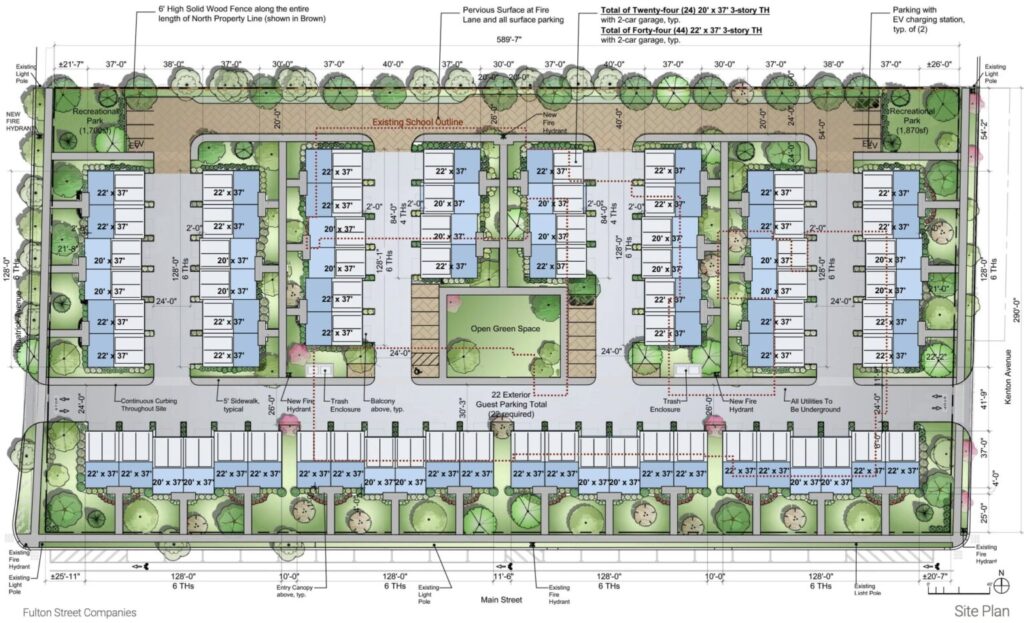
In response to concerns about the project’s density, Kate Portillo, a planning manager with Skokie’s Community Development Department, presented a map that showed the site will possess approximately 17.35 units per acre.
In comparison, the map appears to show that nearby blocks on Knox and Kilpatrick avenues primarily have a higher density of 19.81 to 29.9 units per acre.
The development will offer community benefits, Portillo said, like improvements to water pressure, stormwater drainage and below-grounding of electrical utilities.
The only zoning relief Fulton Street Companies sought and received was to reduce portions of a 24-foot wide drive aisle to a 20-foot wide aisle on the site. Skokie Fire Chief Nicholas Eschner said he confirmed his fire trucks can navigate those dimensions and serve the site’s buildings.
Still, some Skokie residents said they were concerned the property’s density will bring more cars, noise, pollution and hazardous traffic conditions.
Fee-in-lieu
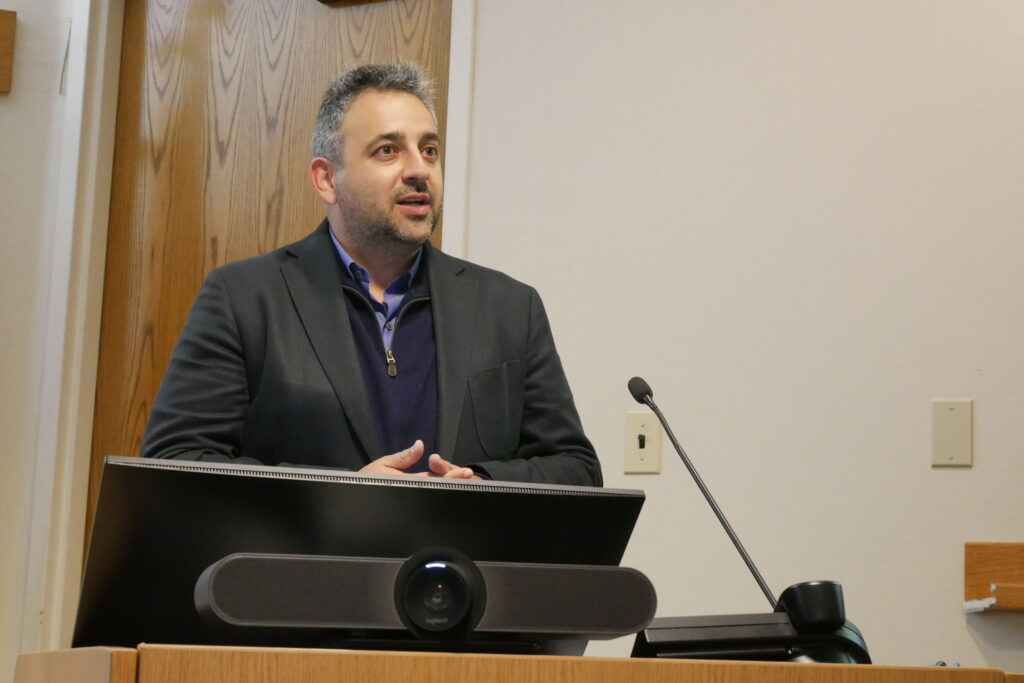
Village officials questioned why the development was unable to include onsite affordable housing.
Babel responded that funding restraints would require the project to have a higher density if it were to include even four units offered at “affordable” rates, which are determined by the area’s median income.
“It’s not just what I say, right. We have, on our side, a lot of different stakeholders, for perspective, even lenders and equity partners, etc. The economics drive what we’re able to develop and what we can build,” Babel said.
Still, Schechter forwarded a motion to effectively approve the development but deny Fulton Street Companies’s petition to pay a fee in lieu of providing onsite affordable housing units.
That motion failed with Trustees Iverson, Pure Slovin, Robinson and Mayor Ann Tennes voting against it. Trustees Schechter, Lissa Levy and Kimani Levy voted in favor of the amendment.
Notably, Skokie’s Inclusionary Housing Ordinance, which the board passed in May 2024, outlines that payments made in lieu of building affordable units will be deposited into a “segregated account known as the Village of Skokie Housing Fund.”
This fund reportedly is to be used for village housing programs like affordable owner-occupied units and land trusts for an affordable housing renovation program.
But no fees in lieu have yet been paid to the village since the Inclusionary Housing Ordinance was passed, and the fund’s programs have not yet been created, said Meredith Gioia, a village communications manager, via email.
“While the specific housing programs supported by the fund are still in development, any future expenditures will be determined in alignment with the ordinance and directed toward advancing affordable housing initiatives within the community,” Gioia said.
After the project was formally approved on Tuesday, Tennes said the board “has work to do” on its Inclusionary Housing Ordinance and must meet soon to make sure it is accomplishing its goals.
Increasing enrollment
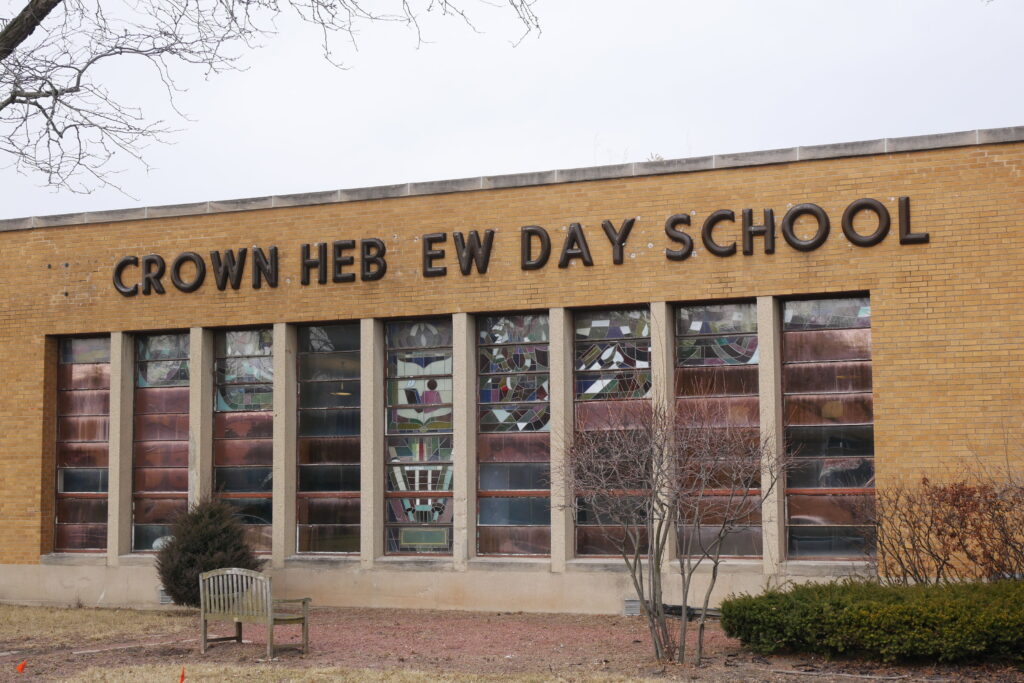
Mindi Zissman, a member of Arie Crown’s board of directors, said the nonprofit identified increasing enrollment and a need for more space at 4600 Main St. about 15 years ago.
The school developed a plan to improve its campus at the site, but the design was denied due to opposition from neighboring residents, Zissman said. Arie Crown has since consolidated its campus to 7787 Gross Point Road.
Luz and Associates #1, another developer, obtained approval from the Village Board in February 2024 to construct a 68 townhome-development at the site; however, that developer later “folded” and construction never began, Portillo said.
As previously reported by The Record, the Skokie Plan Commission voted unanimously on Oct. 16, to recommend that trustees approve Fulton Street Companies’ project, which bears a significantly similar design as the plan put forth by Luz and Associates.
“The redevelopment project of 4600 Main Street is not a standalone matter, it is a crucial component to the broader Arie Crown initiative,” Zissman said before the vote, noting the school’s long history in the village.
“It is essential to ensuring long-term viability of our school. Failure to move forward with this redevelopment will have far reaching and significant financial consequences for our school and impact the greater Skokie community and our Skokie families,” Zissman said.
The Record is a nonprofit, nonpartisan community newsroom that relies on reader support to fuel its independent local journalism.
Become a member of The Record to fund responsible news coverage for your community.
Already a member? You can make a tax-deductible donation at any time.

Samuel Lisec
Samuel Lisec is a Chicago native and Knox College alumnus with years of experience reporting on community and criminal justice issues in Illinois. Passionate about in-depth local journalism that serves its readers, he has been recognized for his investigative work by the state press association.
The Record is a nonprofit, community news site from former editors of 22nd Century Media
Our daily coverage of your government, schools, businesses and neighbors is not possible without your support.
Latest

The Record: Shortcut
Related Stories