
Expecting demand surge to continue, Niles Township Food Pantry pushes for monthly donors
When the federal government shutdown began on Oct. 1, threatening the disbursement of food assistance funds, Niles Township Supervisor Bonnie Kahn Ognisanti saw an increase in people lining up outside the agency’s food pantry the very next day.
Even though the shutdown has ended and families are starting to receive their Supplemental Nutrition Assistance Program funds again, Ognisanti does not expect the surge in families visiting the Niles Township Food Pantry to slow down anytime soon.
In response, the Township is making a push to add 1,000 regular donors who can contribute at least $20 a month.
More impacts to food security
The One Big Beautiful Bill Act that President Donald Trump signed into law earlier this year contains provisions that affect the eligibility and administration of SNAP funds.
A number of those changes, like the expansion of work requirements, are set to go into effect on Monday, Dec. 1. The bill also restricts individuals with certain immigration statuses from receiving SNAP funds and withdraws a portion of federal funding for the program from states.
Before OBBA passed in July, able-bodied adults ages 18-54 who lacked dependents were generally required to work, volunteer or participate in job training for at least 80 hours a month in order to receive benefits — about $177 per person in 2023.
The new law now applies those requirements to Americans ages 18-64 and those caring for a dependent child under 14 years old. The law also removed exemptions to the work requirement for unhoused individuals, veterans and young adults aging out of foster care.
Furthermore, OBBA determined that refugees, humanitarian parolees and individuals who were granted asylum are no longer eligible for SNAP benefits. This may have an impact on Skokie given its significant immigrant population, Ognisanti said.
Starting in 2027, the federal government will pay states 25% of SNAP’s administration costs as opposed to the current 50%. And starting in 2028, states that have a higher “error rate,” or those that provide too many or too few benefits to SNAP recipients, will receive less funding.
The U.S. Department of Agriculture, which has not yet released formal guidance on how it will enforce the new provisions, reported that SNAP served 41.7 million people per month in 2024. Other data shows SNAP served more than 1 million people in Illinois in March 2025.
But as a result of these and other changes to SNAP, the Congressional Budget Office estimated 2.4 million fewer people in an average month will participate in SNAP over the next 10 years.
Local impact
Ognisanti anticipates a number of local individuals who lose their SNAP benefits will then turn to the Niles Township Food Pantry, and her office decided earlier this month to take some of the ideas of mutual aid and “braid” them into the level of local government services.
Ognisanti’s team is encouraging local households to donate $20 a month. With approximately 40,000 households in Niles Township and about 3,5000 utilize the food pantry, Ognisanti said her goal is to get 1,000 households to commit to monthly donations.
That would provide the township a stream of $20,000 in monthly revenue — about how much money it spends each month to stock the remainder of its food pantry outside of the allotment it receives from the Greater Chicago Food Depository, a Chicagoland nonprofit.
“The reason why I think the sustaining donor campaign is important is that we need something that is dependable, that we can draw on as we keep getting hit with all of these changes,” Ognisanti said.
“It is very difficult to make a plan for the future when you don’t know what the future is going to look like, because crises after crises after crises keep coming towards us from the federal government,” Ognisanti said.
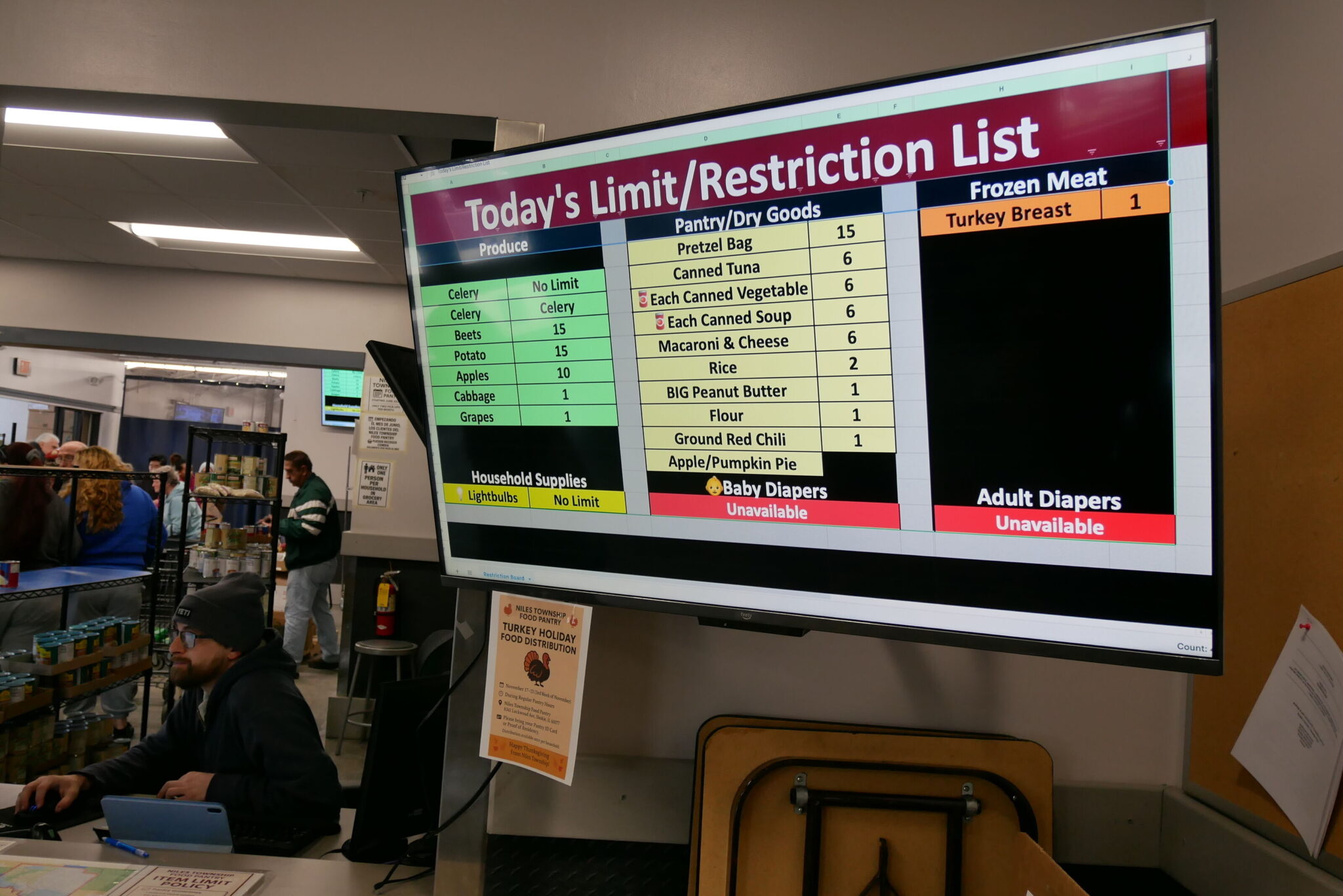
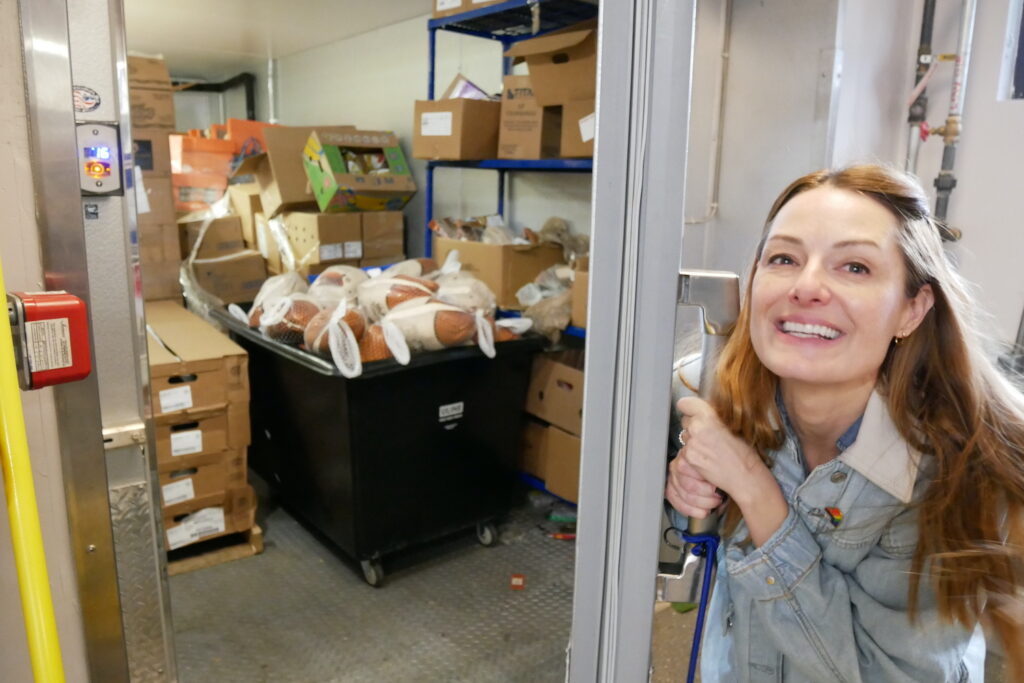
Fortunately, Niles Township’s Food Pantry’s shelves were well stocked the week of Thanksgiving. Donations are typically up during the November and December months, but Ognisanti said they started earlier this year so she hopes the rate will hold.
That helps at a fragile time when other economic factors — such as delayed SNAP payouts, mixed job reports, and a reported rise in heating costs — are poised to inflict financial stress and send individuals to food banks.
An average of 120 households visited the Niles Township Food Bank each day before the shutdown began (an average of 6,000 individuals visited it per month before November), and about 200 households are still lining up outside the food bank each day, two weeks after it ended.
Still, Ognisanti said she is optimistic that Niles Township residents will band together to help support and keep each other fed. Three weeks into starting the fundraiser campaign, 100 households have already committed to the $20 a month drive.
“Truly this is a community that is very plugged into each other,” Ognisanti said.
“You know, there is wealth in this community, in Niles Township — not like there is New Trier Township — but there is also a lot of poverty. So if people are comfortable, they’re not so removed from what it looks like for somebody to be struggling,” Ognisanti said.
The Record is a nonprofit, nonpartisan community newsroom that relies on reader support to fuel its independent local journalism.
Become a member of The Record to fund responsible news coverage for your community.
Already a member? You can make a tax-deductible donation at any time.

Samuel Lisec
Samuel Lisec is a Chicago native and Knox College alumnus with years of experience reporting on community and criminal justice issues in Illinois. Passionate about in-depth local journalism that serves its readers, he has been recognized for his investigative work by the state press association.
The Record is a nonprofit, community news site from former editors of 22nd Century Media
Our daily coverage of your government, schools, businesses and neighbors is not possible without your support.
Latest

The Record: Shortcut
Related Stories