
Suburban reports of immigration enforcement are down — as feds shift focus but pledge a return
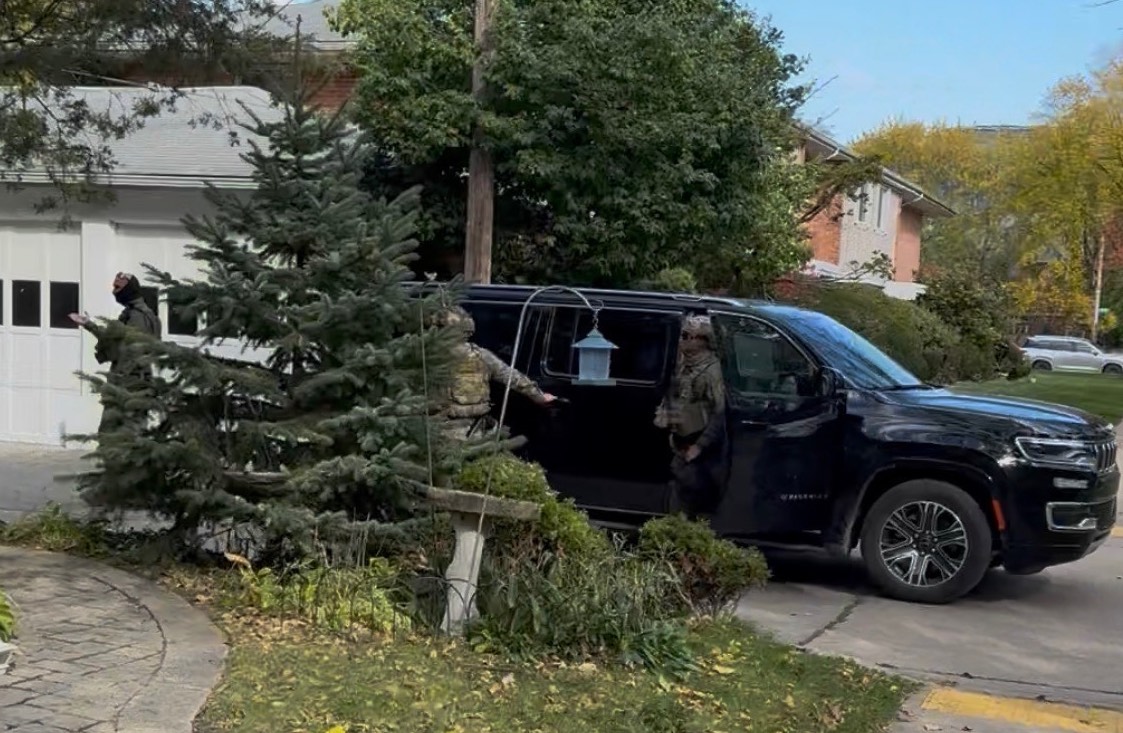
Over the past few months, immigration enforcement activity has surged across Chicagoland, and the North Shore was no exception.
Anxieties rose, neighbors organized and, amid calls from residents, some municipalities even clarified or bolstered their policies related to federal immigration operations, whether from U.S. Immigration and Customs Enforcement or border patrol.
Now, several media reports — including from local (Chicago Sun-Times, Block Club Chicago) and national (CNN) outlets — say that the Trump administration’s Operation Midway Blitz has reduced its activity in Illinois, as agents have moved east. Greg Bovino, head of U.S. Border Patrol, reportedly declared on social media earlier this month that federal agents have arrested 81 people in North Carolina.
The Record has not confirmed any reports of immigration enforcement in its coverage area since early November.
Yet Brandon Lee, a spokesperson for the Illinois Coalition for Immigrant and Refugee Rights, emphasized “there are still sightings and people are still being taken” by ICE and border patrol agents across the Chicago area.
The nonprofit offers a variety of legal services to immigrants in need of help and, over the past few months, its Eyes on ICE Network text program has communicated ICE sightings that are then often used by local grassroots “rapid response networks.”
Lee said call volume is one indicator that ICIRR has used to measure the level of ICE activity in the area. In early September, before the escalation of immigration enforcement activity started, the nonprofit received about 100 calls a day, the majority of which pertained to ICE sightings.
The nonprofit, Lee said, then saw a “dramatic increase” from late September to early November, receiving 500 calls a day on average as Operation Midway Blitz picked up; at its height, ICIRR received 1,500 daily calls primarily inquiring about immigration enforcement activity, Lee said.
Today, Lee said ICIRR is back to fielding about 100 calls a day, but not all of those calls pertain to ICE sightings; some include inquiries about the settlement of a lawsuit against the Department of Homeland Security, bond eligibility, or the pause of SNAP benefits.
Lee added that the ICIRR’s work is always adapting to the moment.
Moving forward, the relative pull back of ICE activity around Chicago means that the nonprofit’s network may focus on connecting with all the new volunteers who were galvanized by the moment and continuing to expand “Know Your Rights” training.
Local organizers are also using the quieter period to regroup and digest what they learned from their collective encounters with federal agents, according to Patrick Hanley, a Winnetka resident and candidate for the Illinois Senate who helped form a local rapid-response group amid ICE activity in October.
Hanley said the group grew to hundreds of participants who shared information and would respond to the scene of reported immigration enforcement activity to confirm, document and alert community members.
“I think it brought the community together during what felt like a pretty invasive operation from ICE,” he said.
Since “there’s always been lots of (immigration) enforcement in the suburbs,” Lee said the nonprofit remains aware that ICE and Border Patrol Agents are liable to eventually return to the Chicago and North Shore in mass again, as they did this fall.
“I think there’s a looming threat because Bovino himself has said that they would come back and arrest even more people the next time around, so I think we’re cognizant of that, we know it’s a possibility that they could come back and I wouldn’t necessarily say that it means our work is changing, it means that we’re just always in a state of preparation,” Lee said.
Hanley agreed, but hopes it’s not the case.
“We heard reports from Bovino and others that they might come back in spring,” he said. “We’re be here to be helpful and supportive if they do, but we hope they don’t and it’s all just bluster.”
The Record is a nonprofit, nonpartisan community newsroom that relies on reader support to fuel its independent local journalism.
Become a member of The Record to fund responsible news coverage for your community.
Already a member? You can make a tax-deductible donation at any time.

Samuel Lisec
Samuel Lisec is a Chicago native and Knox College alumnus with years of experience reporting on community and criminal justice issues in Illinois. Passionate about in-depth local journalism that serves its readers, he has been recognized for his investigative work by the state press association.
The Record is a nonprofit, community news site from former editors of 22nd Century Media
Our daily coverage of your government, schools, businesses and neighbors is not possible without your support.
Latest