State data: Higher absenteeism, above-state-average ACT scores for Skokie high-schoolers
Board president wants improved numbers, especially in math
Graduation rates in 2025 dipped slightly compared to the year before and chronic absenteeism increased by two points in 2024, but the number of students who took the ACT in Niles Township High School District 219 in April surpassed the state’s average in every one of the test’s categories.
The D219 Board of Education reviewed those findings and more on Nov. 11 after the Illinois Board of Education released its annual state report card on Oct. 30 highlighting the district’s and state’s progress toward various standardized benchmarks.
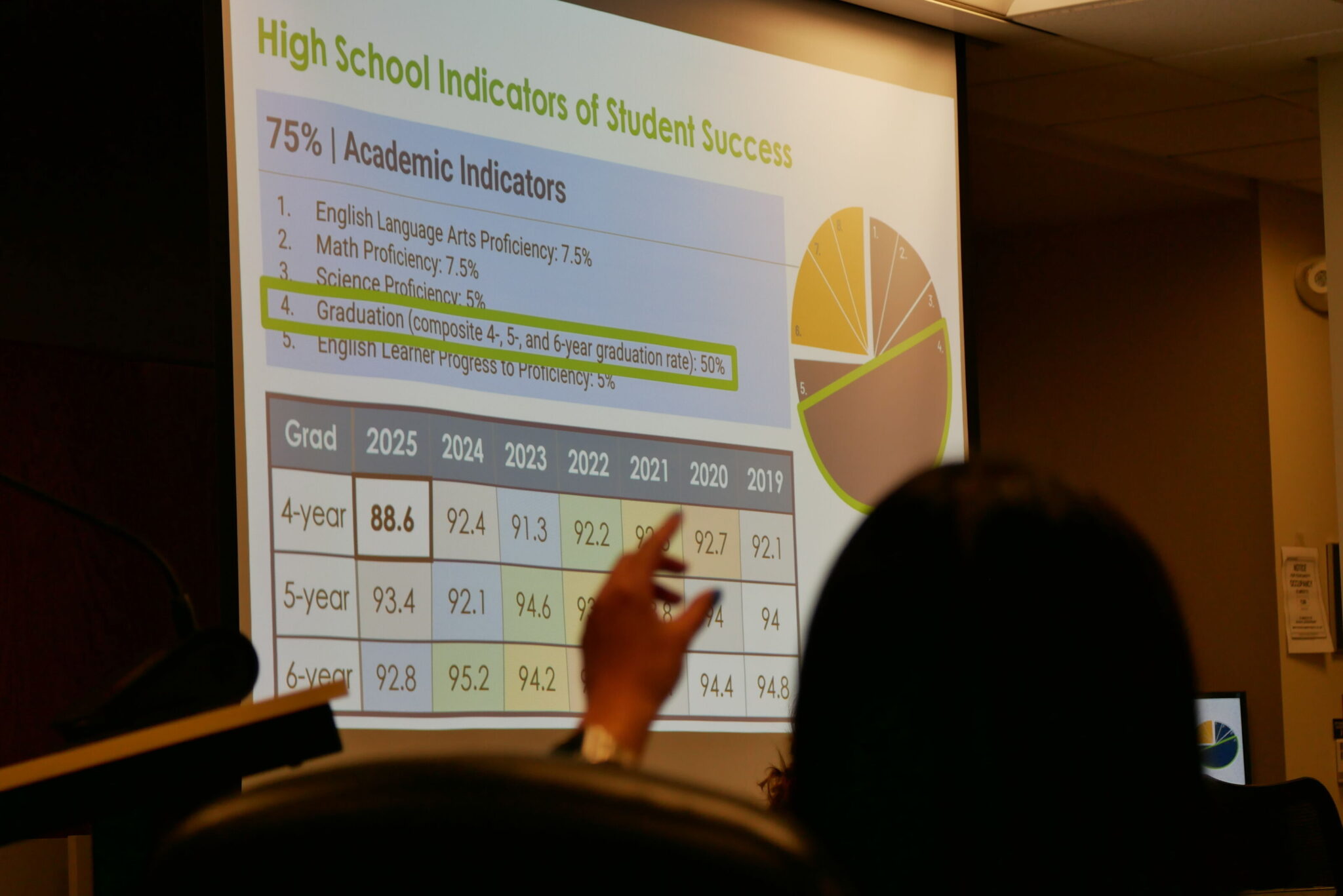
In a presentation to the board, Christine Gonzales, D219’s assistant superintendent for curriculum, pointed out that 48.4% of district students were measured as proficient in English language arts and 35.8% were measured as proficient in math last year.
That came in higher than the 40.6% of students who were measured as proficient in the English language arts and 29.2% who were measured as proficient in math last year across the state.
A total of 88.6% of D219 students graduated within four years in 2025, a decrease from the 92.4% of district students who graduated within four years in 2024. Five-year graduation rates did not see a drop — they were 93.4% this year and 92.1% in 2024.
Gonzales said the fact the district strengthened its curriculum last school year, “implementing more rigorous standards and consistency across classes,” along with the fact that less students dropped out last compared to the school year before, could have contributed to the decline of the 2025 graduation rate.
The drop-out rate in D219 was 1.8% in 2025, a decline from 2.1% in 2024.
Moving forward, Gonzales said the district can look at providing better support for students throughout the school year to ensure they stay on track and examine more opportunities for students to recover credits, like summer school.
While Gonzales primarily discussed the state report card’s academic findings, she said the D219 administration will provide to the board a presentation reviewing the other “school quality and success indicators” the state measures, such as truancy, at another date.
The state report card shows that chronic truancy in D219, defined as when a student misses 5% of school days within an academic year, was 16.7% in 2025. That is a jump compared to 11.1% of D219 students chronically truant in 2024 and 10.7% in 2023.
The report also shows an increase in the number of D219 students who don’t have permanent or adequate homes. A total of 2.7% of D219 students were measured as homeless in 2025, an increase from 1.9% in 2024 and 1.2% in 2023. The state reported 2.7% of all students as homeless in 2025.
Notably, the state report lacked historical data to compare D219’s 2025 ACT scores to previous recent years as the ISBE transitioned back to requiring students to take the ACT this spring year after its 9-year contract with the College Board, which provided the SAT, expired in 2024.
A total of 1,142 D219 students took the ACT this year with 58% of district students hitting the test’s English benchmark, 42% the reading benchmark, 34% the math benchmark and 32% the science benchmark.
In comparison, 138,820 total students took the ACT in Illinois this year with 47% at the test’s English benchmark, 34% the reading benchmark, 29% the math benchmark and 26% the science benchmark.
Gonzales noted that ACT experienced a nationwide technical issue on April 8, delaying the start time for D219 students taking the test that day by one hour. Some were allowed to finish the test another day and students received vouchers to retake the whole test.
A total of 150 D219 students took advantage of that voucher and retook the ACT on another day, but those scores are not reflected in this ISBE state report card, Gonzales said.
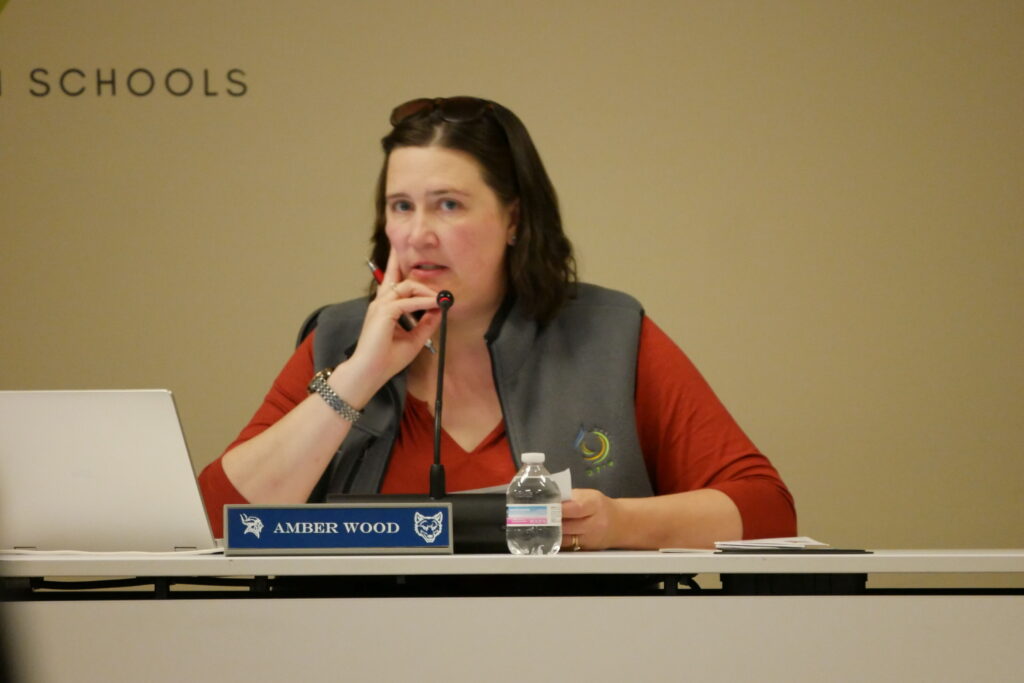
Board Chair Amber Wood highlighted D219’s ACT test scores struggled in math and she’d like to see 50% of all its students hitting the benchmark in all subjects.
Gonzales said there’s been a decline in math scores across the state as a result of the COVID-19 pandemic as the subject “requires a lot of cumulative knowledge.”
“So we can identify the causation, we think,” Wood said. “I am excited at some point to hear the solution or proposed solutions because as we’re seeing now, the seniors graduating this year are the first kids who were back full-time in school right after COVID.”
“And so I’m hoping there’s going to be that swing up, but also there’s that whole section of kids, about four years of kids, that we need to help support in some way,” Wood continued.
Gonzales added that the district will present its plan to the board next month for ACT prep courses, though she’s “not a fan of test prep courses, as good instruction is the best test prep you can get.”
The Record is a nonprofit, nonpartisan community newsroom that relies on reader support to fuel its independent local journalism.
Become a member of The Record to fund responsible news coverage for your community.
Already a member? You can make a tax-deductible donation at any time.

Samuel Lisec
Samuel Lisec is a Chicago native and Knox College alumnus with years of experience reporting on community and criminal justice issues in Illinois. Passionate about in-depth local journalism that serves its readers, he has been recognized for his investigative work by the state press association.
The Record is a nonprofit, community news site from former editors of 22nd Century Media
Our daily coverage of your government, schools, businesses and neighbors is not possible without your support.
Latest

The Record: Shortcut
Related Stories