Public-transit bailout includes public safety reform, will eliminate parking minimums
(Editor’s Note: This story was reported by Alex Harrison and Igor Studenkov for the Evanston RoundTable, a neighboring independent newsroom. It was shared with The Record as part of an ongoing collaborative effort.)
The Illinois General Assembly wrapped up its fall veto session early Friday morning, extending several hours past midnight to finish votes on several major bills that will now head to Gov. JB Pritzker for his approval.
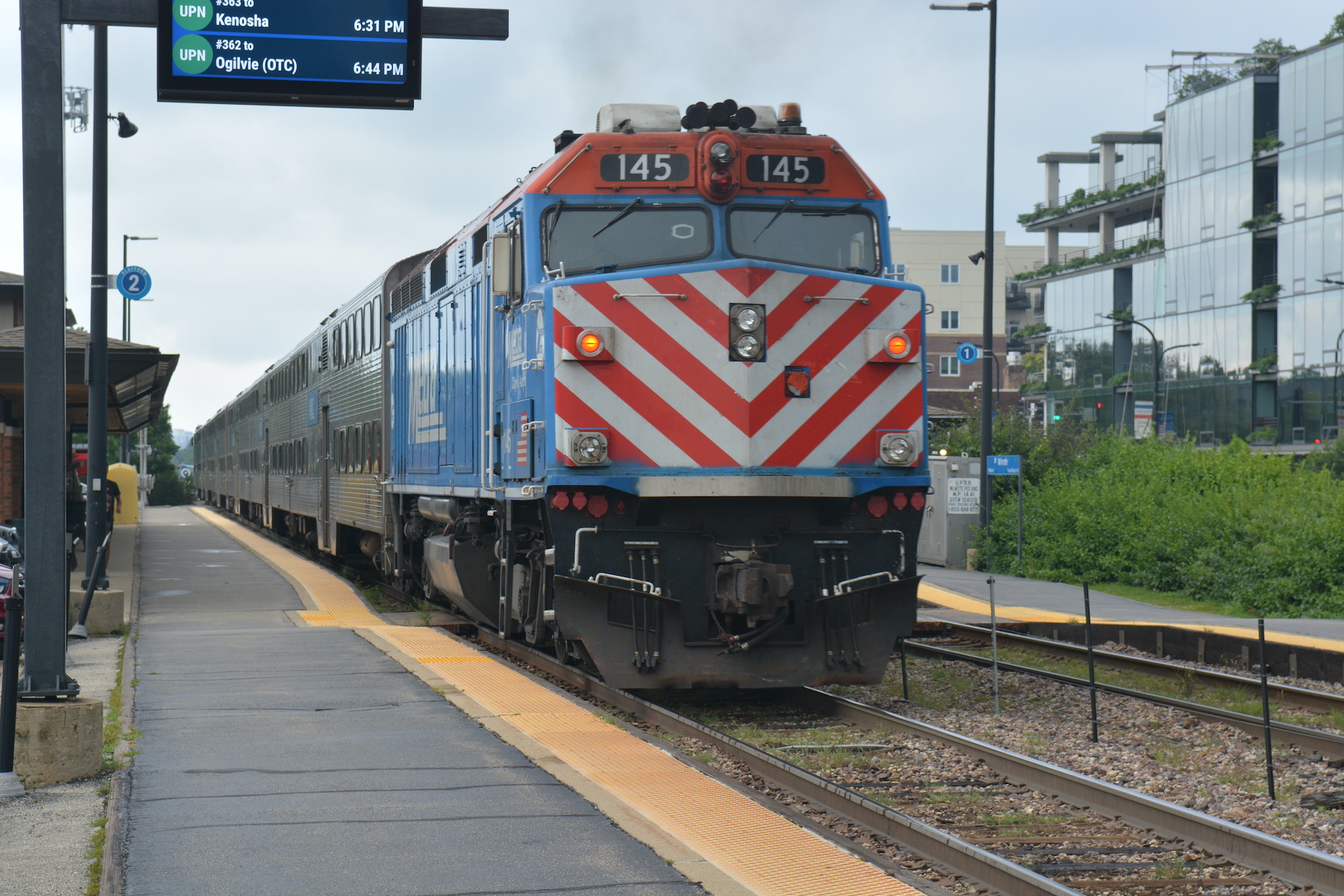
The headlining item was passage of a $1.5 billion revenue package to avert a Chicago-area public transit fiscal cliff. The bill includes significant reforms to the governance structures and oversight of the Chicago Transit Authority, Metra and Pace.
The bill renames the Regional Transportation Authority the Northern Illinois Transit Authority, strengthens the NITA’s oversight powers over CTA, Metra and Pace, and gives NITA responsibility for fares and large-scale purchases.
Under this proposal, the governor would appoint the NITA director, who previously would have been appointed by the speaker of the house and president of the senate.
Tax changes and the new composition of transit boards won’t take effect until next June and next September, respectively. Some of the newly minted NITA’s expanded planning and regulatory powers would not take effect until at least 2027.
The funding solution is particularly significant for paratransit services. Money for paratransit has already run out, and RTA had to transfer funds to temporarily bail it out. The proposed paratransit budget assumes that, without a funding solution, it would have to cut all but federally required essential services.
The final transit bill approved by the General Assembly keeps an RTA sales tax increase, which will increase by 0.25 percentage points, going up to 1.25% in Cook County.
The major change compared to the original version of the bill is the provider of the rest of the funding. The bulk of it would come from the Motor Fuel Tax, the sales tax on gas and diesel purchases, which usually goes to road projects. The bill redirects around $860 million to public transportation operations.
Another estimated $200 million would come from interest accrued in the Road Fund, a state fund that is typically used for road construction projects but can also be used for transportation purposes under the state constitution.
The bill also makes several reforms to improve public safety. It establishes a NITA Law Enforcement Task Force, which will be headed by the Cook County Sheriff and be “dedicated to combating violent and other types of crime with the primary mission of preservation of life and reducing the occurrence and the fear of crime” on all three transit systems.
It also creates the NITA Office of Transit Safety and Experience to develop public safety policies and solutions on an ongoing basis.
Other provisions call for NITA to set regional safety standards for transit vehicles and stations, and require transit agencies to equip all buses with “bus shield” security barriers, which is already standard on CTA buses.
Besides the revenues and reforms that captured most of the attention, the transit bill also incorporates the People Over Parking Act, which targets vehicle parking requirements for developments in local zoning codes.
The adopted act will as of June 1, 2026, prohibit all cities, including “home rule” cities like most of those in the North Shore, from imposing parking minimums on all developments (except hotels and other “transient lodging”) that are close to public transit. More specifically, parking minimums will be banned:
• Within half a mile of train stations and bus stops with multiple routes that combined have headways of 15 minutes or less during morning and afternoon rush-hour periods; and
• Within one-eighth mile, or 660 feet, of any street with bus route headways of 15 minutes or less during rush hour.
The Record is a nonprofit, nonpartisan community newsroom that relies on reader support to fuel its independent local journalism.
Become a member of The Record to fund responsible news coverage for your community.
Already a member? You can make a tax-deductible donation at any time.
The Record is a nonprofit, community news site from former editors of 22nd Century Media
Our daily coverage of your government, schools, businesses and neighbors is not possible without your support.
Latest

The Record: Shortcut
Related Stories