‘Distressing, Difficult and Frightening’: Skokie leaders respond to ICE with Village to consider new policy on Monday
Marci Sahinoglu has spent more than a decade as an attorney, first in criminal defense and then at the Illinois Attorney General’s Office in Skokie, where she defended state employees like police officers in civil rights cases against allegations of unlawful arrest and unlawful seizures.
After learning one of her neighbors in the Fairview neighborhood was “abducted” on Oct. 17 in an Immigration and Customs Enforcement operation, Sahinoglu came to a recent Village Board meeting to say it doesn’t take an expert to recognize what ICE is doing is wrong.
“My heart is broken. It shouldn’t feel any different when it’s the guy who cuts the lawn in the neighborhood next to you who’s taken, versus the neighbor who you’ve had dinner with and whose kid has jumped on your trampoline, but somehow it does feel different when it’s literally closer to home,” Sahinoglu said. “Those of us with privilege have an obligation to speak up.”
Sahinoglu was one of several people who stood before Skokie trustees on Oct. 21 to express their rising concern about ICE’s local activity and demand village officials take stronger action against the federal government’s operations.
Trustees voted unanimously in March to update Section 58 of its code, reaffirming, among other things, that village staff cannot provide information about individuals in custody to immigration detainers or provide them access to village facilities without a criminal warrant.
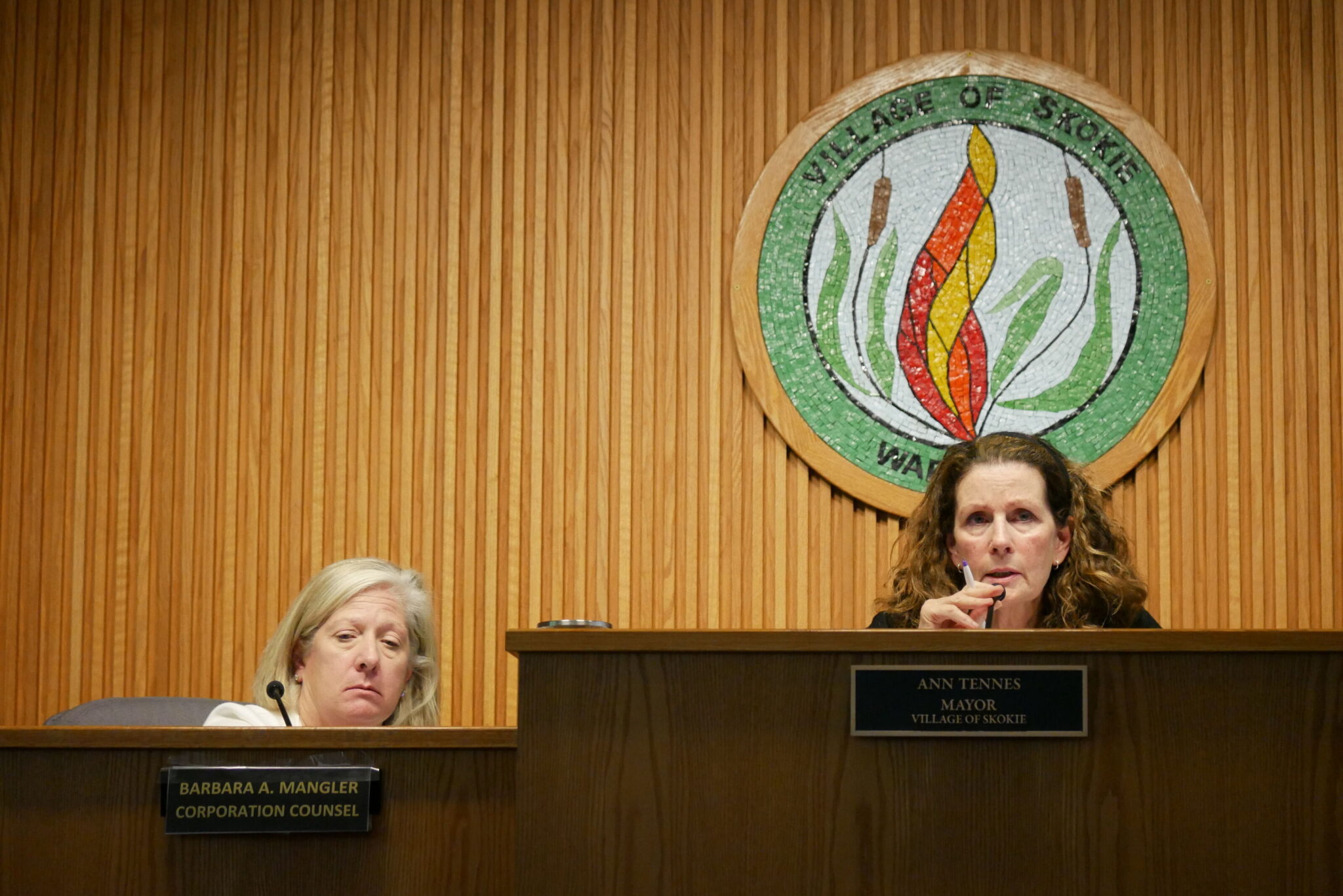
But Skokie’s interim corporation counsel Barbara Mangler clarified that the Village does not have jurisdiction to enforce that ordinance when ICE operations occur on property owned by other municipalities, like the Skokie Public Library and local school districts.
The agenda for the Village Board’s next meeting on Nov. 3 shows that trustees will discuss a recommendation from staff to add more language to its code that “strengthens and clarifies restrictions on Village-owned property for civil immigration enforcement.”
Prior to the public session, The Record checked in with Skokie’s public agencies to gain insight on the scope of ICE’s operations in Skokie and what measures they are taking in response.
Multiple agencies told The Record that immigration agents have apprehended Skokie residents. Residents have also testified in public settings about local ICE detainments.
Mayor Ann Tennes addressed the community on Halloween, Friday, Oct. 31, when immigration operations were confirmed in Evanston, Skokie, Wilmette and other surrounding communities.
“Today’s been a hard day in our community,” she said. “There’s been an enhanced presence of federal immigration enforcement. … This has been terribly distressing, difficult and frightening.
“Skokie is a community of immigrants, and we’re also a community that supports one another. Time and again we step up and stand together.”
ICE, however, in an email to The Record on Oct. 31 denied that its agents have made any arrests in Skokie.
“No ICE arrests have occurred in Skokie during Operation Midway Blitz,” an ICE Spokesperson said.
‘We help anybody’
The Village Board first passed an ordinance in 2017 that prohibited village staff from collecting individuals’ immigration status, engaging in immigration action without a criminal warrant and refusing village services based on a person’s immigration status.
Amanda Sabri, a social worker in Skokie’s Department of Health and Human Services, said the mayor and village manager tasked the Human Relations Commission in July with outlining the rights that ordinance enshrines and other resources that may be helpful for local immigrants.
That information, which the commission finalized into a flyer in October, is now published online and was distributed to residents, area school districts and service groups like the Early Childhood Alliance, said Michael Charley, Skokie’s director of Health and Human Services.
The village’s health department does provide residents with legal, food and rental assistance, and staff have connected the local business community with training from local groups like the Illinois Workers in Action about what to do if ICE visits their business, Charley said.
Moving forward, Sabri said the Human Relations Commission’s Community Engagement Subcommittee will work on programming that focuses on “social cohesion” to help make the local immigrant community feel welcomed and connected to Skokie.
“In general, the Village just wants to reaffirm our long-standing commitment of inclusion, dignity and respect for all,” Charley said.
“Our board stands behind that and as ICE activity started I think the Village Board wanted to not only remind but just reassure Skokie’s public that we have our own Chapter 58 of the village code that says it doesn’t matter what your immigrant status is, we help anybody in the community.”
The library, parks and schools
The Skokie Park District “is following the Village of Skokie’s policy” regarding ICE operations and has had no reports of ICE personnel on park property, said Jim Bottorff, the Skokie Park District’s director of communications, in an email.
Jane Hanna, the Skokie Public Library’s communications manager, said its existing policies prevent staff from sharing information about patrons without a subpoena, and its security team are within their rights to intervene if there is a disruption to the safe, appropriate use of the library
The library parking lot and building, however, are public property, which means “there’s little the library can do in terms of preventing ICE from coming in,” Hanna said.
“That being said, our staff have received guidance from our administration on how to respond if there are ICE agents on the property and one of the core values of librarianship is protecting patron privacy, so we are definitely committed to that,” Hanna said.
Ruth Sinker, communication manager for Skokie School District 73.5, said she is only aware of one family in the district who has had a member detained by ICE so far.
The district recently sent an update to parents outlining how staff will respond if ICE comes to a D73.5 building. The response includes asking for a signed judicial warrant to protect the disclosure of a student’s citizenship status without proper authorization.
Takumi Iseda, director of communications for Niles Township High School District 219 (Niles West, North and Central high schools), said there have been no confirmed reports of ICE on campus, but school staff have received updated information on procedures and federal laws to follow related to immigrant rights.
‘Enormous financial and emotional stress’
Both D219 and D73.5 have intergovernmental agreements with Niles Township. The two school districts administer funds to the government entity to support the social programs, like childcare services or rental assistance, that the township provides to qualifying families.
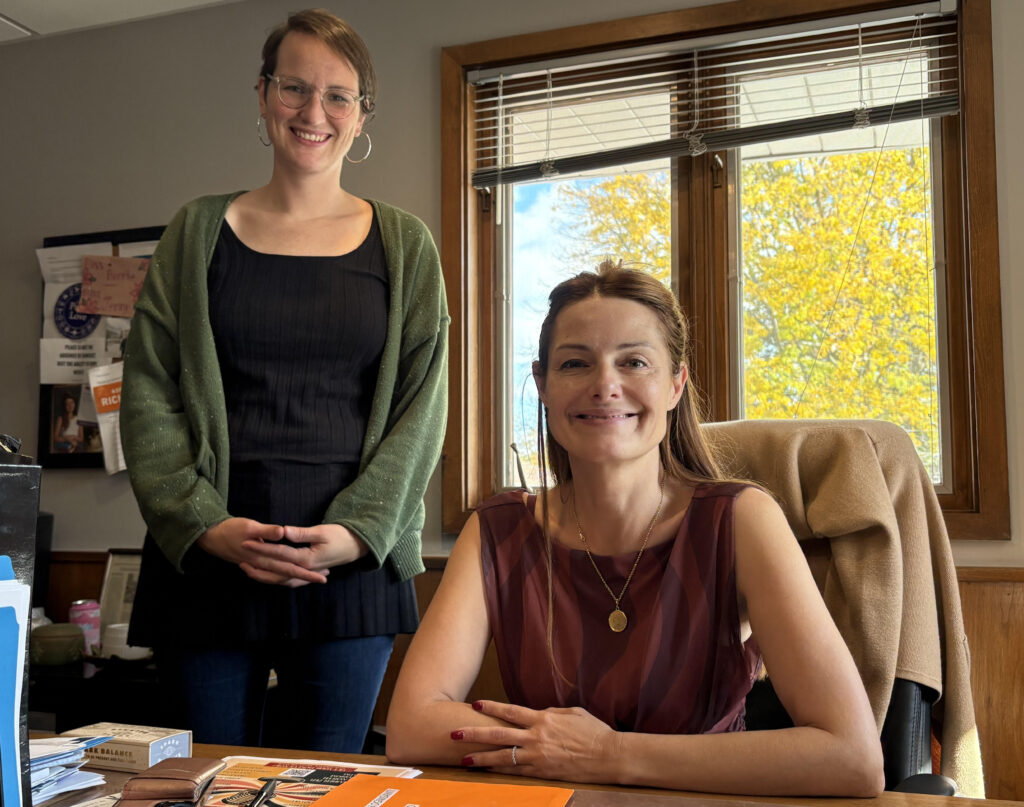
Bonnie Kahn Ognisanti, Niles Township’s supervisor, said the state limits who can receive assistance. The office can provide emergency eviction prevention to people with refugee status, a demographic that reportedly accounts for about a third of the township’s cases.
But since ICE has operated in Skokie and the surrounding communities, Ognisanti said the township has utilized more “flexible” funding sources, like intergovernmental agreements, to provide wrap-around services to local families struggling after a breadwinner was detained.
“We’ve helped people with immigration issues (before), but never because ICE was involved — never,” Ognisanti said, noting that the kind of stress her team is seeing since ICE’s Operation Midway Blitz began in September is new.
“We were never needing to help a family because a loved one was detained and removed, creating just enormous emotional and financial stress on that family and the community that surrounds the family and cares about them,” Ognisanti said.
The township is typically connected with families impacted by ICE via referrals from other social workers or even grassroots organizations. While Ognisanti said her office has helped Skokie families who have had a member detained by ICE, she declined to share how many.
Committed to creating a safe place that will always put the needs of everyone in its community first, Ognisanti said her office is careful not to take any actions that could potentially identify or endanger its users, many of whom are afraid to get help for fear of detainment.
To that end, the office doesn’t keep a list of those impacted by ICE. For a Know Your Rights workshop the township is helping facilitate with the North Shore Legal Aid Clinic, Ognisanti had attendees sign up using their initials only.
Ruth Orme-Johnson, director of social services at the township, said she would like to see ICE call off their immigration blitz so the community can return to a sense of “normalcy and safety.”
“So many of the people who are picked up (by ICE) are folks who have lived here for decades, people with small businesses, people who have owned houses and had multiple generations,” Orme-Johnson said. “It’s just incredibly corrosive to the social fabric for some of these immigrant communities, and therefore, for all of us.”
‘Make it crystal clear’
On Oct. 21, Skokie resident Kimberly Polka placed her phone underneath an overhead projector in the Skokie council chambers to show trustees a recent confrontation in Evanston she filmed between herself and an ICE agent.
Polka said the agent confronted her when she saw them near an unattended landscaping truck. She urged the Skokie Village Board not to allow federal agents to use village-owned property to detain members of the community, emphasizing that “silence is complicity.”
“Please make it crystal clear that ICE is not permitted to use our village property in their campaign of cruelty and terror,” Polka said. “November 3 is too long; Will County has done it. Evanston has done it — Chicago, Cook County, Lake County. We are behind the ball.”
Chicago Mayor Brandon Johnson signed an executive order on Oct. 6 prohibiting ICE from using city-owned properties and requiring spaces that may be used for immigration federal enforcement operations to be identified with clear signage.
The Cook County Board, Lake County Board, City of Evanston have all since followed suit, approving similar measures in October. On Oct. 28, Wilmette residents pleaded with village officials to act swiftly — two days later ICE agents were confirmed operating in the area.
As Skokie’s Human Relations Chapter already forbids staff from assisting with immigration enforcement by providing access to village facilities, it remains to be seen what more language trustees can add to its code that will ensure local residents feel more safe and secure from ICE operations.
“I should not have to hesitate before asking my children’s 70-year-old Mexican grandparents to take them to the library or around the corner to the park or run an errand because I worry about them being stopped, questioned, or even worse, detained simply based on the color of their skin,” said Kristina Fleck, another Skokie resident, on Oct. 21.
“That is not the definition of safe access to our services,” Fleck said.
The Record is a nonprofit, nonpartisan community newsroom that relies on reader support to fuel its independent local journalism.
Become a member of The Record to fund responsible news coverage for your community.
Already a member? You can make a tax-deductible donation at any time.

Samuel Lisec
Samuel Lisec is a Chicago native and Knox College alumnus with years of experience reporting on community and criminal justice issues in Illinois. Passionate about in-depth local journalism that serves its readers, he has been recognized for his investigative work by the state press association.
The Record is a nonprofit, community news site from former editors of 22nd Century Media
Our daily coverage of your government, schools, businesses and neighbors is not possible without your support.
Latest

The Record: Shortcut
Related Stories