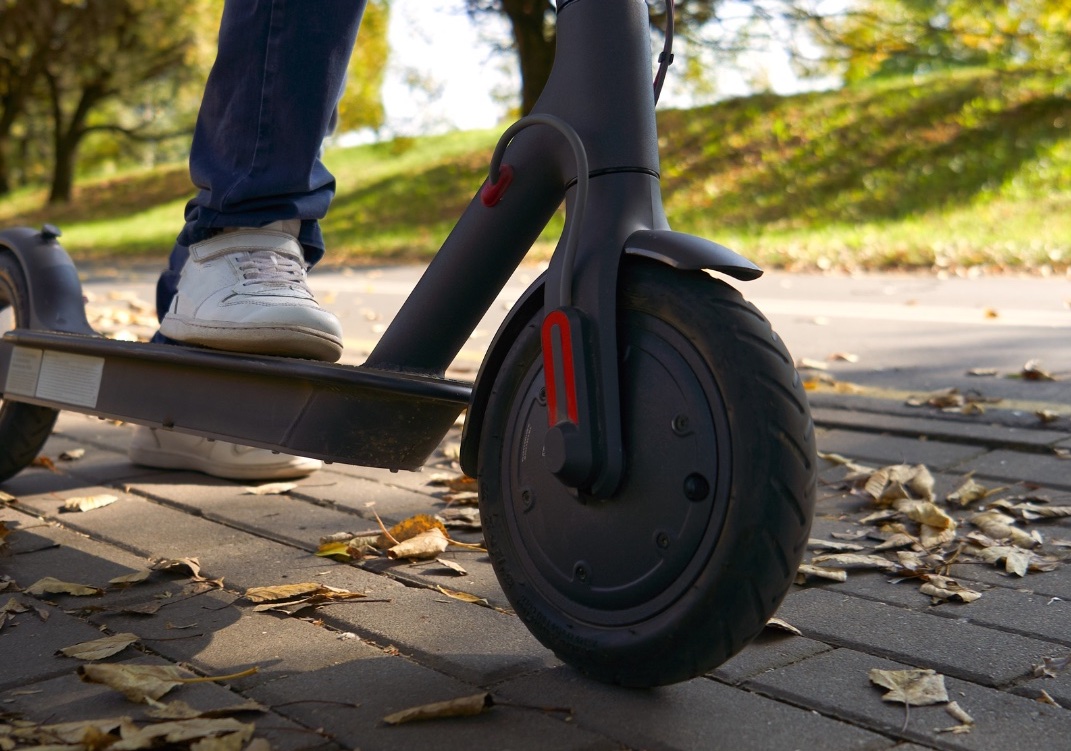
Winnetka moving to regulate e-scooters — with possible carve out for e-bikes
Winnetka officials are joining the growing chorus of local municipalities looking to take action on a “hot-button” issue they say is leading to rapidly increasing safety concerns around town.
Village trustees during a Tuesday, Sept. 9 study session devoted more than an hour of public debate to potential ordinances that could usher in new regulations on the use of electric scooters and bikes and other motor-driven vehicles.
The council ultimately decided to direct staff to prepare a pair of ordinances that it will formally consider this Tuesday, Sept. 16 during its regular meeting.
Trustees reached enough of a consensus to instruct staff to separate the ordinances so that one will consider potential regulations for electric scooters and motor vehicles while the other contemplates possible rules for electric bikes.
Winnetka Police Chief Brian O’Connell opened the session by highlighting what he described as a “significant increased usage in our area” while also providing an overview of current Illinois laws.
O’Connell told the council that “technology is much further along than Illinois law,” adding that the state law does not always effectively regulate new devices.
“Although the technology in these devices has made significant advancements, state regulations for these devices have remained stagnant,” O’Connell wrote in a village memo to trustees. “Staff have witnessed dangerous operations of these devices, often from operators who have minimal experience regarding safe driving on the roadway.”
The village’s top cop also spent a portion of the meeting briefly summarizing how some nearby towns are handling regulations.
Glencoe trustees recently passed an ordinance placing new regulations on motor-driven vehicles, including electric scooters and electric bikes that went into effect on Aug. 30, The Record reported.
Highland Park was one of the first local towns to put new rules in place as city councilmembers voted in early July to approve regulations that determined electric bikes and electric scooters can no longer be operated on Highland Park-owned bike trails, parks, parking lots and sidewalks, as previously reported by The Record.
Amendments approved by Highland Park officials also added age restrictions, stating that riders must be older than 16 to operate a low-speed e-bike or older than 18 to operate a low-speed e-scooter.
Towns with newly established ordinances have seen a “dramatic decrease” and the majority of feedback is positive in regards to regulations, O’Connell told the council of his conversations with other local police chiefs.
Additionally, O’Connell also presented results from the 2025 Winnetka Caucus annual survey that showed nearly 68% of respondents listed rules related to e-bikes, e-scooters and motorized under-16 vehicles as “very important.” Another 18% of respondents said those rules were “somewhat important.”
“We’ve covered a lot of topics in my five-plus years in this caucus as a trustee of the village and this is a hot button,” Trustee Rob Apatoff said.
“This is really a hot-button because it will end in tragedy as we are seeing right now and that’s what I think worries so many parents that even don’t buy these bikes is that their kids are going to get into someone else’s bike,” Apatoff later added.
While officials did not clearly state the specifics that will be included in the ordinances to be considered Tuesday, the council did seem to show favor toward conditions that would place age and driver’s license requirements as well as prohibit the use in some areas of town, including the Green Bay Trail and the downtown business district.
Trustees placed the majority of their focus on prioritizing regulations for higher speed e-scooters and motorized bikes — which they often referred to as “moto bikes” and compared to dirt bikes.
A key reason they’re planning to consider the two separate ordinances is to avoid any “unintended consequences” new regulations might have on e-bikes, which the council agreed are largely being used responsibly and need much less oversight.
Trustee Kirk Albinson did note that he had “some concerns” over what was being discussed, cautioning that the council may be trying to achieve too many outcomes with one overarching ordinance. He said that he feels like the board is using “a sledgehammer when we need a little bit of a scalpel.”
Albinson said that he agrees on moving quickly to address concerns related to the motorized vehicles but in regards to regulations related to e-bikes, said he believes in a more thought-out and pragmatic approach.
“While I encourage us to move quickly on the e-motos, I believe patience and doing this thoughtfully will be helpful and it will benefit the families that have invested in these technologies and these modes of transportation for their families,” he said.
Village President Bob Dearborn said that he doesn’t view the discussions as a “rush in judgement.”
“This is not an impromptu ordinance coming up,” Dearborn said. “There has been a lot of thought behind this and a lot of concern from the public. And regionally you can see other communities (addressing this).”
O’Connell hopes any regulations the council determines would lead to the “same type of response that other municipalities have seen in the dramatic decrease” in use,” he said, adding that he feels “there’s tremendous value in education.”
The Record is a nonprofit, nonpartisan community newsroom that relies on reader support to fuel its independent local journalism.
Become a member of The Record to fund responsible news coverage for your community.
Already a member? You can make a tax-deductible donation at any time.

Martin Carlino
Martin Carlino is a co-founder and the senior editor who assigns and edits The Record stories, while also bylining articles every week. Martin is an experienced and award-winning education reporter who was the editor of The Northbrook Tower.
The Record is a nonprofit, community news site from former editors of 22nd Century Media
Our daily coverage of your government, schools, businesses and neighbors is not possible without your support.
Latest

The Record: Shortcut
Related Stories