District 65 board votes 4-3 to advance Dewey and Lincolnwood closures
(Editor’s Note: Hope Perry and Margo Milanowski reported this story for Evanston RoundTable, a neighboring independent newsroom. It was shared with The Record as part of an ongoing collaborative effort.)
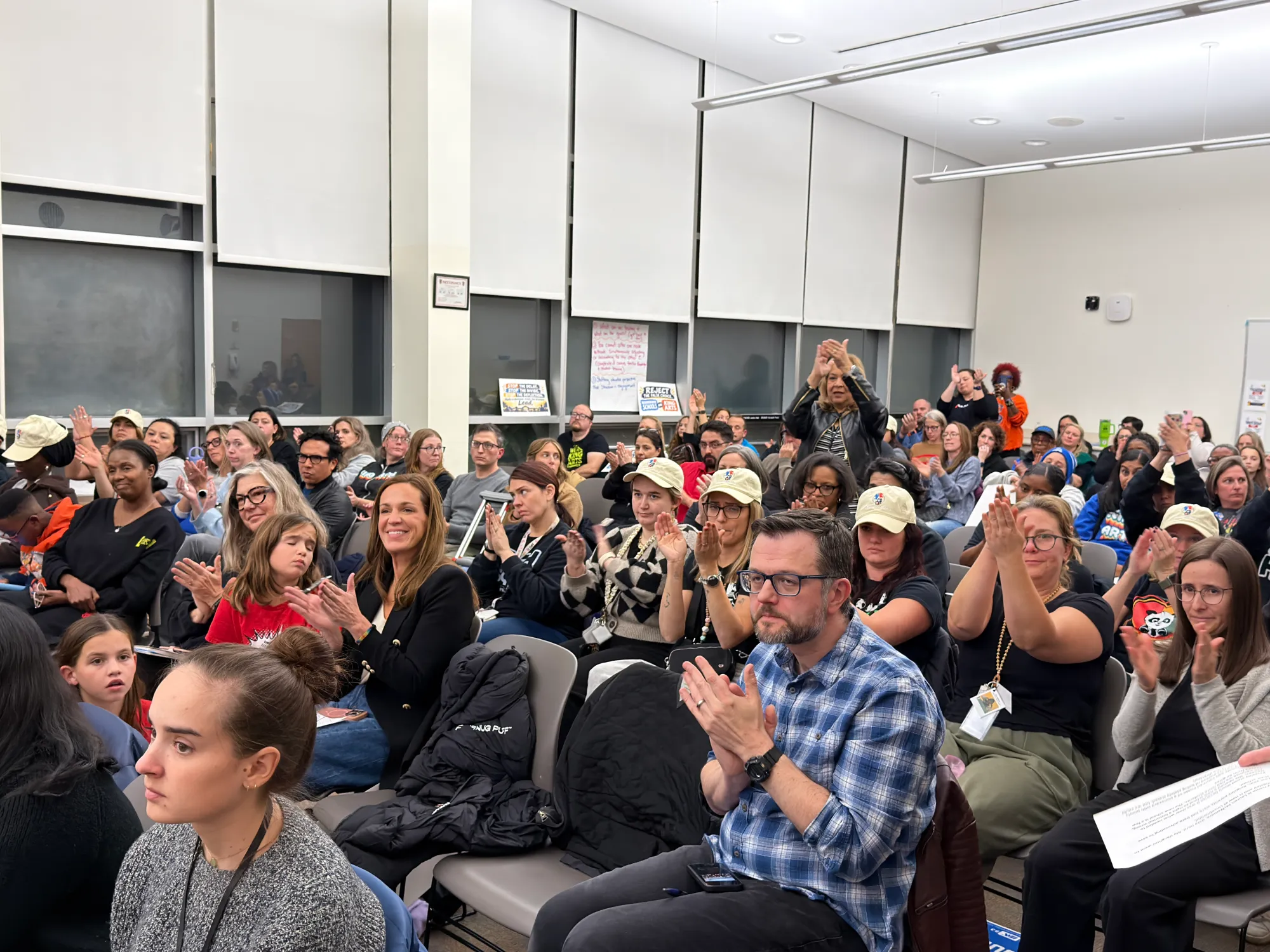
The Evanston/Skokie District 65 School Board voted 4-3 Monday to trigger state-mandated hearings on the potential closure of both Lincolnwood and Dewey elementary schools.
Board President Nichole Pinkard, Vice President Chris Van Nostrand and member Maria Opdycke voted against the move, while members Pat Anderson, Sergio Hernandez, Mya Wilkins and Andrew Wymer voted in favor.
The vote came after several hours of intense discussion, during which the public also learned that James Rachlin and Andrew Mace of financial advisory firm Meristem, who were called in to do an independent review of some aspects of the district’s budget plan, identified a recurring error in financial projects overstating revenue by $7.3 million annually.
Rachlin and Mace said on Monday that they noticed a potential issue with the district’s tax revenue figures last week, and that they were still working on their report as of Monday morning.
“Even though it’s going to be even more difficult than we anticipated, this plan will balance the budget,” District 65 interim Superintendent Eric Witherspoon said. “We’re not going to be able to invest as much in capital as we anticipated. We won’t be able to rebuild the fund balance.”
Background
Amid an ongoing financial crisis, District 65 proposed sweeping budget cuts at its Oct. 13 board meeting, including the closure of Lincolnwood and Dewey, along with ending district-provided Head Start. The closure of Lincolnwood would see the STEP program for students on the autism spectrum moved to Orrington, and the Two-Way Spanish/English Immersion program at Dewey moved to Lincoln.
District administrators have said that closing Lincolnwood and Dewey would save the district about $3 million annually, counting both staffing and facilities savings.
That plan was also set to eliminate the district’s School Age Child Care program, but the district walked that back after it came to a new agreement with the union representing childcare staff.
The proposed cuts have faced widespread community scrutiny, particularly after some Dewey parents discovered a $27.35 million error in the district’s five-year financial projections. A group of parents and educators also found that proposed staffing cuts to the early childhood program would eliminate all early childhood special education staff, a claim that district officials pushed back against without providing updated figures.
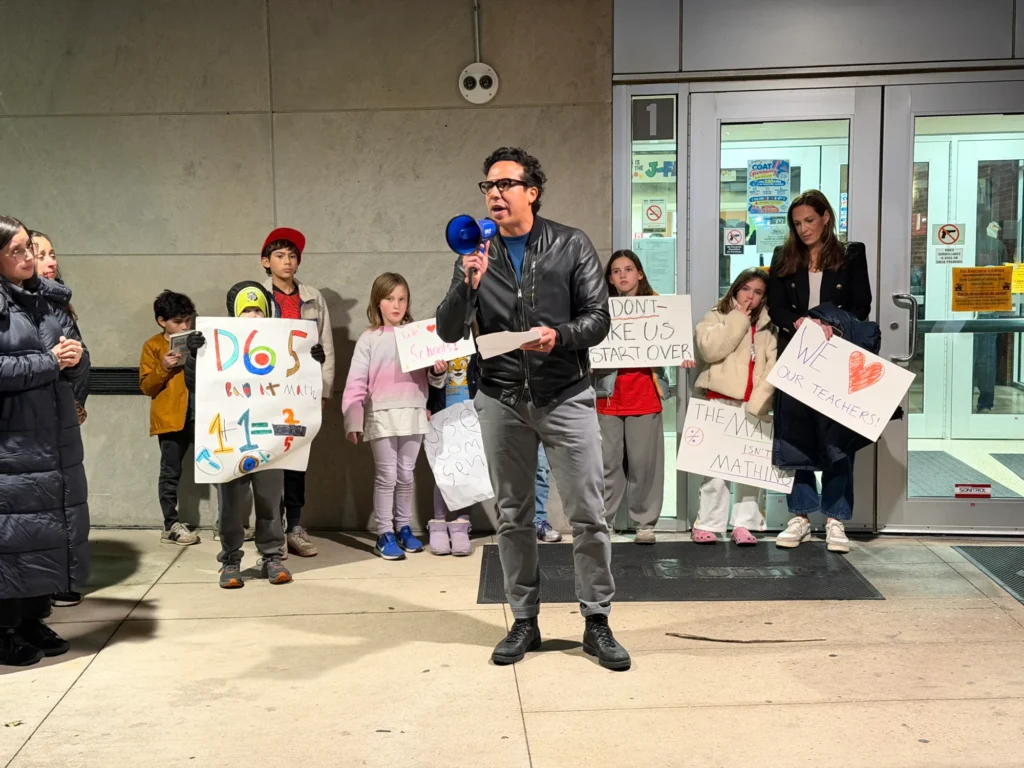
Over the weekend, parents also pushed the district to explore other alternatives to its budget proposal.
$7.3 Million Error
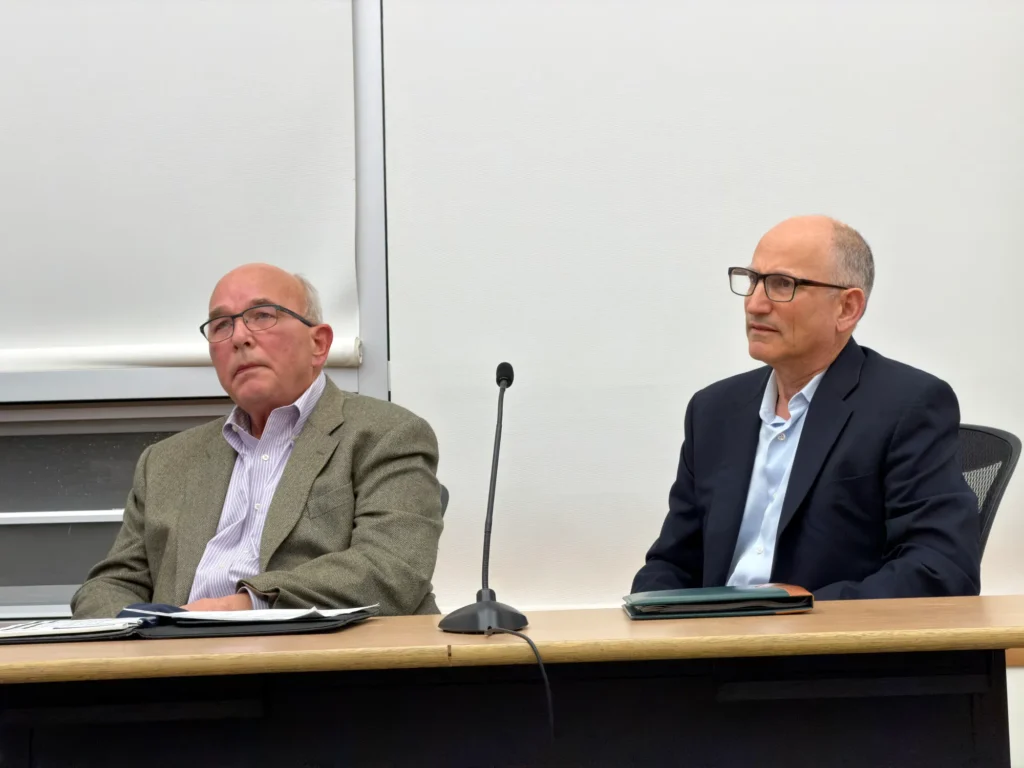
Following public comment on Monday (which you can read about in the RoundTable’s live blog), Witherspoon introduced findings from Rachlin and Mace, who announced the $7.3 million annual revenue error.
District 65 Chief Financial Officer Eric Miller then shared a slide showing that corrected tax revenue figures would put the district in a worse financial position than originally projected over the next several fiscal years
Miller said the updated financial projections would also require the district to reduce its capital expenditures to $2.7 million each year — down from the $8 million that was presented in the district’s original plan (once double-counting errors were taken into account, as well).
Rachlin said as the firm reviewed the district’s financial models, they identified an issue with the initial assumptions about property taxes going into the model.
Rachlin said Monday that Meristem was not asked whether the plan was “good” or “workable,” but if the district’s financial numbers were accurate.
“If we can’t validate the savings we’re projecting by school closures, transportation routing — making sure that we’re sure that this plan is going to accomplish what we think its going to accomplish — I don’t think its prudent for us to move forward with it,” Opdycke said.
Wymer also pointed out that, according to the newest financial projections from Miller, the district’s fund balance would fall to “catastrophically low” levels without action, a view echoed by Wilkins.
Van Nostrand questioned how the district would make up the $7.3 million in lost revenue annually and whether the administration plans to close more schools to account for the error. Witherspoon said the $7.3 million would come from a slower build-up of the district’s fund balance and money previously allocated to capital improvements.
Wymer questioned how it would be possible for the district to address its capital needs while putting aside just $2.7 million for them each year.
“Is that sustainable?” he asked. Miller said it was, though he then rephrased to say the district “would have to live with” the $2.7 million figure for the time being.
Future Funding
Opdycke reminded fellow board members and administrators that, after the proposed closure of Lincolnwood was announced, there was some discussion about constructing a larger building on the property.
Witherspoon said that could best be accomplished through a capital referendum. If the district did rebuild and reopen Lincolnwood, he said, additional money from that referendum could be used to renovate other aging buildings.
Van Nostrand questioned why, over the past several weeks, administrators said that $8 million per year in capital expenditures was not enough, but that $2.7 million per year was now considered adequate in updated projections.
He then read a prepared statement, asking why it appears there has been a “retrenchment” in the district’s proposed plan, “which appears to solve fewer and fewer problems as we go.” He said the district’s plan was not forward-looking enough, and that it buys just “three years of cash.”
“It is not strategic, and it is not comprehensive,” Van Nostrand said.
Wymer said he supports the plan, citing figures from the district showing that failing to close Dewey and Lincolnwood or make cuts to the early childhood program would have negative financial consequences. He called not moving the plan forward “kicking the can down the road.”
Pinkard then read her own prewritten statement, saying she had “a fundamental problem” with closing schools and then asking the public to support a referendum
Anderson said she is “trusting in the plan, but not without question,” and that she wants to see a fuller financial audit before approving school closures.
After Anderson’s statement, the board voted 4-3 to proceed with state-mandated hearings on the potential closure of both Lincolnwood and Dewey.
Opdycke asked the district to employ Rachlin and Mace of Meristem to validate assumptions and savings projections from the district’s budget, and also to create a base-case budget scenario, a conservative scenario and an optimistic scenario.
The board, in an informal poll, unanimously agreed to this so long as the scope of work and timeline are better defined in the future.
After The Vote
Following the vote, many attendees left the meeting. The RoundTable interviewed several parents on their way out.
Kelly McCabe, a Washington Elementary School parent and member of both the Legion of Data Nerds and the Washington Task Force parent groups, told the RoundTable she felt “defeated” and “disillusioned.”
“The hearings that they schedule, we went through them last year,” McCabe said. “I was there last year and … it’s a foregone conclusion. And I would love to see [board members’ minds] change, but I have zero hope that that will be the case.”
Through tears, Dewey parent Liz McGuinness told the RoundTable, “It’s not fair to the students. It’s not fair to the teachers. It’s short-sighted and not fair. And that’s all I have to say.”
The Record is a nonprofit, nonpartisan community newsroom that relies on reader support to fuel its independent local journalism.
Become a member of The Record to fund responsible news coverage for your community.
Already a member? You can make a tax-deductible donation at any time.
The Record is a nonprofit, community news site from former editors of 22nd Century Media
Our daily coverage of your government, schools, businesses and neighbors is not possible without your support.
Latest

The Record: Shortcut
Related Stories