Skokie Village Board’s new public-comment rules include no more slideshows
Over the past four years, Lauren Grodnicki has regularly participated in the public comment portion of Skokie Village Board meetings by using the council chamber’s projector to display a slideshow presentation.
The slideshows have featured everything from infrared photos of parking lots to diagrams about the water cycle. They served as a visual aid for the Skokie resident while she advocated for environmentally sustainable initiatives.
Grodnicki and other public speakers, however, can no longer show slideshow presentations, use overhead projectors or provide comment during certain Committee of the Whole sessions after the Village Board voted unanimously on Monday to lock in new regulations.
“I feel like the effectiveness of my comments is going to decrease because a lot of what I’m showing is pictures,” Grodnicki said.
“It’s true that I can send it to the board as an email, and they’ll see it and they have access to it so they can call it up as a document while I’m talking, but nobody else can see it. And it’s actually been really effective at educating the public and then they go and address the board members too.”
The village’s updated Rules Governing Public Meetings and Public Comment codify policies the Village Board was already practicing after Mayor Ann Tennes introduced a set of “pilot” public comment policies in May 2025, said Patrick Deignan, Skokie’s communications director, in an email.
After her election in 2025, Tennes reportedly added an additional 30-minute public comment period at the start of Village Board meetings, while still maintaining the existing public comment period Village Board agendas offer at the end of meetings.
Among other things, the freshly adopted public comment rules keep that additional public comment period in place, but prohibit speakers from using the village’s “audio-visual/projector system” for overhead presentations or displaying signs if they “interfere with the conduct of the public meeting.”
Public speakers will not be required to state their home address, but the Village Board’s presiding officer may ask the speaker to state whether they are a Skokie resident and allow Skokie residents to speak before all other persons desiring to speak, village documents show.
Public speakers “may not approach the dais or hand out materials directly to members of the Public Body,” but they can give their materials to the Deputy Village Clerk or email their comments (to publiccomments@skokie.org), village documents show.
When a Committee of the Whole meeting is scheduled to take place on the same night as a regular Village Board meeting, per the new policies, village staff will no longer provide a public comment period during the Committee of the Whole meeting.
As the public comment portions allotted before and after the meeting are designated for people to address matters not on the agenda, the approved public comment rules still allow the audience to speak before the trustees on specific action items.
“The Village strongly believes that public participation and input enhance the effectiveness of local governance and improve the quality of its decisions,” Deignan wrote to The Record.
“Consistent with the authority granted under the Illinois Open Meetings Act, the Village’s public comment policy is intended to ensure that public meetings are conducted in an orderly, efficient, productive and respectful manner by both members of boards and commissions and the public.”
In prohibiting slideshows and public comment at some Committee of the Whole hearings, Tennes said the village “cannot be careful enough” to the risk of malware and the board needs to be done with the committee hearing in time to begin a Village Board meeting with “clear minds.”
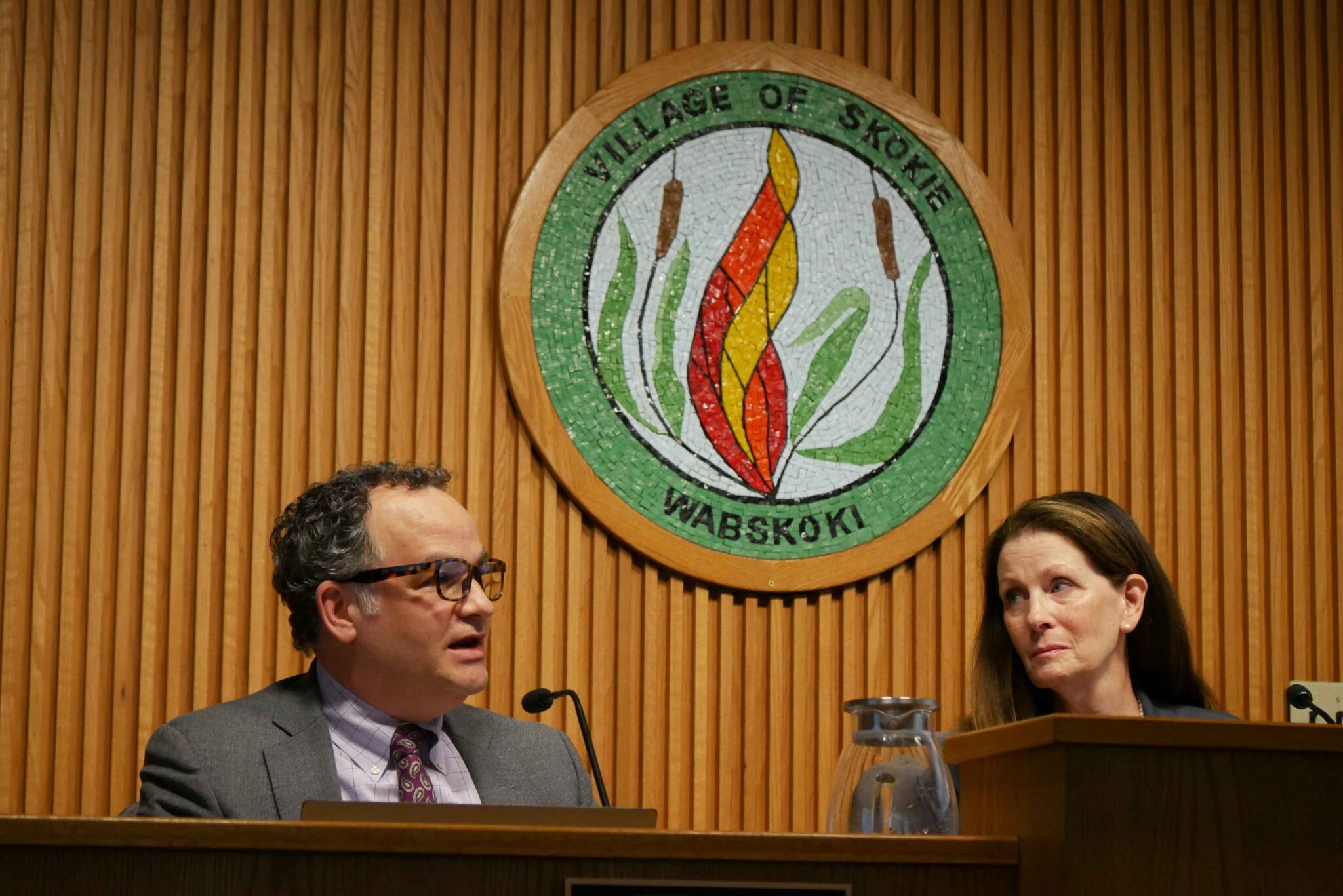
Stew Weiss, a member of Skokie’s corporation counsel, noted on Monday that the state’s Open Meetings Act provides sparse guidance to municipalities when it comes to public comment rules.
“Any person shall be permitted an opportunity to address public officials under the rules established and recorded by the public body,” the law says.
Most municipalities apparently do not provide public comment periods before and after their meetings start.
For example, Chicago has very “strict” rules by only offering 30 minutes for a city of approximately 3 million people, Weiss said.
The tension in drafting public comment rules lies in part by ensuring the largest quantity of speakers can address the board while also making sure the board can conduct its business, Weiss said.
The Record is a nonprofit, nonpartisan community newsroom that relies on reader support to fuel its independent local journalism.
Become a member of The Record to fund responsible news coverage for your community.
Already a member? You can make a tax-deductible donation at any time.

Samuel Lisec
Samuel Lisec is a Chicago native and Knox College alumnus with years of experience reporting on community and criminal justice issues in Illinois. Passionate about in-depth local journalism that serves its readers, he has been recognized for his investigative work by the state press association.
The Record is a nonprofit, community news site from former editors of 22nd Century Media
Our daily coverage of your government, schools, businesses and neighbors is not possible without your support.
Latest

The Record: Shortcut
Related Stories