
Skokie resident wins regional Emmy for documentary on Chicagoland immigrants
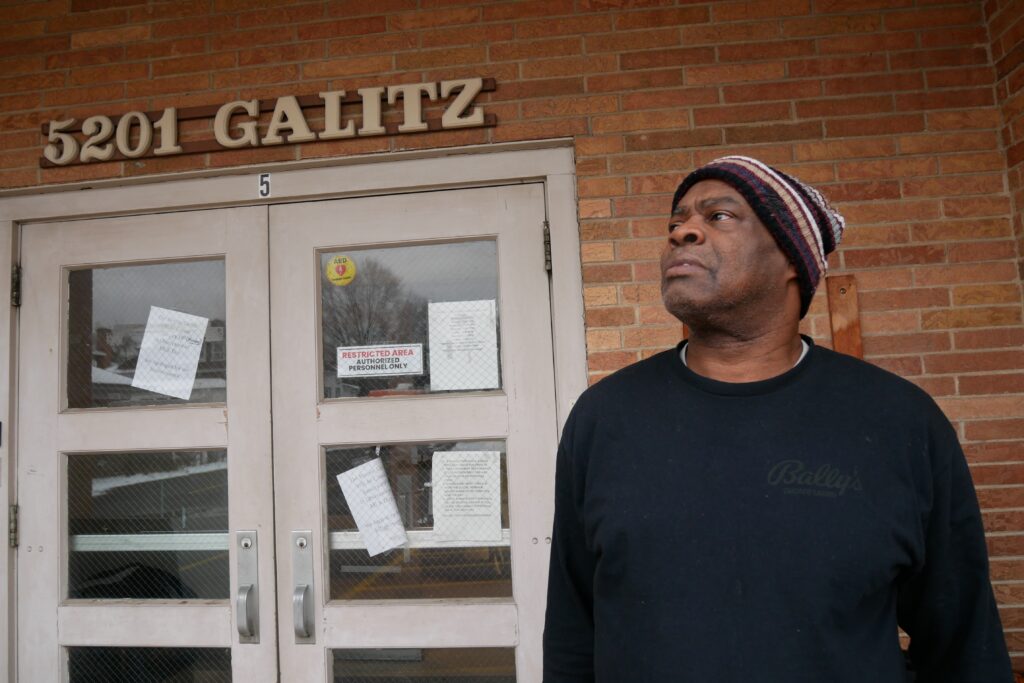
Edgar Vargas, standing outside a Chicago homeless shelter in February, lost his interview.
A documentary producer, he was set to speak with a source for a series on homeless immigrants, a population that surged in the city, in part when the state of Texas began bussing in asylum seekers in 2022.
When the person he was scheduled to meet that cold morning decided they were not comfortable speaking on the record, Vargas struck up a conversation with a woman nearby who was selling chicken noodle soup out of the trunk of her car.
The woman, Emili Rincón, had fled to Chicago from Venezuela. She told Vargas that her husband was murdered for his opposition to the government and she was tired of sleeping fully dressed out of fear that police would barge in and hurt her family.
After Vargas returned the next day, Rincón agreed to become one of the five individuals his film crew followed for a day-in-the-life series launched by WTTW Channel 11 in 2024, “Firsthand: Homeless – The Migrant Experience.”
A regional chapter of the National Academy of Television Arts & Sciences recognized the WTTW series that Vargas, a Skokie resident, helped produce, with an Outstanding Achievement for Documentary Emmy Award in the “topical” category this year.
“The laws are important, but it’s really about people. It comes right down to people,” Vargas said of the project and his work highlighting the experience of immigrants in the United States.
“If you took away status, if you took away privilege, if you took away borders, all of these people you may or may not be friends with, you can at least recognize that they’re human and they just want a little bit of dignity and maybe the opportunity to work, or in some cases, just not to live in fear or not to have their kids grow up in fear,” Vargas said.
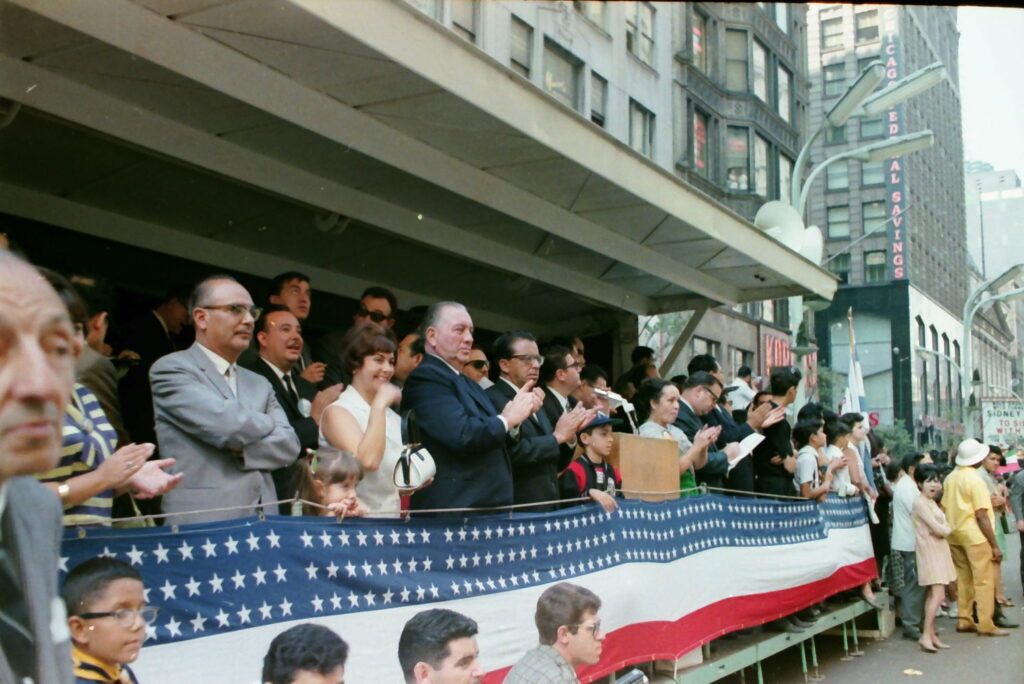
Vargas traced his interest in documentary work back to his father, who worked as a laborer but made side money photographing weddings and Mexican Independence parades in South Chicago, one of the first predominantly Mexican-American neighborhoods in the city.
When Vargas was 10 years old, his father bought him a Kodak Instamatic camera with the plug-in flash cubes, and he was “hooked.” Though he didn’t know anyone in the television industry, he worked his way up from a production assistant to floor director and spent years cutting 30-second promos.
He was introduced to long-form documentary television while at WPWR-TV Channel 50, which had a mandate to create “public affairs programming” that served locals, Vargas said.
There, he began to really focus on stories that represent the city’s ethnic communities.
An advantage of his upbringing, Vargas said, is he lives in the community he covers, and so he doesn’t take any of his relationships for granted as he may need to call on them. When someone asks whether he knows someone from South Chicago, he said nine times out of 10 he does.
“We have to control our own narrative,” Vargas said he was advised about storytelling. “So much of the narrative is written by other people, which is fine because you do want the exposure and you do want documentation. But we have to take control of the narrative.”
After Vargas became a freelance producer, he got involved with WTTW and helped produce its “Firsthand: Homeless” project. During that shoot, he saw how many of the homeless in Chicago were recent immigrants, many bussed in from Texas Gov. Greg Abbott with nowhere to go.
“Compassion,” Vargas said, seemed like it was in “short supply” in Chicago during that time. And so he decided to work on WTTW’s next project documenting the immigrant experience.
The Emmy-winning series explores the lives of five different immigrants: why they left their home countries, how they journeyed to the southern border, and what their immediate needs are as they live in Chicago and navigate the country’s immigration system.
Besides Rincón, the documentary features an artist who left Ecuador in search of better economic opportunity, a community organizer who crossed the Darian Jungle with her family to escape threats in Colombia, a former government employee from Venezuela who sought safety in the United States and a Chicago Public Schools employee from Colombia also seeking safety.
While Vargas spent almost every single day, for three months straight, working on the documentary and coordinating interviews with those subjects, he also spent hours and hours speaking with other immigrants not featured in order to gain more perspective.
“I can’t tell you how many times and how many shelters I hung out at, how many times I hung out at the busy expressways — because there was a lot of panhandling in those days — only to talk to people and figure out what they needed,” Vargas said.
While Vargas believes his upbringing offered some “built-in empathy” in telling these five individuals’ stories, completing the project also provided him a better appreciation of what his parents must have gone through and how challenging it is to start over in America.
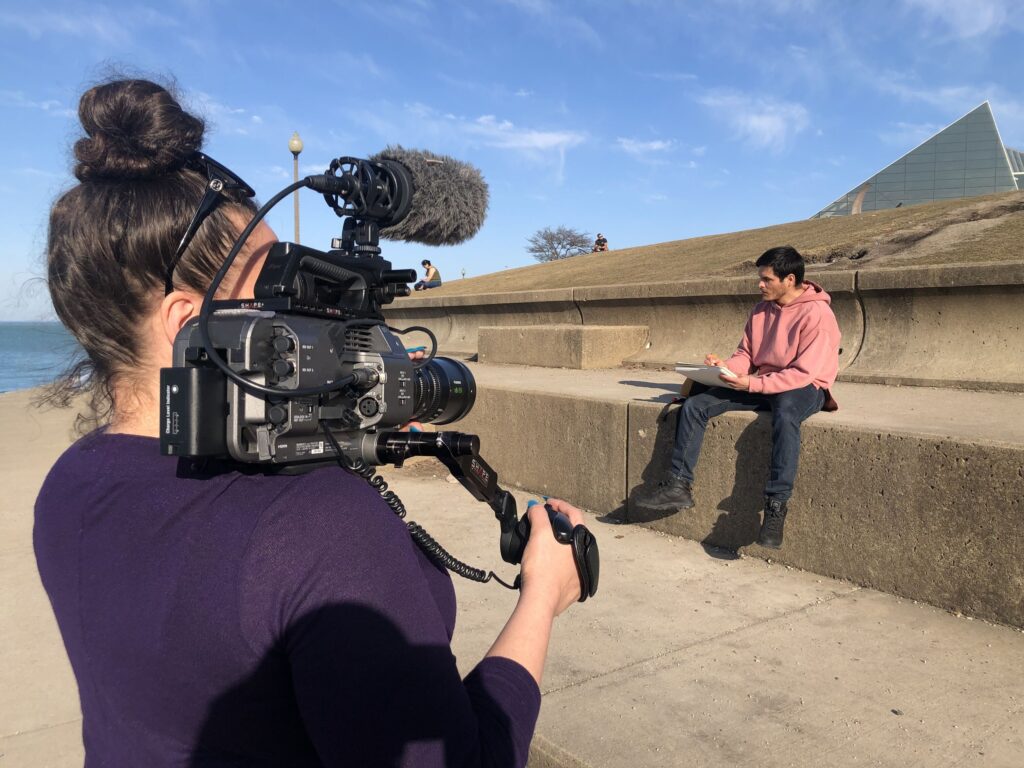
He was so emotional when he learned the series won an Emmy that “words couldn’t come out,” he said. The award was validating, he said, because it was judged by peers in the industry and ultimately recognized what he believed was good work documenting this time in Chicago history.
While Vargas is still in contact with three individuals featured in the series, he’s been unable to check in with the other two and no longer knows where they are.
He believes they may be reluctant to talk about their experience now, because of how the challenges immigrants are facing now are so different than a year ago.
“I’m grateful that we did at the time that we did it because so much has changed,” Vargas said. “We could do it again now and tell five stories that are equally as powerful and unique.”
The Record is a nonprofit, nonpartisan community newsroom that relies on reader support to fuel its independent local journalism.
Become a member of The Record to fund responsible news coverage for your community.
Already a member? You can make a tax-deductible donation at any time.
Samuel Lisec
Samuel Lisec is a Chicago native and Knox College alumnus with years of experience reporting on community and criminal justice issues in Illinois. Passionate about in-depth local journalism that serves its readers, he has been recognized for his investigative work by the state press association.
The Record is a nonprofit, community news site from former editors of 22nd Century Media
Our daily coverage of your government, schools, businesses and neighbors is not possible without your support.
Latest

The Record: Shortcut
Related Stories