Winnetka officials decline to support bluff repairs for homeowner who undertook unpermitted work
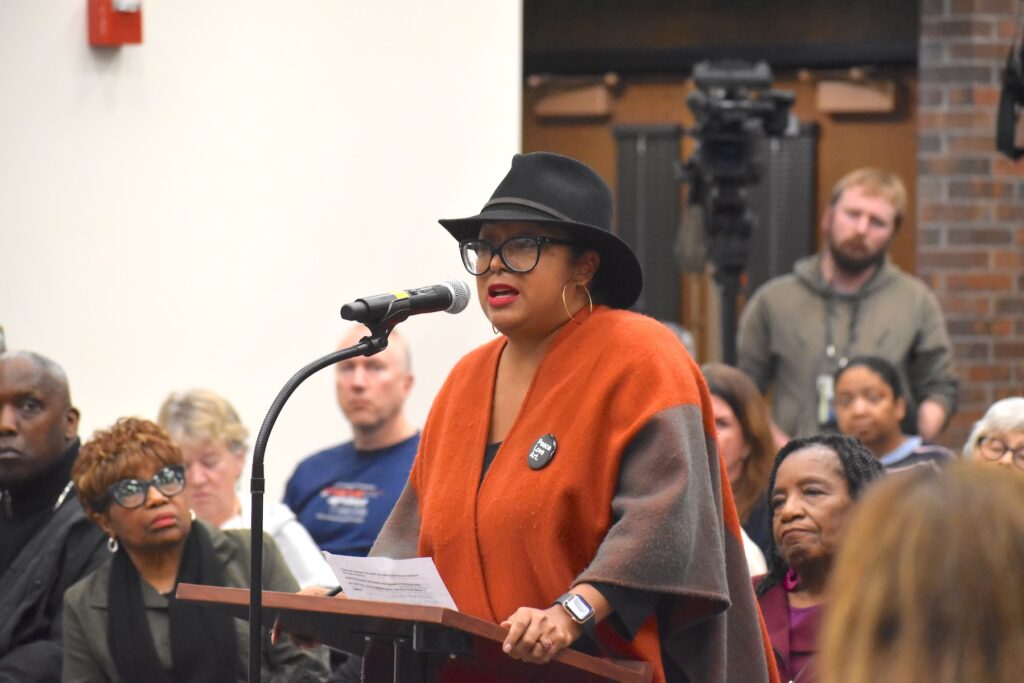
A historic home, damage to the Lake Michigan bluff, and a homeowner facing mounting design and repair costs prompted an unusual request to the Winnetka Village Council on Nov. 5.
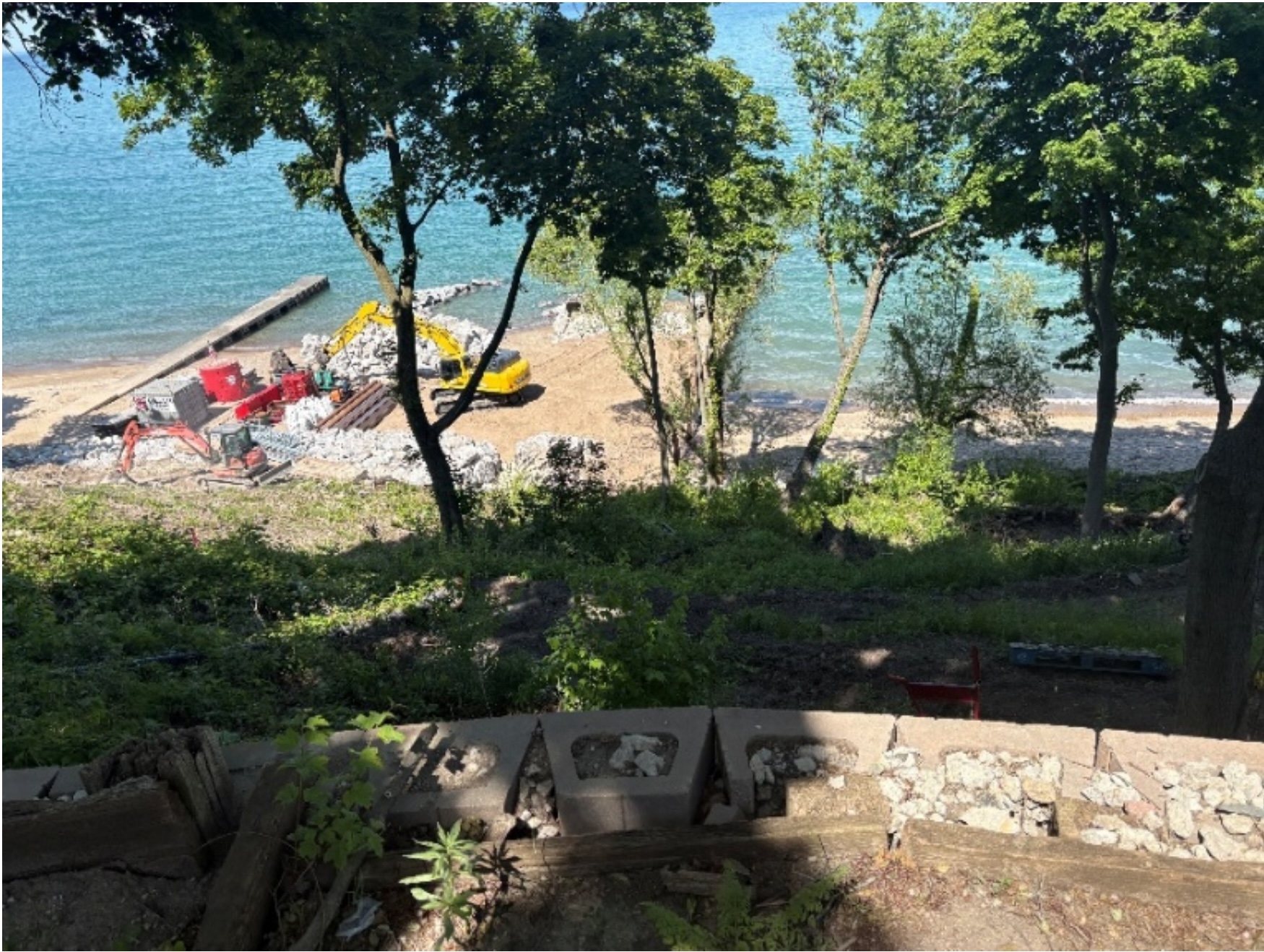
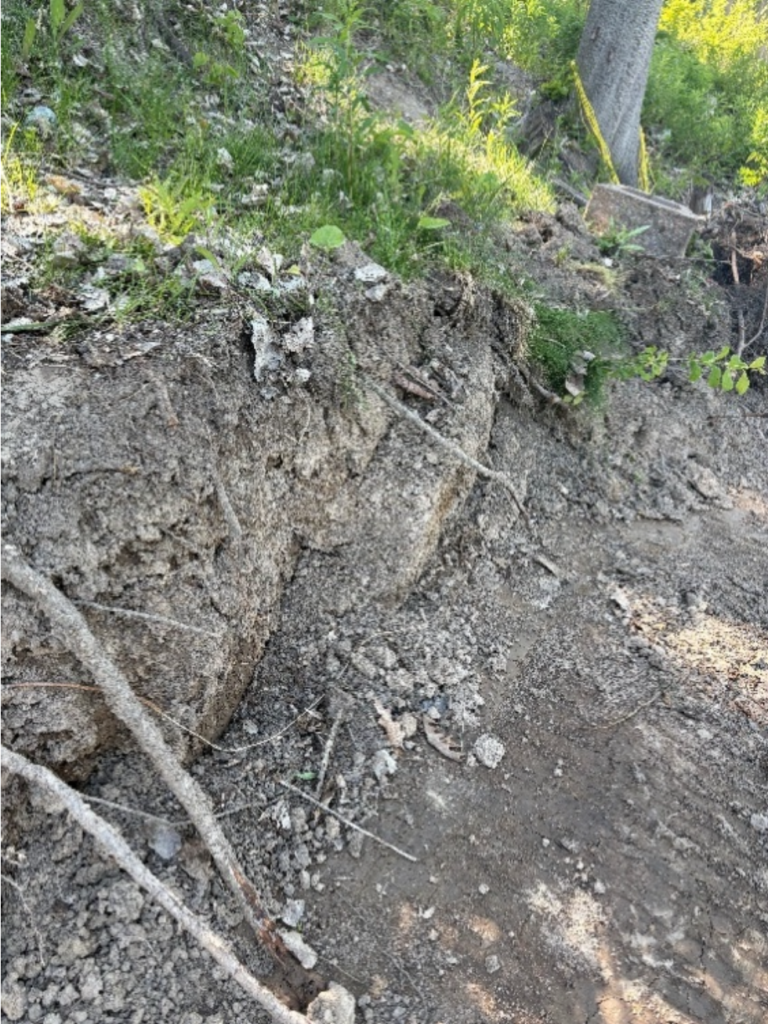
In June, 11-year Winnetka resident Rehan Aslam undertook unpermitted work within the steep-slope zone of the bluff behind his lakefront home at 1207 Whitebridge Hill Road, including cutting a path to reach a fallen tree that he attributed to erosion and neighboring construction.
Jim Bernahl, the village’s director of engineering, issued a stop work order after learning about it through an anonymous report. He determined the work did not comply with the village’s steep-slope regulations (passed in 2024) and required a permit.
The unpermitted work undertaken prior to the stop work order potentially damaged the roots to existing trees that were previously healthy, likely causing damage to the bluff.
Aslam filed a series of appeals that ultimately brought him before the Village Council, where he asked trustees to either waive the permit requirement entirely or take on a portion of the permit and design costs for the home’s stabilization and reconstruction.
Trustees declined both requests.
“Mr. Aslam, I don’t think that what I’m hearing here from the group is that we’re going to approve financial support for this project at this point,” Village President Robert Dearborn said. “I think you should continue a dialogue with our engineering department and try to stabilize the situation and then go from there from a permitting standpoint.”
The Existing Regulations
Village Attorney Peter Friedman provided context around the unpermitted work and outlined the Village’s steep slope regulations ahead of Aslam’s presentation.
Adopted on Feb. 6, 2024, Section 17.82 of the Winnetka Village Code establishes the steep slope regulations that govern development and construction along the bluff, with goals of protecting slope stability and preserving the bluff.
“Those regulations, as you know, set forth reasonable development guidelines that require review and approval and permits by the village in advance of any work to ensure that the construction on the bluff is and complies with the applicable regulations,” Friedman told trustees.
Friedman pointed out that the code governs the appeals process for decisions made by the director of engineering, meaning “any determination by the Director is appealable by the property owner or the applicant to the Village Manager.”
Aslam appealed Bernahl’s decision on Aug. 25, and the village manager denied his appeal on Sept. 4.
“That same provision also allows the property owner to advance that appeal directly to the Village Council, which is why we are here tonight,” Friedman added.
Aslam’s appeal before the council, Friedman clarified, was against Bernahl’s decision that a permit is required to undergo work in the steep slope zone. As of Nov. 5, Aslam had not applied for a permit related to this project.
The Homeowner’s Perspective
Before trustees, Aslam presented his request, which caused some confusion as there had only been mention of a permit waiver request, not one for financial assistance.
“This is more of a funding partnership that I am requesting rather than any disagreement or disputing any of the village requirements,” Aslam said.
Per his presentation, Aslam sought assistance from the council with a “necessary, professional engineered stabilization project from concept to permit-ready design.”
The request had three distinct parts: waiving applicable permit and administrative fees; “providing a cost-share or matching contribution for the required survey, geotechnical investigation, and professional engineering/design”; and consideration of a “separate, capped Village contribution toward construction.”
Aslam later said he is not requesting funding for the construction itself but rather for the preliminary work and design components.
In consideration of financial hardship he is set to undergo for the project, the presentation cited a request for a “not-to-exceed Village contribution for phases one and two, with owner match and reimbursement against paid invoices.”
Aslam said he already completed a topographic survey, which he had not shared with the village as of Nov. 5 but next would need a geotechnical analysis and engineering design that he estimates will cost a total of $27,000.
He also said his situation is unique compared to other Winnetka residents. He said that he is a “retired professional with limited resources” who invested his life savings into the home. And that home, built in 1956, is a local landmark that was designed by William Ferguson Deknatel in the style of Frank Lloyd Wright.
Now, Aslam said the bluff needs to be stabilized as it supports the structural integrity of his home.
He presented images in which the patio appears to be sinking, a crack runs through the foundation, the balcony leans, and a tree is uprooted.
As for the unpermitted project Aslam began in June, he attributed the necessity of the work to the uprooted tree and neighboring construction that has required “a lot of pile driving into the bluff, which caused a lot of shaking of the ground.”
“As that was happening, things started to accelerate, like the crack that I showed you, which didn’t exist prior,” he said.
Upon consultation with close friends who are civil engineers, Aslam said, he first attempted to strengthen the retention wall of his home and then undertook the creation of a path down to the fallen tree with the hope of filling the hole with soil.
The Village’s Review
Bernahl expressed confusion regarding the path and its usage.
“On June 3, when staff was notified, we went out to take a look,” he said. “Some of the images staff had taken at the time [showed] a cut into the bluff. The explanation at the time was that Mr. Aslam was creating a path for the contractor to go down to remove the tree but also the path was being utilized by the contractor next door as an access point.”
“At that point, the disturbance to the bluff had already occurred, so our initial concern was what are the immediate impacts?” Bernahl explained. “What else has been impacted in the bluff as we went along?”
The village’s forestry team inspected the property and found that some of the existing trees’ roots had been disturbed.
“The nonstabilization of the soil without some sort of retaining wall or reinforcement to hold it in place and to stabilize the bare soil was the immediate and remains the immediate concern for us,” he said.
According to Bernahl, staff offered to let Aslam revert and restore the damage done by the path without a permit; though Aslam had not yet taken them up on that offer.
We cannot be in a position to reward people violating our ordinances.”
Tina Dalman, Winnetka trustee
Bernahl also questioned where the soil that was removed to create the path had gone, noting that it could have been used to fill the hole from the fallen tree instead of being removed from the site.
“So, there is a lot of uncertainty of what staff understands the scope of [the project] to be,” he said, adding that he has requested Aslam offer a design vision in multiple meetings.
Aslam later pushed back against the claim that the soil was removed, saying he had no means of doing so and that all of it had simply been moved around but remained where the path was cut.
He would also assert that the concept is “already done” and that the village simply needs to “come and look at the property.”
Bernahl said the priority is “to come up with some sort of structural restoration program to get the bluff stabilized.”
“In my professional opinion, the undercutting that took place actually destabilized the bluff more so than what was … existing before,” he said.
The Council’s Response
Winnetka trustees immediately expressed confusion and uncertainty over the nature and details of Aslam’s request.
Dearborn called the offer for Aslam to restore the work that was done without a permit “generous.”
Trustee Kirk Albinson said Aslam should restore the work done or follow the village regulations and ordinances that the village has put in place “intentionally for situations like this.”
“I appreciate the opportunity to speak to us, I appreciate you being a resident in the community, what I don’t appreciate is taking up the oxygen in the room where it’s been elevated because of the way that the ordinance has been structured to come to us at this point in time,” he said. “It seems way ahead of the curve in terms of the relevancy of being something for us to adjudicate.”
Although Trustee Tina Dalman revealed she disagrees with the ordinance, she said Aslam still needs to follow it.
“We cannot be in a position to reward people violating our ordinances,” she said. “I disagree with the ordinance, but it is the ordinance and the law of the village, and to treat you differently than any other citizen would be creating a standard of people coming and asking for forgiveness while violating the law.”
The Record is a nonprofit, nonpartisan community newsroom that relies on reader support to fuel its independent local journalism.
Become a member of The Record to fund responsible news coverage for your community.
Already a member? You can make a tax-deductible donation at any time.

Zoe Engels
Zoe Engels (she/her) is a writer and translator, currently working on a book project, from Chicagoland and now based in New York City. She holds a master's degree in creative nonfiction writing and translation (Spanish, Russian) from Columbia University and a bachelor's in English and international affairs from Washington University in St. Louis.
The Record is a nonprofit, community news site from former editors of 22nd Century Media
Our daily coverage of your government, schools, businesses and neighbors is not possible without your support.
Latest

The Record: Shortcut
Related Stories