With new 25 mph speed limits, Skokie sees more traffic stops and fewer crashes
After the Village of Skokie set the majority of its residential streets to a uniform speed limit of 25 mph earlier this spring, police stopped more vehicles for speeding violations and the number of car crashes in the village decreased compared to last year, according to a report from village staff.
Samantha Maximilian, Skokie’s senior engineer, presented that information to the Village Board on Oct. 5 as part of an update on the initiative that reduced the maximum speed permitted on more than 1,000 Skokie blocks from 30 mph to 25.
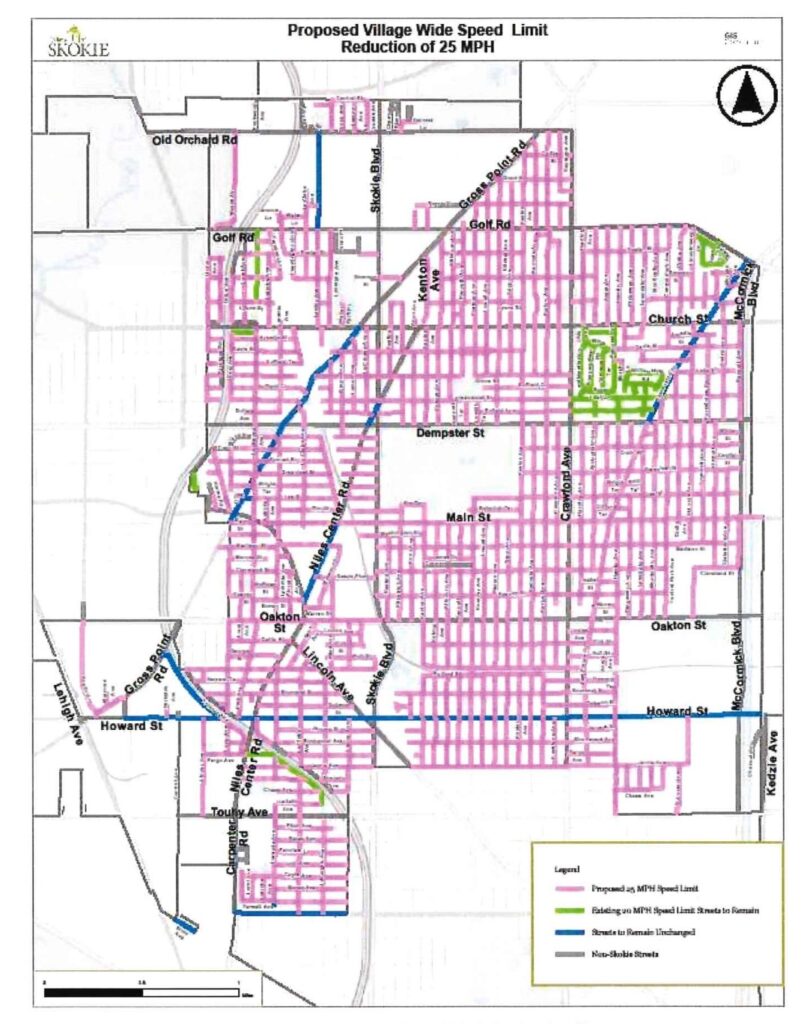
The change, which went into effect March 1, aimed to promote better road safety by encouraging lower speeds in areas where 96% of Skokie motorists reportedly already drive at 25 mph, The Record previously reported.
County roads like Oakton Street or Crawford Avenue, and state roads like Dempster Street and Skokie Boulevard remained unchanged with their speed limits of 30 to 40 mph, depending on location.
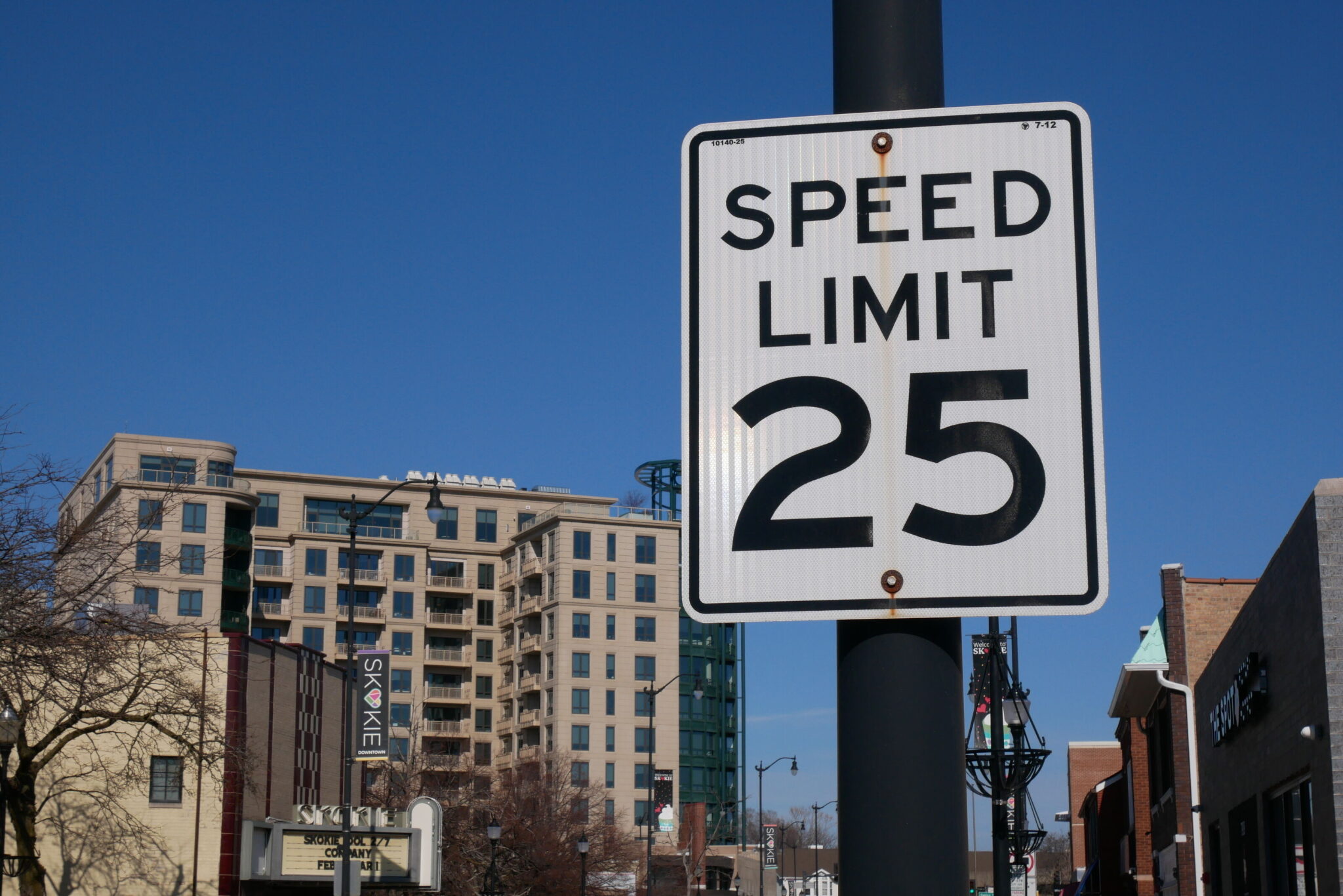
To implement the change, village staff launched a public awareness campaign, replaced 43 existing 30 mph signs and installed 19 additional 25 mph signs. “New” plaques were placed above those signs and staff are working to install more 25 mph signs at “strategic entry points along the Village borders,” a village report says.
Staff then employed traffic management software to compare speed data on village-owned streets before and after the limits changed. In one study, village-owned roads during a three-month summer period saw an average speed of 20 mph in 2024, 16 mph in 2025 and 18 mph in 2026.
That study reportedly was “not limited to streets where the speed limit was reduced to 25 mph.”
Another study analyzing the existing Skokie streets with a 25 mph limit and streets where limits were reduced from 30 mph found that between Aug. 1 and Sept. 30 cars traveled with an average speed of 19 mph in 2024, 15 mph in 2025 and 17 mph in 2026.
Both studies show a decrease in average speeds between 2024 and 2025, and while the average measured speed increased in 2026 compared to the year before, cars traveled on average slower compared to 2024.
Between June and September this year, Skokie police stopped 749 vehicles for speeding-related violations, a 17% increase compared to the 639 speeding-related stops in 2025 during the same period, the village report says.
That said, Skokie Police Chief Jesse Barnes told the trustees he was “happy to report” that the initiative did not place an “unreasonable enforcement burden” on officers, because traffic data shows 96% of drivers in Skokie already travel at the 25 mph speed limit.
Barnes said the vast majority of the police department’s speed enforcement occurs on streets like Oakton Street, Church Street, Skokie Boulevard and McCormick Boulevard — “areas where we get a lot of community complaints or we see high incidents of traffic crashes.”
While Barnes said there is not always a direct relationship between traffic crashes and speed enforcement, car crashes in Skokie decreased this summer by 3.8% compared to 2025. Between the period of June and September, the village recorded 809 crashes in 2025 and 776 crashes in 2026.
“The post-implementation analysis continues to support the 25-mph speed limit on the evaluated residential streets,” the village report says. “Lower vehicle speeds are an important component of traffic safety, as lower speeds generally reduce the severity of injuries when crashes occur.”
After Mayor Ann Tennes said she is often asked why Skokie does not implement speed bumps, Maximilian explained they have an effect on emergency response times, they can interfere with the village’s stormwater berm system, and studies show some drivers increase speed in between bumps to “make up time.”
The Record is a nonprofit, nonpartisan community newsroom that relies on reader support to fuel its independent local journalism.
Become a member of The Record to fund responsible news coverage for your community.
Already a member? You can make a tax-deductible donation at any time.

Samuel Lisec
Samuel Lisec is a Chicago native and Knox College alumnus with years of experience reporting on community and criminal justice issues in Illinois. Passionate about in-depth local journalism that serves its readers, he has been recognized for his investigative work by the state press association.
The Record is a nonprofit, community news site from former editors of 22nd Century Media
Our daily coverage of your government, schools, businesses and neighbors is not possible without your support.
Latest

The Record: Shortcut
Related Stories