
Skokie to study gambling machines, but trustees voice moral, practical concerns
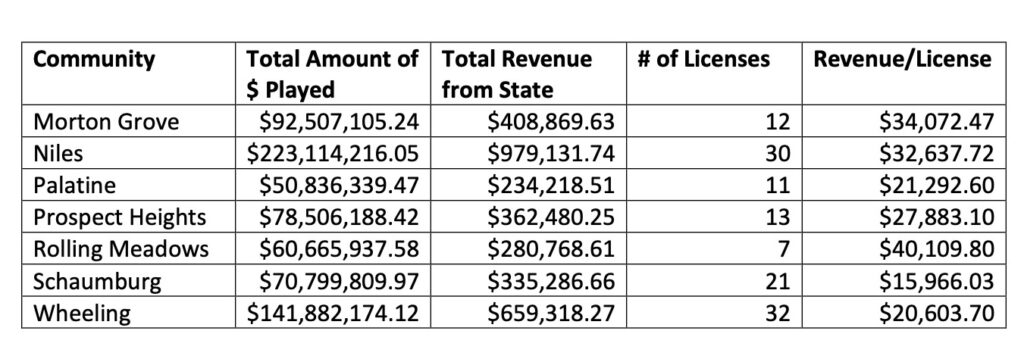
In 2025, Prospect Heights collected more than $390,000. Morton Grove reaped more than $442,000. Wheeling secured more than $679,000, and Niles has pulled in more than $1 million.
Skokie presumably stands to benefit from a surge of new revenue within that range each year if it were to permit video gaming terminals, or electronic slot machines, within its borders, like those neighboring suburbs did after the state legalized the business in 2012.
But members of the Village Board during a Committee of the Whole discussion on Monday, June 15, expressed concerns about the moral implications and practical challenges of allowing the gambling machines, which are currently banned from Skokie bars and establishments. Evanston, Wilmette and Glenview also do not allow gaming.
“What I want to see is, is there overwhelming evidence that the financial benefit from this outweighs the massive, massive social ills?” Trustee Lissa Levy asked.
The board directed village staff to assemble a report for more information on video gaming, like what new revenue could fund, what the administrative oversight costs would be, and what are the specific restrictions neighboring suburbs set for licensing slot machines.
Mayor Ann Tennes asked staff to finish the report by the end of 2026, so the Village Board is not expected to take action on its gaming policy anytime soon.
What are VGTs?
According to village documents, Illinois’ Video Gaming Act allows the users of video gaming terminals to wager up to $4 per spin for a maximum single payout of $1,199.
A single licensed establishment is typically only allowed to have up to six terminals, the law states.
The law also only allows the gaming machines in four kinds of places: bars and restaurants that serve liquor, fraternal establishments, veteran’s establishments, and large truck stops.
Net terminal income, or the amount of money wagered minus how much is paid out to players, is split up between various entities. According to Village documents, 33% goes to the state, 29% to the terminal operator, 29% to the licensed establishment and 5% to the county.
Municipalities can charge additional licensing fees and impose their own controls, like zoning requirements, visibility of gaming and the brightness of the machines’ screens, said Johanna Nyden, Skokie’s community development director.
According to a Northwest Municipal Conference survey, cited by the Village, Niles charges establishments $750 per gaming machine, limits only one per business and requires gaming to be separated if the business allows people under 21.
Likewise, as noted in the survey, Mount Prospect charges establishments a $300 application fee and a $1,000 fee each year per machine, limits the gaming area to 25% of a restaurant’s premises and requires establishments must install video camera surveillance of the segregated gaming area.
The village noted that Chicago’s decision in February to allow video gaming in the city may decrease the amount of revenue other north suburban municipalities make from the machines each year.
‘What they should and shouldn’t do’
Trustee Jim Iverson expressed concerns about the “moral hazard” of gambling but noted the revenue gaming generates would help both the village and local “businesses that need help to survive.”
Tennes said the board’s gaming discussion was sparked in part by “a handful” of local businesses that have told her that the revenue from video gaming would be “essential to their continued operation” in Skokie.
Robinson, who said he’s seen people socializing at gaming machines inside a nearby Veterans of Foreign Wars post, noted that people already have a choice to play electronic slots (and therefore contribute to revenues) in municipalities bordering to the east, west and south of Skokie.
“I would also love to hear from the residents. I think that’s a significant voice. I hate to tell folks what they should and shouldn’t do,” Robinson said, adding that he’d be interested in the question of allowing gaming being posed to voters via referendum.
Robinson also asked if local municipalities have allowed video gaming with sunset clauses, but Nyden said she is not aware of those being implemented given the capital investments the machines require.
Village Manager John Lockerby said Skokie has more than 2,000 licensed businesses, several hundred of which he estimated are restaurants that could potentially house gaming machines.
Notably Illinois, does not have a law allowing it to collect revenue from bets wagered via online slots. Levy said she supports lobbying the state to capture revenue from bets wagered on phones — similar to how Skokie gets tax revenue from online sales and ride-share apps.
A ‘financial obligation’
Levy said the village has a “financial obligation” to its residents, and she couldn’t see an argument for allowing video gaming when the projected revenues can vary significantly and gambling addiction treatment and rehousing for people whose “lives were destroyed” is costly.
The trustee also said the board should consider from whose pockets the revenue would likely come from, as “communities that are already in economic distress are attracted to the lottery.”
If one of the reasons for allowing video gaming is to help Skokie’s businesses thrive, Levy argued a more sustainable strategy would be for local businesses to focus on collaboration and community in order to create customer bases and hubs of foot traffic.
Tennes recalled when the Skokie Chamber of Commerce was opposed to Skokie being one of the first Illinois municipalities to ban indoor smoking in 2003.
While people at the time argued the measure would drive people away from Skokie restaurants, Tennes said she personally became a customer of various local restaurants after they became smoke free.
“What do we want our community to look like?” Tennes asked. “How could this, (gaming machines) and allowing video gaming in Skokie, how does that fit in with the look of our community? This is a very abstract concept. Does that reflect our community? I don’t know.”
The mayor also questioned how the board might equitably determine which businesses get gaming licenses and said it might be helpful to ask a village commission to study the prospect.
Trustee Kimani Levy said she didn’t feel like the board had enough information to understand if the revenue would justify the cost of gaming machines, and she wanted to know what lessons other municipalities learned from regulating them and what social services they offer.
Trustee Gail Schechter said she worked for a fair housing center and once helped a woman who was losing her home to a predatory lender, because the woman’s son had gambling addiction.
Schechter said she did not even want to know more information from village staff to further a discussion on it, and if local businesses are seeking gaming machines because they’re struggling financially, she’d rather the board seek alternative ways to help them.
The Record is a nonprofit, nonpartisan community newsroom that relies on reader support to fuel its independent local journalism.
Become a member of The Record to fund responsible news coverage for your community.
Already a member? You can make a tax-deductible donation at any time.

Samuel Lisec
Samuel Lisec is a Chicago native and Knox College alumnus with years of experience reporting on community and criminal justice issues in Illinois. Passionate about in-depth local journalism that serves its readers, he has been recognized for his investigative work by the state press association.
The Record is a nonprofit, community news site from former editors of 22nd Century Media
Our daily coverage of your government, schools, businesses and neighbors is not possible without your support.
Latest

The Record: Shortcut
Related Stories