
West Nile discovered in Wilmette mosquitoes — first local occurrence this season
A collection of mosquitoes trapped in Wilmette reportedly tested positive for the West Nile virus this week, the first such confirmed presence of the annually presenting virus this year in The Record’s coverage area (Skokie, Wilmette, Winnetka, Glencoe, Kenilworth, Northfield, Highland Park and Highwood).
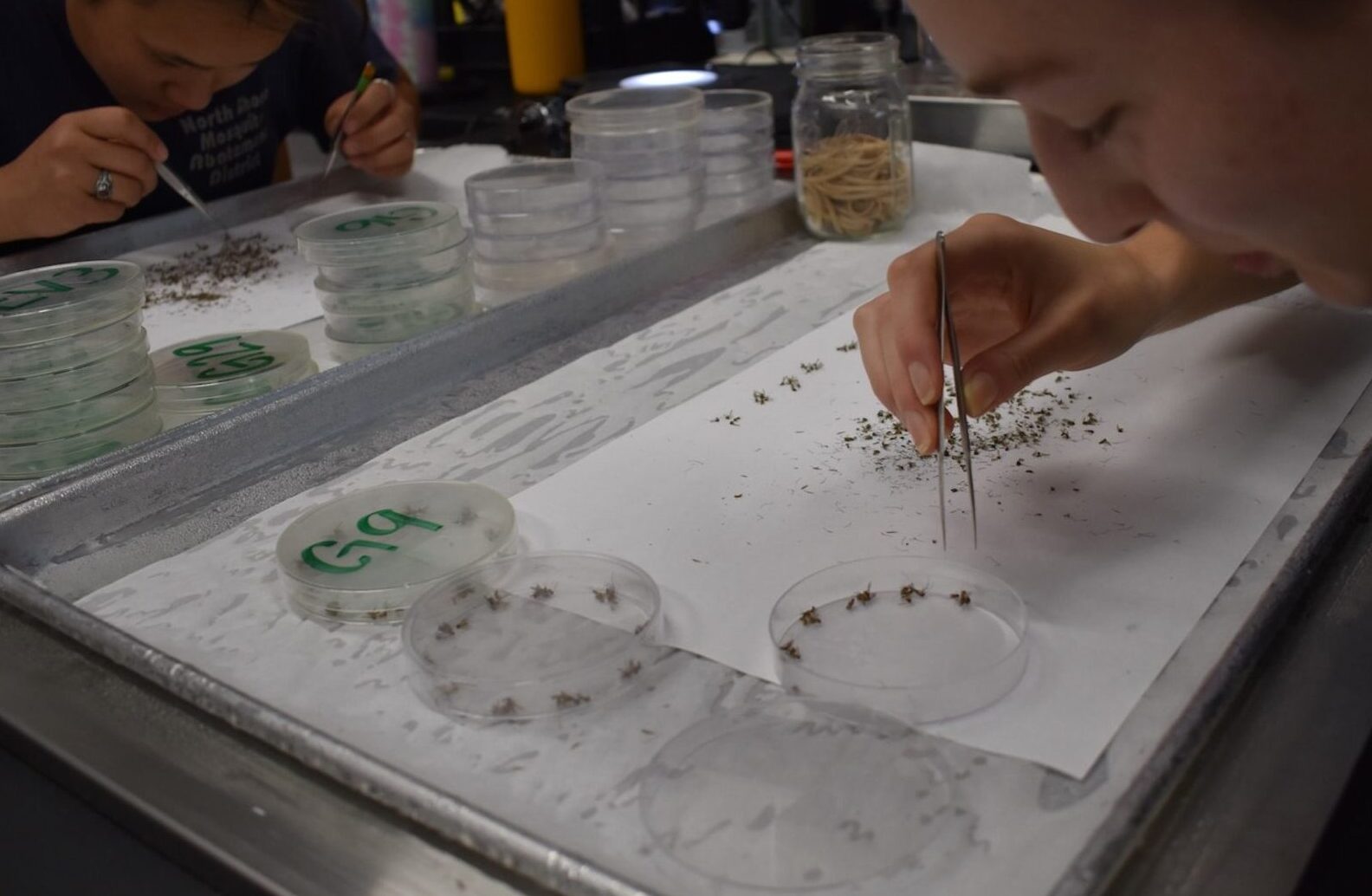
The news was announced by the North Shore Mosquito Abatement District, a local and public agency that has collected and tested 217 batches of mosquitoes this season. Just three samples — one each in Wilmette, Northbrook and Evanston — among those collections have tested positive for West Nile virus, according to the district’s Mosquito Surveillance Dashboard.
The positive Wilmette batch reportedly was collected on Monday, June 15, and tested Tuesday, June 16, in the abatement district’s lab.
According to the district’s data, mid-June is typical for the virus to present in its mosquito samples.
As of press time, the area’s current human risk level for West Nile virus is low, according to the agency’s three-tier system (low, medium, high). The virus’s prevalence tends to increase later in the summer, the agency said.
Last year, the risk level moved to the moderate designation mid-summer where it remained through the season. The agency actually in August 2025 recorded the highest infection rate (6.5%) in its 20-year testing history; however, the low number of mosquitoes held down the risk level.
While the current risk is low, the North Shore Mosquito Abatement District urges residents to use protective measures to minimize risk of exposure to mosquitoes and the virus, such as:
• Applying EPA-registered insect repellant,
• Wearing loose-fitting clothing,
• Avoiding the outdoors around dusk and dawn, and
• Eliminating from their property any items (big or small) that can hold water.
West Nile virus is a disease transmitted by mosquito bites that causes fever, headache, body aches, vomiting, diarrhea or rash, according to the CDC. Although it can be asymptomatic, about 1 in every 150 people affected develop a serious illness, which in some cases can be fatal.
The Record is a nonprofit, nonpartisan community newsroom that relies on reader support to fuel its independent local journalism.
Become a member of The Record to fund responsible news coverage for your community.
Already a member? You can make a tax-deductible donation at any time.

Joe Coughlin
Joe Coughlin is a co-founder and the editor in chief of The Record. He leads investigative reporting and reports on anything else needed. Joe has been recognized for his investigative reporting and sports reporting, feature writing and photojournalism. Follow Joe on Twitter @joec2319
The Record is a nonprofit, community news site from former editors of 22nd Century Media
Our daily coverage of your government, schools, businesses and neighbors is not possible without your support.
Latest

The Record: Shortcut
Related Stories