
Through music, food and history, Wilmette festival celebrates Asian American, Pacific Islander heritage
Wilmette’s Community Recreation Center transformed on Saturday into a vibrant cultural mosaic as the village marked Asian American and Pacific Islander Heritage Month.
On a crisp spring Saturday, the rec center saw a lively showcase of Asian American and Pacific Islander cultures. Many attendees came dressed in traditional attire, such as saris, shalwar kameez, and hanbok, while local eateries served everything from samosas and chicken biryani to sushi and tempura.
The Village of Wilmette Human Relations Commission invited residents to join them in celebrating the annual Asian American & Pacific Islander Heritage Month Festival. As the month of May commemorates the role Asian Americans and Pacific Islanders have played in our history across the country, the village has been marking the recognition through a cultural exchange celebrating AAPI music, dance, food and performing arts.
The festival in Wilmette, now in its fourth edition, attracts locals as well as visitors from across the North Shore. The afternoon was packed with traditional performances and engaging activities that beautifully exposed many visitors to new traditions.
Talking about the festival, Eric Hellige, of the Wilmette Human Relations Commission, said, “It is a unique learning experience. There are so many countries displaying their dances, music, food, etc. it is so interesting to know more about different cultures and practices.”
The guests were greeted to lilting sounds of erhu (a Chinese stringed musical instrument) played by Yun Oldshue in the lobby.
“I have taken up playing erhu at events as my hobby now. It’s great to see people connect through music,” said Oldshue, a retired professional from Glenview.
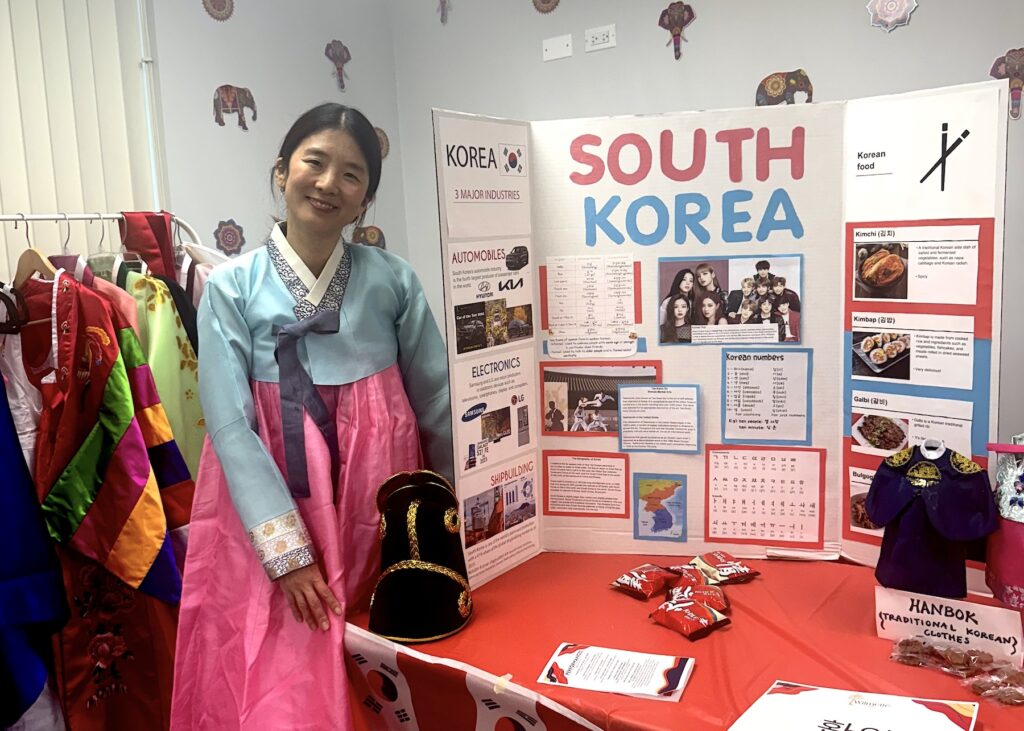
Cultural booths representing countries such as China, India, Pakistan, the Philippines, South Korea, Japan, Taiwan and Thailand displayed traditional artifacts, cultural insignia and ceremonial objects.
At the Japanese cultural booth, ikebana artist Miko taught an intent audience the basics of the Japanese art of flower arrangement.
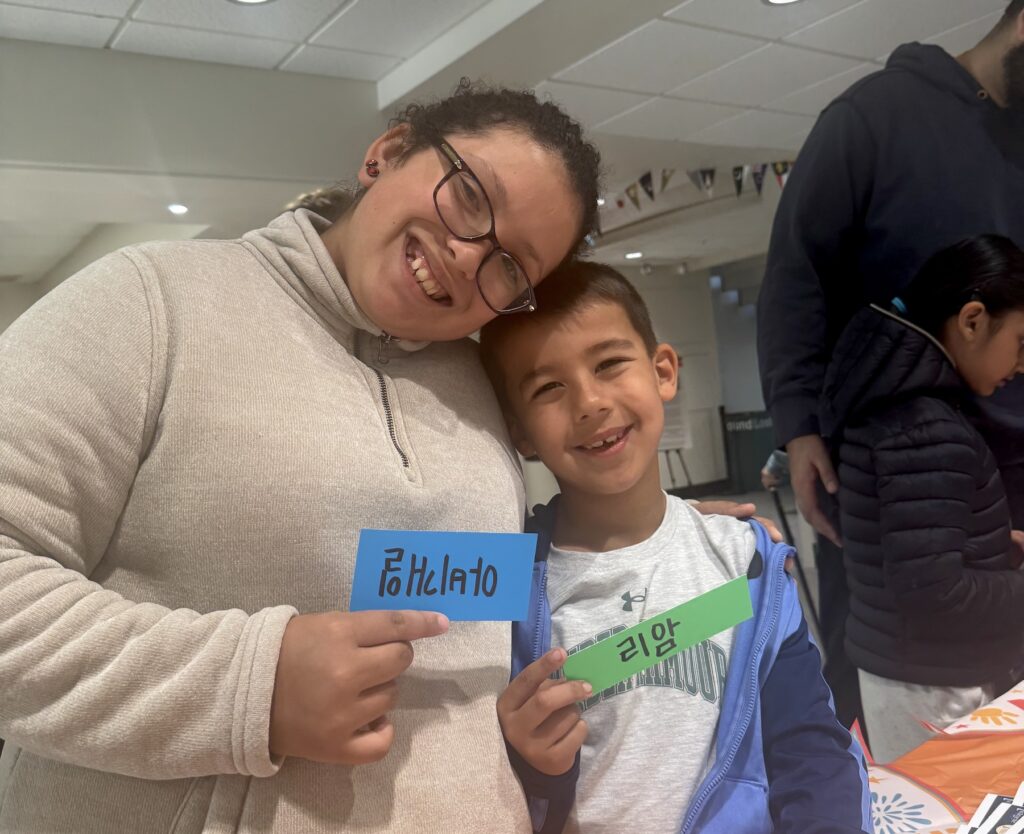
At the South Korean booth, children got to try their hands at writing their names in Korean language.
The event, also gave a rare opportunity to some locals to wear their heritage costumes with pride and nostalgia. Evanston resident Mie Thamura, an American of Japanese origin, came dressed in a traditional kimono bought from her hometown of Kyoto.
She adorned her kimono with her grandma’s obi (a broad belt worn over a traditional kimono).
“My grandma would be so proud to see me wear this here in the U.S.,” she said.
As the guests lined up to sample classic dishes served by many local eateries, the underlying idea behind the festival of representation and inclusion also came alive through sights, sounds and shared meals.
Many volunteers who helped create cultural booths also brought along their family heirlooms, adding personal significance to the event while also offering the community a chance to connect through shared stories.
Avik Das, a lifelong Glenview resident and member of the New Trier High School Board of Education, brought his personal tabla (a twin-drum percussion instrument used in Indian classical music) and his brother’s sitar (a plucked-string musical instrument from the Indian subcontinent).
“We grew up in Glenview during the ’70s and ’80s. At the time, we were the only people who played these instruments here and no one knew much about Indian music,” Das said. “Today as we raise our kids here, it’s a delight to see the community take interest in our musical heritage.”
At the Pakistan booth, Wilmette resident and pharmacist Sadaf Suleman displayed her son’s first-ever cricket bat to underline the significance of the game among the subcontinent’s youth.
Also, on showcase were Pakistani khussas (a handcrafted flat-heeled leather shoe with intricate embroidery made by local artisans in Pakistan) and a traditional kurta (a long shirt-like garment often decorated with gold or silver lace worn during festive occasions).
The afternoon progressed with tradition-steeped performances, such as Chern Phra Kwan, a classical Thai dance with fluid movements and spiritual leanings; Tinikling, a folk Filipino dance; a Chinese silk fan duet dance; and a Korean dance.
There were also performances by the Northshore Choir, a presentation by the New Trier High School K-Pop Dance Club, a bansuri (Indian flute) recital, a community song by the ukulele choir, and the Shire Choir.
“The festival was aimed at embracing the diversity in Wilmette,” said Swati Mothkur-Paul, a Human Relations commissioner.
Looking at the enthusiastic community participation, it seems that the event fulfilled its mission.
The Record is a nonprofit, nonpartisan community newsroom that relies on reader support to fuel its independent local journalism.
Become a member of The Record to fund responsible news coverage for your community.
Already a member? You can make a tax-deductible donation at any time.
The Record is a nonprofit, community news site from former editors of 22nd Century Media
Our daily coverage of your government, schools, businesses and neighbors is not possible without your support.
Latest

The Record: Shortcut
Related Stories