Highland Park revisits long-debated tax on plastic bags
The idea to tax plastic and other single-use bags has resurfaced in Highland Park, reigniting a policy conversation that has floated around town for 20-plus years
Staff brought a recommendation for a 10-cent tax on single-use, nonreusable bags in front of the City Council’s Committee of the Whole on Monday, April 27.
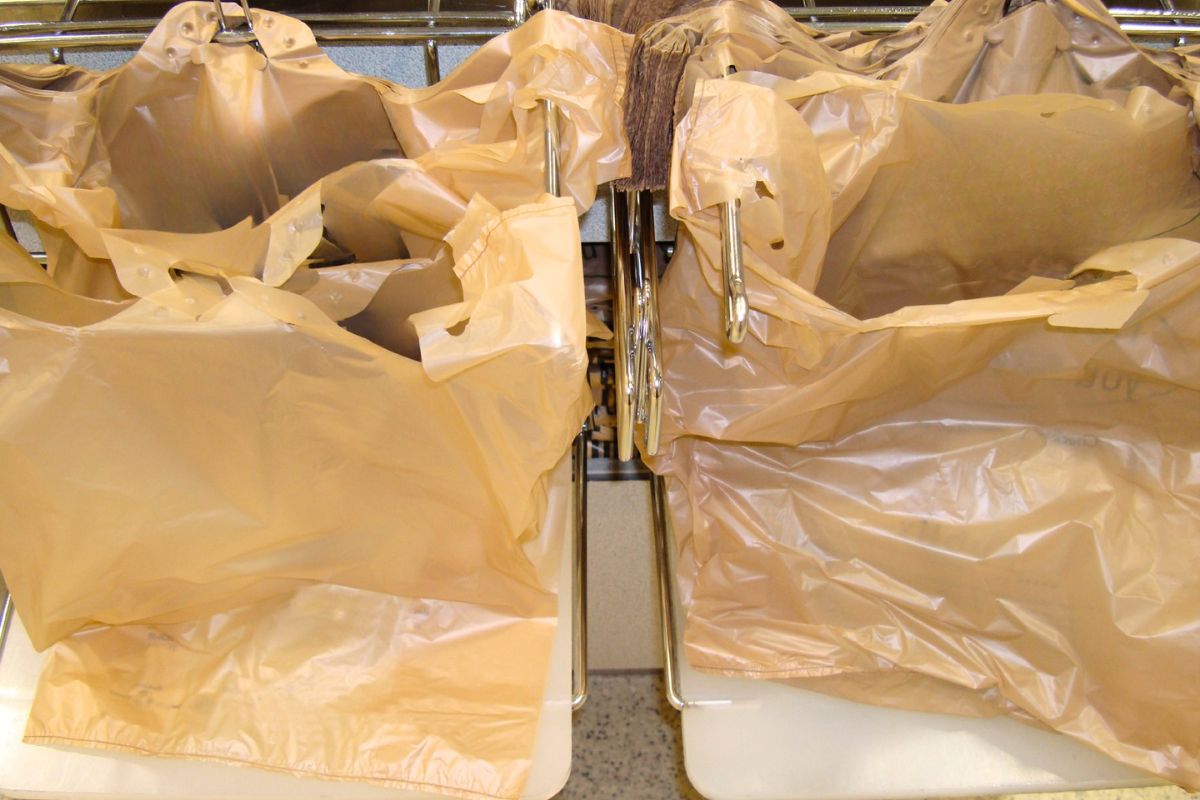
The city defines single-use, nonreusable bags as any plastic or paper shopping bag provided by a business to a customer at the point of sale, pickup or delivery to carry purchased items. That includes compostable and biodegradable bags.
A discussion on taxing or banning the use of single-use bags has been around since at least 2005, said Mayor Nancy Rotering, whose been mayor 17 years but was on the city’s environmental commission in 2005.
The city seeks the tax to encourage the use of reusable bags, an outcome that would align with the city’s sustainability plan, according to Erin Jason, assistant city manager of Highland Park.
Most recently, the Sustainability Advisory Group reviewed the proposal in 2023. At the time, Northbrook was about to launch a similar program, and the SAG decided to wait and see the results out of Northbrook before making a decision in Highland Park.
After putting a tax in place, Northbrook reportedly saw a 240,000 (or 7.5%) decrease in single-use bag sales in a one-year span — from 3.18 million in 2024 to 2.94 million in 2025.
“That’s a significant number of plastic bags being reduced,” Jason said. “In addition to Northbrook, the Chicagoland area has also seen results in the reduction of single-use bag consumption.”
Currently, Highland Park has a plastic bag and wrap recycling ordinance for retailers of large businesses (10,001 square feet or more), but it can be difficult for merchants to comply with, Jason said.
“If you have plastic bags, you also have to have receptacles to recycle those bags,” she said. “And following the trail of once those bags are recycled has been more difficult.”
Staff also sees the bag tax as a revenue generator, as Jason cited other similarly sized communities collecting around $150,000 annually with a bag tax.
The city noted that negatives of such a tax could include time consuming tracking and compliance, initial resident resistance, and residents leaving the community to shop.
Single-use bag fees between 10 and 15 cents per bag exist in suburbs including Woodstock, Batavia, Elgin, Evanston, Oak Park and Northbrook.
The staff’s recommendation excludes bags used for restaurant takeout, prescriptions, dry cleaning, bulk/bakery/loose items (fruits, vegetables, newspapers), seasonal events, and SNAP recipients and similar government assisted programs.
Jason suggested Highland Park could operate a model identical to Woodstock: 10 cents per bag, with 3 cents going to the retailer and 7 to the City. Revenues would be diverted to the sustainability fund. The tax would only apply to businesses of at least 10,001 square feet.
Most councilmembers were on board with exploring the policy further.
“The fact that you are exempting SNAP recipients and similar government assisted programs gives me a little bit of comfort,” Rotering said. “I found that when Chicago put a tiny fee, people didn’t even want to spend a nickel and they saw much greater of an impact.”
Rotering also said she would apply the recommendation to 10,000 square feet of “retail” space, to exclude places like Dinx Social Club, noting that it has a small retail footprint relative to its overall size.
Councilmember Barisa Bruckman, however, expressed skepticism in the plan, noting the lack of neighboring towns participating in a similar program.
“I worry that looking at how few surrounding suburbs are doing this right now it might not be successful,” Bruckman said. “I had some concerns about how it’s going to affect our residents, and if they would look elsewhere to shop because of this.”
But Councilmember Yumi Ross didn’t think a bag tax would drive people away from local shopping.
“The bag fee never stops me from shopping at a store,” Ross said. “People might also get into the habit of using a City of Highland Park reusable bag while they shop, improving our marketing.”
Councilmember Andrés Tapia said he felt strongly about the city’s commitment to sustainability and feels that residents should get charged more for a single-use bag. He suggested 15 cents per bag with an even split with the retailer.
“At a bigger level, we made a big commitment to sustainability in Highland Park,” he said. “We should stand firm and pride ourselves in being a leader. To me, it’s unacceptable that, in the past 20 years, we haven’t gotten there yet and we have a chance to now.”
Tapia added, “I am thinking about what will give us the biggest reduction in single-use bags without political revolt. What is that sweet spot?”
Councilmember Annette Lidawer, agreed with Tapia’s focus on the city’s sustainability commitment, and noted that a cost per bag has changed her personal shopping habits.
“I know I couldn’t get my bag from a store, so I changed my habits because of it,” Lidawer said. “I don’t want to be viewed as punishing people with this tax; I want to change habits.”
Lidawer believes the best way for the Highland Park community to comfortably make these changes is by starting at 10 cents per single-use bag then moving to banning them completely, as was done in Evanston.
The Record is a nonprofit, nonpartisan community newsroom that relies on reader support to fuel its independent local journalism.
Become a member of The Record to fund responsible news coverage for your community.
Already a member? You can make a tax-deductible donation at any time.

Alessia Girardin
Alessia Girardin is a community reporter focused on stories out of Highland Park and Highwood. A Chicago native and Regina Dominican alumna, she has published work for local and New York City publications and earned a master's degree from New York University.
The Record is a nonprofit, community news site from former editors of 22nd Century Media
Our daily coverage of your government, schools, businesses and neighbors is not possible without your support.
Latest

The Record: Shortcut
Related Stories