First class passes through new Highland Park public safety program
Youth cadets learn about medical training, radio calls, high-stakes response, more
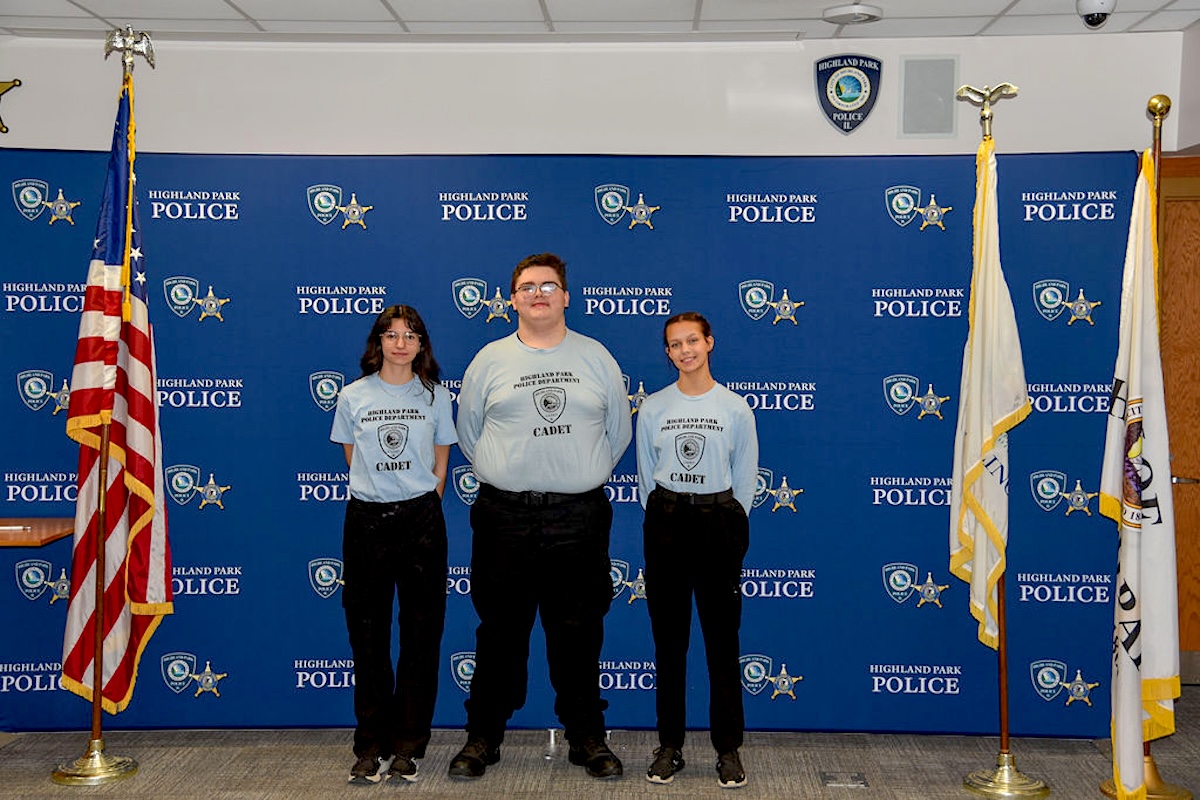
Three local high-schoolers had an exemplary start to the year, as they took their oaths of service as Highland Park Police Cadets.
The City of Highland Park Police Department introduced this year a program for local youth between the ages of 14 and 21 who may be interested in exploring a career in law enforcement, public safety or other such related fields.
The new program, called the Public Safety Cadet Program, runs in partnership with Public Safety Cadets, a national nonprofit supervised by active and retired law enforcement leaders, and gives local youth an opportunity to get hands-on training, mentorship and a glimpse of real-life public service experiences.
The inaugural edition is off and running as young cadets meet fortnightly at the Highland Park Police Department under the supervision of police officers and advisors to gain a deeper understanding of law enforcement operations and procedures.
“We are always seeking meaningful opportunities to engage young people in constructive, service-oriented experiences,” Highland Park Chief of Police Lou Jogmen said. “This program allows us to mentor, educate and inspire future leaders at a time when developing trust, understanding and civic involvement is more important than ever.
“It’s a natural next step in expanding our youth programming and strengthening long-term community partnerships.”
The officers also informed The Record that the Public Safety Cadet Program aligns with the 10 Shared Principles of Public Safety, a joint initiative of the Illinois Association of Chiefs of Police and the Illinois NAACP that is aimed at building trust and common ground between police and diverse communities.
The Highland Park Police Department was the first in the state to formally adopt the initiative back in 2018.
“In particular, the eighth principle (of the initiative) specifically emphasizes the importance of helping community members understand the law and how police departments work to keep communities safe,” Jogmen said. “A program like this helps advance those goals with positive benefits for the individual cadets as well as the community as a whole.”
HPPD School Resource Officer Isaac Schennum supervises the program and explained a typical meeting.
“Meetings focus on a broad variety of topics involving police training and police work,” he said. “In addition to developing students’ leadership skills, a primary goal of the program is to help cadets explore career opportunities in law enforcement. Cadets learn about the mission of the Highland Park Police Department, its services and its commitment to the 10 Shared Principles of Public Safety.”
But that’s not all. Schennum also said that cadets get to experience police training in situations and tactics that law enforcement uses. Examples include radio training, medical training, defensive tactics, taser training, firearms safety training and training for a variety of calls, such as DUI and domestic violence.
The cadets are also being trained to provide assistance at select city events throughout the year, supporting police officers and members of the city’s volunteer Community Emergency Response Team. Many of these classes are taught by officers who have attended instructor-level training.
The Highland Park Police Department also has a Junior Police Academy for younger children (ages 9–14), which has been running for a few years. Jogmen said the program uses a “day-camp-style approach” to help children feel comfortable around police and understand how police help those in need.
Elaborating on the new program, Jogmen said, “The Cadet Program, however, is intentionally deeper and more developmental. The program offers sustained engagement over time rather than a short-term experience, allowing participants to truly develop as young leaders in service. It focuses on leadership growth, accountability, teamwork, and real-world skill building.
“Older students are ready for more in-depth instruction, practical hands-on experiences and structured mentorship. The cadet program’s incorporation of community service and career exploration makes it unique among our programming and a good fit for students who are at the important juncture of their high school years where they are deciding what type of post-secondary education or vocational training to pursue.”
The new cadet program is also continuing to enroll youth who may want to be a part of this opportunity. Schennum said it does not have a space capacity and the selection process is open to everyone. “There is no maximum number of cadets each year. The selection process is quite open to anyone, as long as they meet the requirements and bring a good attitude to the group. Cadets are expected to obey all laws, represent the department and their community in good standing, and maintain their grades at school.”
The officers also said that the community has responded positively and youth continue to ask about the program.
“I believe that the more people hear about the Public Safety Cadet Program, the more they will realize it’s a huge benefit to the youth of our community and a huge opportunity as well,” Schennum said. “Young adults are able to build references, get real-world training not accessible to the vast majority of the public and gain leadership skills, all while only spending a few hours of their free time every other week.”
City officials also say that the initiative is part of a broader effort to deepen youth engagement in civic life.
Jogmen said that can only help the community and the HPPD.
“We know that establishing trust will encourage them to share their ideas, suggestions and opportunities for the department to continue building meaningful connections with the community,” he said. “In this way, the cadet program complements the city’s student representative program, which sees multiple Highland Park juniors appointed to the city’s advisory groups, boards, and commissions.
“Student participation provides students with tangible opportunities to contribute to our local government, support policy initiatives that are important to them as well as the broader community, and practice civic responsibility.”
The Record is a nonprofit, nonpartisan community newsroom that relies on reader support to fuel its independent local journalism.
Become a member of The Record to fund responsible news coverage for your community.
Already a member? You can make a tax-deductible donation at any time.
The Record is a nonprofit, community news site from former editors of 22nd Century Media
Our daily coverage of your government, schools, businesses and neighbors is not possible without your support.
Latest

The Record: Shortcut
Related Stories