The creator behind Sculpture Park, ‘Skokie Spirit’ and the new village seal mosaic
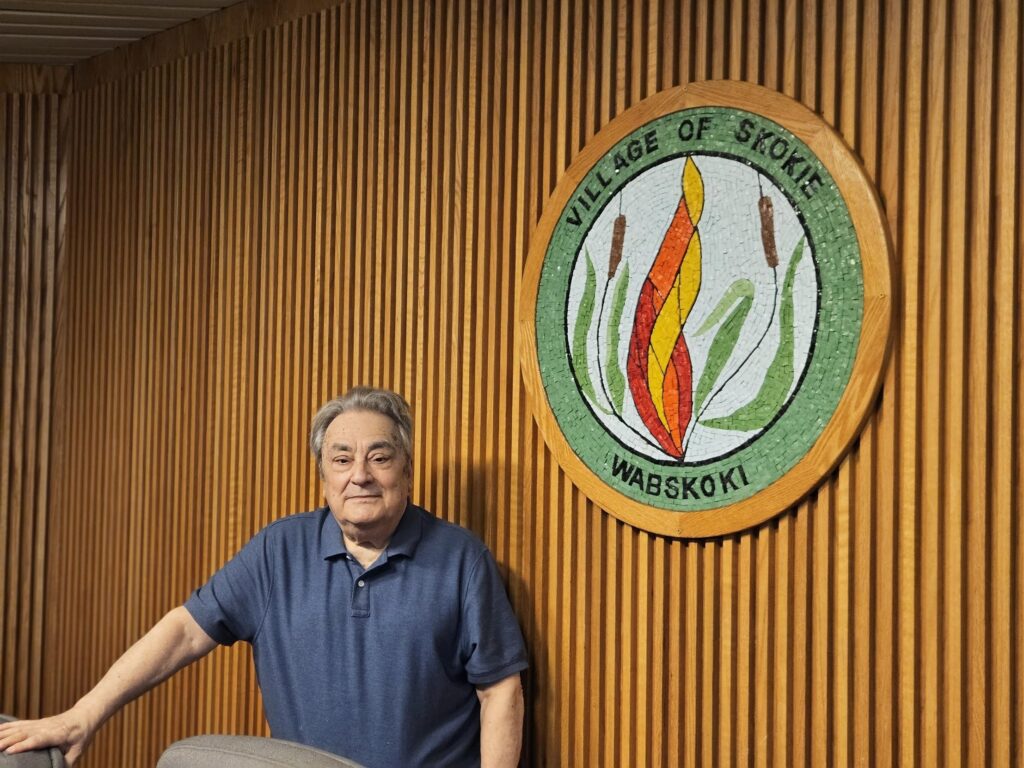
Village recognizes Joe Folise for impact on Skokie
It’s hard to believe that the Skokie Northshore Sculpture Park was once nothing more than a stretch of empty flat land — a blighted dog run along the Chicago River. But Joe Folise remembers.
An engineer technician for Skokie’s Public Works Department back in the 1980s, Folise was a part of the early deliberations when village staff first expressed interest in improving the area.
But it was his work outside the office— as a prolific painter, mosaicist and sculptor — that led Folise to suggest transforming the space into an open-air museum. With help from his many connections in the Chicago art world, he was instrumental in bringing that idea to life.
Folise’s influence on sculpture park is just one of the 79-year-old Morton Grove resident’s numerous “significant contributions to the arts in Skokie” that led the village’s Fine Arts Commission to recognize him in January with an Artistic Excellence Award.
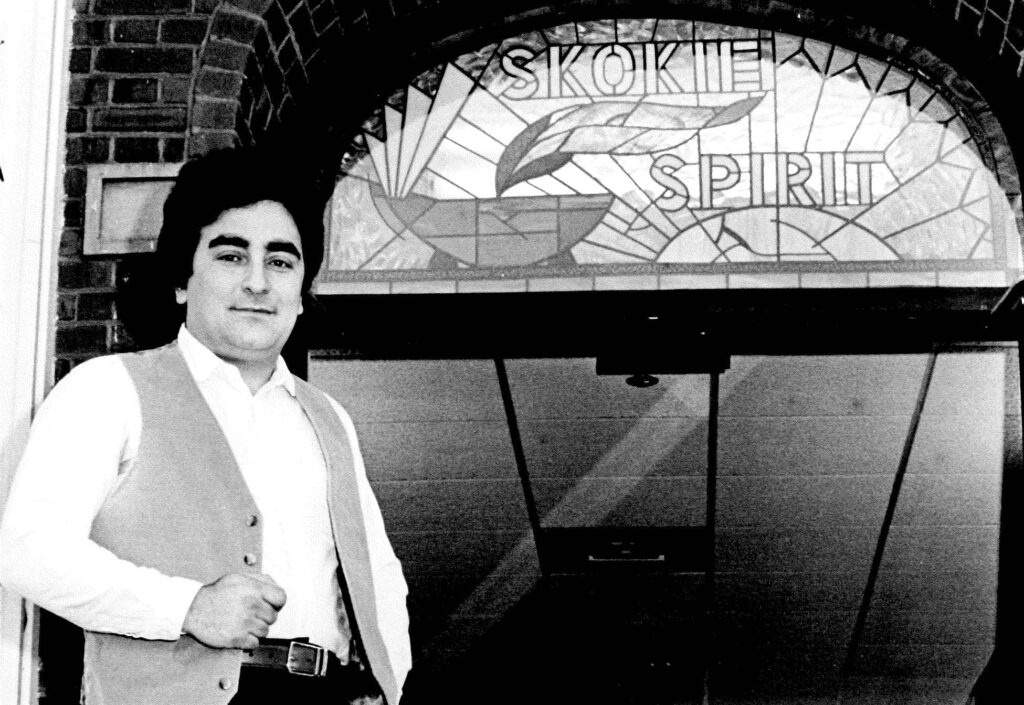
Folise retired in 2017 after more than three decades of public service, a time during which he oversaw the sculpture park, created the “Skokie Spirit” stained glass window that hangs above an entrance to Village Hall, and more recently, fabricated the mosaic of the redesigned village seal now displayed behind the council chambers’ dais.
“At this particular point in my life, to be recognized, it brought back the memories of all these people that I’ve worked with: colleagues, mentors and, I think as I said in my speech, friends from over the course of that 37 years,” Folise said.
“It was all just so special, the guidance and the support that they gave me. That just brought all that to the forefront.”
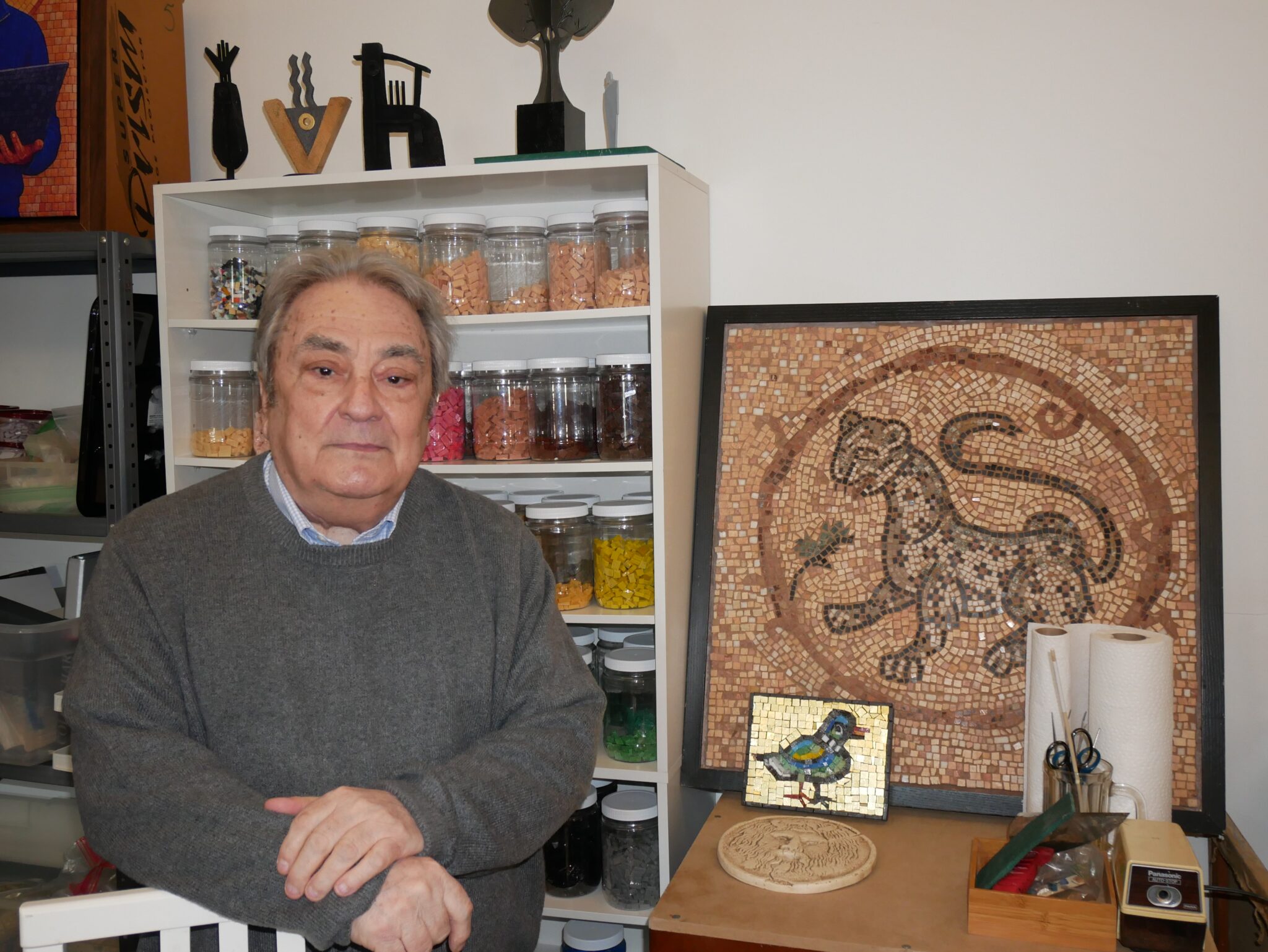
Folise knew early on that he loved to make things, and he attributed his love for art to his family.
Growing up in Wauconda, members of the Folise family each had their own craft; his sister was an avid photographer, his mother was a seamstress, and his father was both a jeweler and watchmaker.
“He would wake me up sometimes and go ‘Joe, you got to find this part,’” Folise said, recalling how his father’s workbench was stationed in his bedroom. “So I’d find these little pieces and then he’d tuck me back in and I’d go back to sleep, and he’d be working with his little light on.”
After illustrating his high school yearbook and skipping class sometimes to work in the building’s studio space, Folise went on to study art history at the Chicago Academy of Fine Arts and enjoyed spending his lunches across the street, walking around the Chicago Art Institute’s galleries.
Folise primarily focused on painting and sculpture while enrolled at the college, but a trip he later took to visit his sister in Europe inspired his love for mosaics. The mausoleums and basilicas, particularly in the Catholic churches he prayed at, were stunning, he recalled.
“I’ve always been a religious person, but rather than reading books and seeing pictures, to see it in the actual setting — especially a lot of the cathedrals in France, the stained glass — to actually see these (shrines), I don’t care who you are, you’re overwhelmed by the beauty of all that,” Folise said.
In the 1970s, he moved to Skokie, his wife’s hometown, and joined the village Public Works Department for a stable job to help raise their family.
Just like his dad, who worked at Fort Sheridan while running his watchmaking business on the side, Folise continued making art.
He showed his work in three galleries and in as many as five exhibitions a year, but Folise said he most enjoyed the more unstructured, hands-on experience of selling his paintings, sculptures and mosaics at art fairs.
Folise said he likes to be social, but also feels right at home in his garage studio, where he can work away at a mosaic for 10 hours a day and still be happy. The time-consuming work of chipping and arranging tesserae is time consuming, but also his form of meditation or prayer.
All the while, he continued plugging away in public works, ensuring that private developments were up to code and utilizing his drawing skills to draft plans. When there was an opportunity to contribute to village art projects — like creating a logo for a brochure or fabricating a stained glass rendition of the village seal for council chambers — Folise would step up.
The original plan for the Skokie Northshore Sculpture Park called for just 12 pieces between Dempster and Main Street, Folise said. But as he personally ensured the installation, layout and design of the paths to the sculptures, the scope of the project grew.
“I would visit art gallery shows of a friend who’s a sculptor, so I sort of knew who had how much in the way of public art, like larger pieces, and I offered to them a venue in a sense, whereby they could show their works,” Folise recalled.
“And because of my friendships with these people, they knew I was going to be responsible and I would watch over their work, so they were very interested in becoming a part of this,” he said.
Today, more than 60 pieces are on display in Skokie’s Sculpture Park, all the way from Dempster Street to Touhy Avenue. Eight alone were donated from Lewis C. Weinberg, a famous sculptor who provided the pieces from his personal collection in the 1980s and ’90s after Folise befriended the artist.
As for someone who typically likes to work in the background, Folise said receiving the village award was special because he worked alongside so many people dedicated to the Skokie community and he appreciated having his collaboration with their work recognized.
Moving forward, Folise said he’s no longer interested in taking on new commissions, but he won’t turn down certain opportunities; he still works in his studio every week and is now finishing a mosaic series of saints for St. Rita of Cascia Shrine Chapel in Chicago.
Folise said his faith and the drive to use his talents to help other people enjoy art and have a place to gather and pray is what keeps him motivated.
“When people pray to these images, it’s just a feeling knowing that these pieces are consecrated, that they have been the objects of religion. To me, it really blows me away,” Folise said of his mosaic shrines.
“To be a famous artist, I never thought about being famous or a named artist. To me it was just about, like, immersing myself, with having it become part of my life.”
The Record is a nonprofit, nonpartisan community newsroom that relies on reader support to fuel its independent local journalism.
Become a member of The Record to fund responsible news coverage for your community.
Already a member? You can make a tax-deductible donation at any time.
Samuel Lisec
Samuel Lisec is a Chicago native and Knox College alumnus with years of experience reporting on community and criminal justice issues in Illinois. Passionate about in-depth local journalism that serves its readers, he has been recognized for his investigative work by the state press association.
The Record is a nonprofit, community news site from former editors of 22nd Century Media
Our daily coverage of your government, schools, businesses and neighbors is not possible without your support.
Latest

The Record: Shortcut
Related Stories