
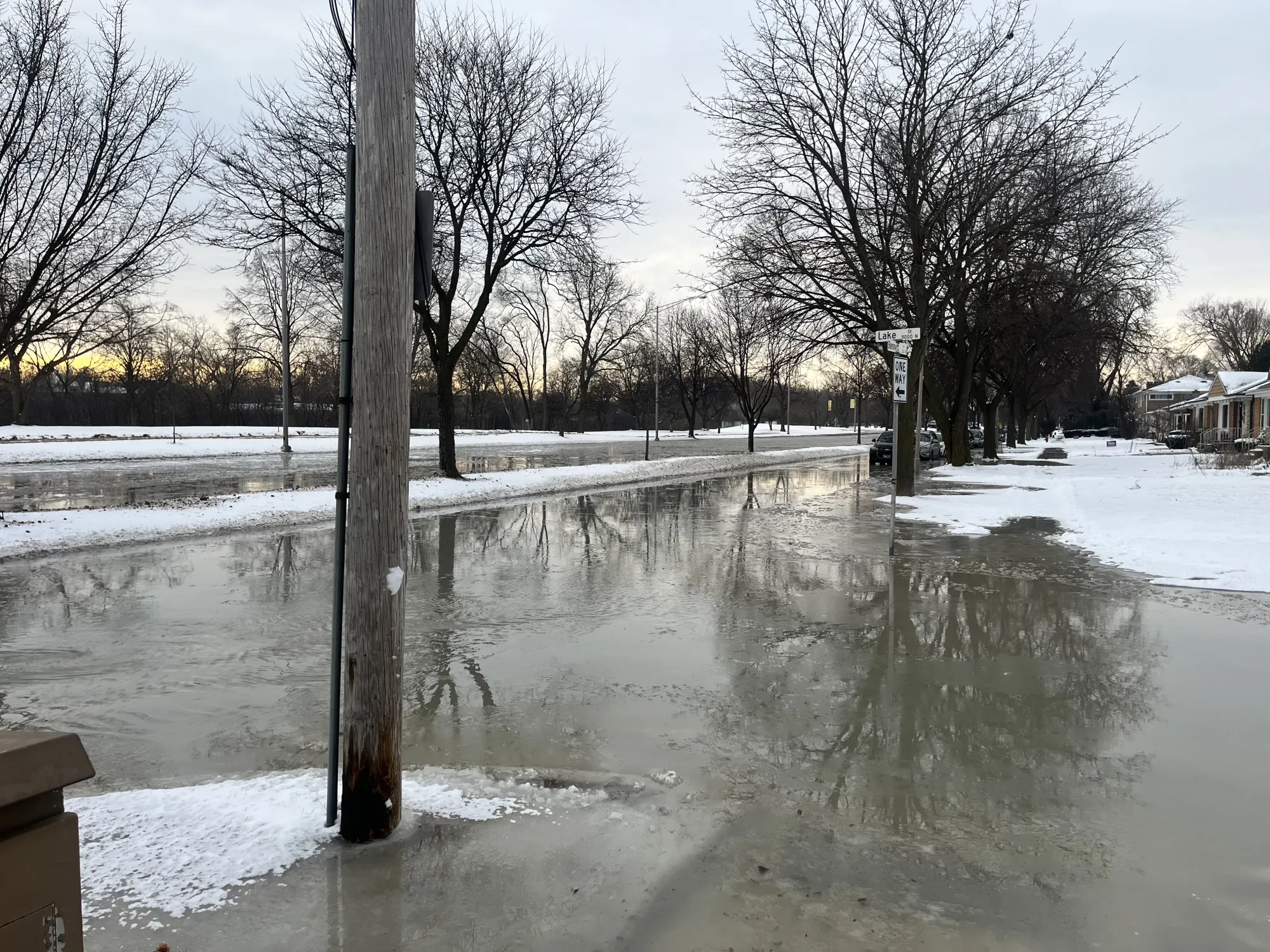
Broken end cap likely caused water main break in February, investigation shows
A wet drive can be concerning, especially when the source isn’t coming from above.
Earlier this year, a driver happened upon that phenomenon in Skokie. Seeing water coming up from ground, the driver called the Village of Skokie.
That call uncovered a headline-making problem that forced extended boil orders, tested the village’s emergency response and led to a months-long investigation detailed for the Skokie Village Board on Monday evening.
Max Slankard, the director of Public Works, told trustees that when the village got word of the flooding, sewer crews excavated either side of a buried valve during an 18-hour, unsuccessful search for a leak in an 8-inch water line below East Prairie Road on Feb. 13-14.
At about 5 a.m. on Feb. 14, a hole in a larger water main just 36 feet away caused flooding on surrounding streets. The break caused a loss of water supply for many homes and boil water advisory orders in Skokie and Evanston that lasted well into the following day, the Evanston RoundTable reported.
The cause of the water-main break and how the Village of Skokie can prevent another were the subject of a presentation to Skokie trustees as a village-sponsored investigation into the incident has concluded.
Sean Dee, an engineer from Exponent, the Chicago-based firm hired for the investigation, said the break was most likely caused by “gradual deterioration” to a 36-inch junction piece that had “inadequate” structural support to its end cap.
That junction, known as a “wye assembly,” helps change the direction of water flow. If one leg of the junction is not used, then it is plugged with an end cap, Exponent’s summary shows. Those caps are sealed with lead and oakum, then held in place by buried pieces of timber called “thrust blocks.”
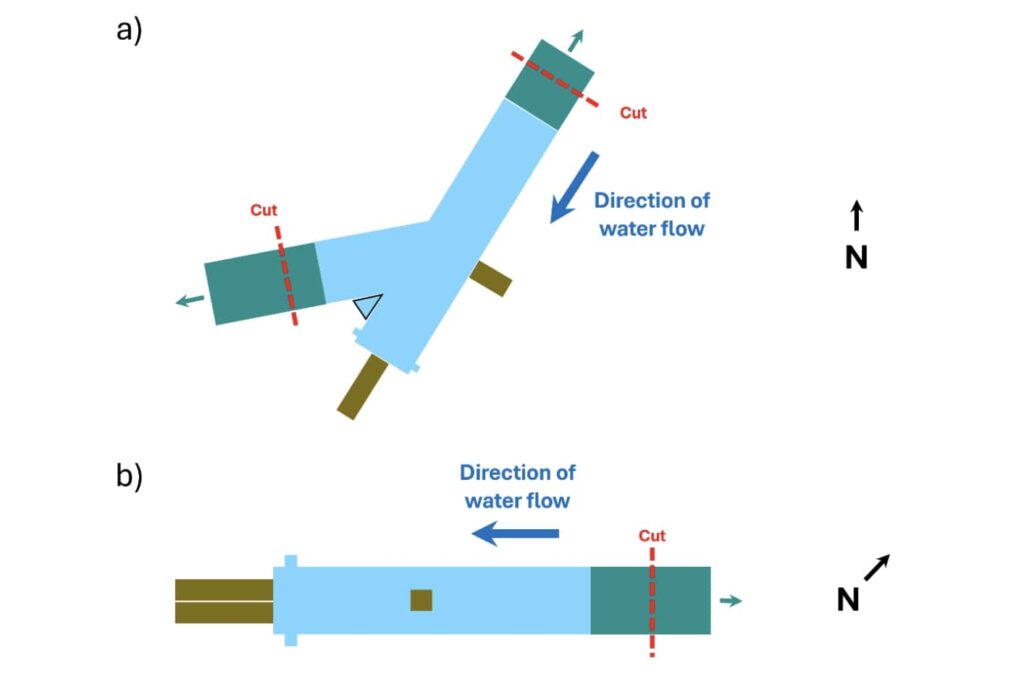
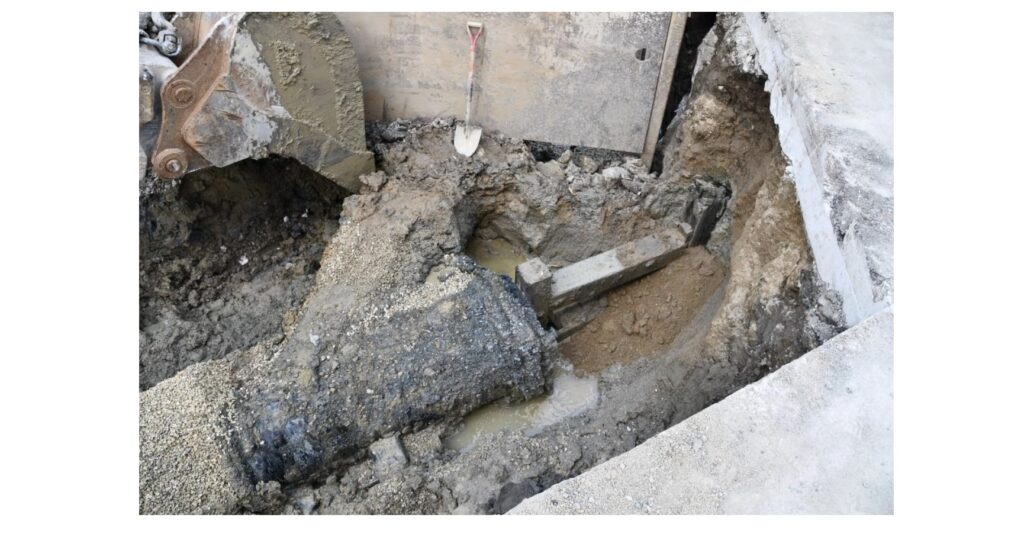
The end cap of the wye assembly beneath Emerson Street and East Prairie Road was separated from the junction in February, and despite all efforts to search the excavation site and debris with radar and metal detectors, the plug was never found.
Dee said he believes the end cap, which was about 3 feet wide and up to 2 inches thick, was likely displaced by the water. The “extent of the release” of the flood also leaves an unclear picture of how well the thrust block had kept that plug in place as only one piece of timber was recovered at the site.
Answering questions from the trustees, Dee added that his team examined flow data in Skokie’s water system from the five days leading up to the break and saw “no evidence” that would suggest a surge of high water pressure blew out the end cap.
Dee said if nearby activity hastened the end cap’s life, he’d anticipate cleaner surfaces on the wye assembly, rather than the signs of gradual deterioration it exhibited. That said, the assembly apparently had no cracks in the pipe wall itself.
Notably, the broken wye assembly located beneath Emerson Street and East Prairie Road had markings dating its installation to 1956.
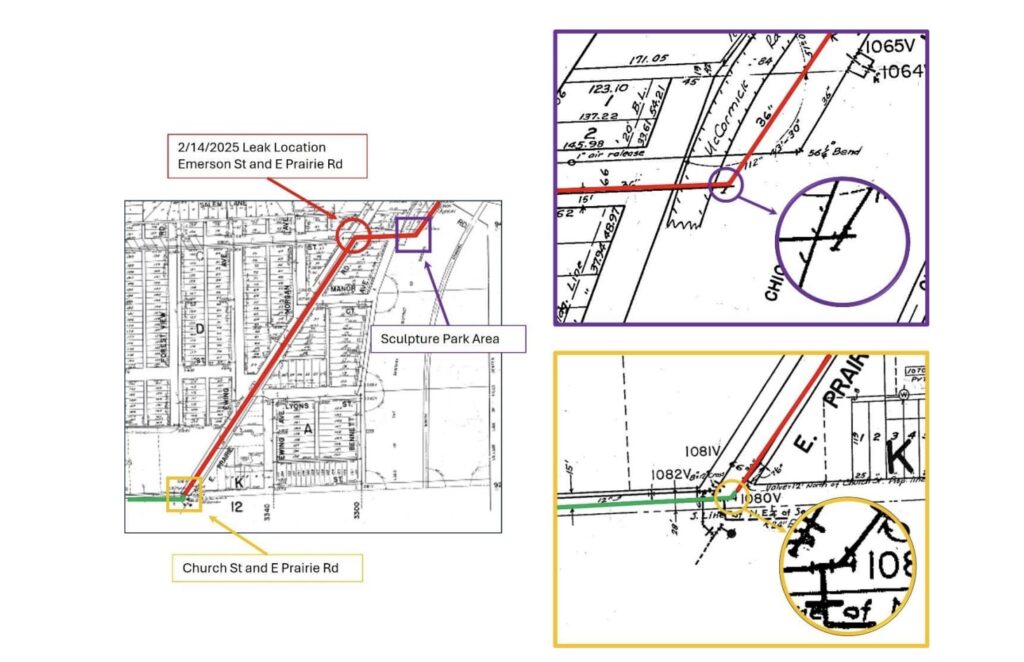
Skokie’s water records show there were two other wye assemblies installed around that time as part of a project connecting the village’s water distribution line to Evanston.
One of these other assemblies was installed beneath the intersection of Church Street and East Prairie Road in 1954. Another assembly was installed beneath Skokie’s Northshore Sculpture Park in 1956.
After excavating all three wye assemblies, Dee said the junction underneath Church Street was found with six pieces of timber constituting its thrust block, which helped keep its end cap flush in place. But the end cap in the other junction near Sculpture Park reportedly showed signs it could break.
“In the Sculpture Park assembly we see this gradual displacement and pushing outward (of the end cap),” Dee said. “It’s the investigation’s thought that that assembly was probably progressing towards a similar failure at some point in the future.”
All three wye assemblies have since been replaced with “new elbow and concrete thrust restraints” that offer more stability to the water line, a memo from Slankard shows.
Slankard said his department has also overhauled its system to better categorize and respond to emergencies moving forward, and in the spring of 2026 the village will gain a new telephone system to prevent lines from being overwhelmed as they were in February.
Slankard, however, said his department heard from residents about how to improve messaging and outreach. In the event of a similar emergency, the director said liaisons from the fire or police department should respond on scene sooner as some residents “felt like they were left alone.”
He said the village considered deploying a “mobile police command station” on Feb. 14 but decided against it as there were concerns about drawing people out of their homes and into the water.
Slankard also said the village will publish a request for qualifications in November as it seeks to hire another engineering firm to undertake an overall assessment of the condition of all of the Skokie’s transmission pipes that are 20 inches in size and greater.
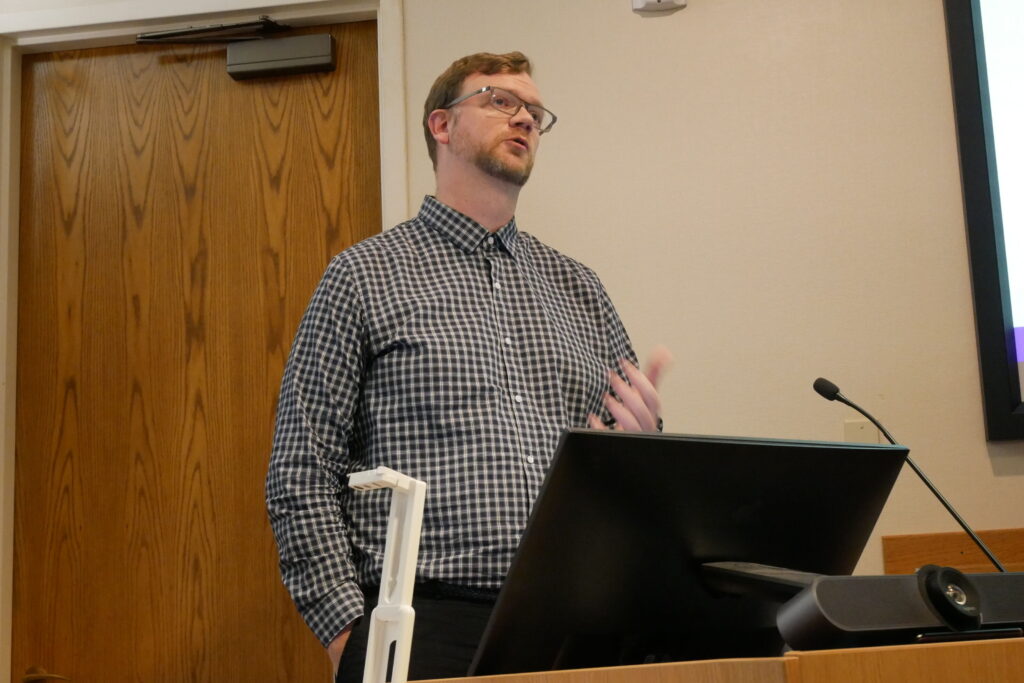
Village Manager John Lockerby said there is underground infrastructure — whether water, sewer or stormwater lines — beneath all 150 miles of streets in Skokie.
The majority of residential streets sit on top of 8-inch water main, Lockerby said. Two 36-inch water transmission lines run parallel from Evanston into the northeast-side of Skokie and provide the village 90% of its water supply.
The Record is a nonprofit, nonpartisan community newsroom that relies on reader support to fuel its independent local journalism.
Become a member of The Record to fund responsible news coverage for your community.
Already a member? You can make a tax-deductible donation at any time.

Samuel Lisec
Samuel Lisec is a Chicago native and Knox College alumnus with years of experience reporting on community and criminal justice issues in Illinois. Passionate about in-depth local journalism that serves its readers, he has been recognized for his investigative work by the state press association.
The Record is a nonprofit, community news site from former editors of 22nd Century Media
Our daily coverage of your government, schools, businesses and neighbors is not possible without your support.
Latest

The Record: Shortcut
Related Stories

