‘How Did This Happen?’: Skokie residents, officials discuss path forward after hate crime in Shawnee Park
Ban toy guns from public parks. Make data on hate crimes more accessible. Partner with religious groups to improve education. Use direct language in public statements. Enforce recourses if offenders don’t comply with Village recommendations.
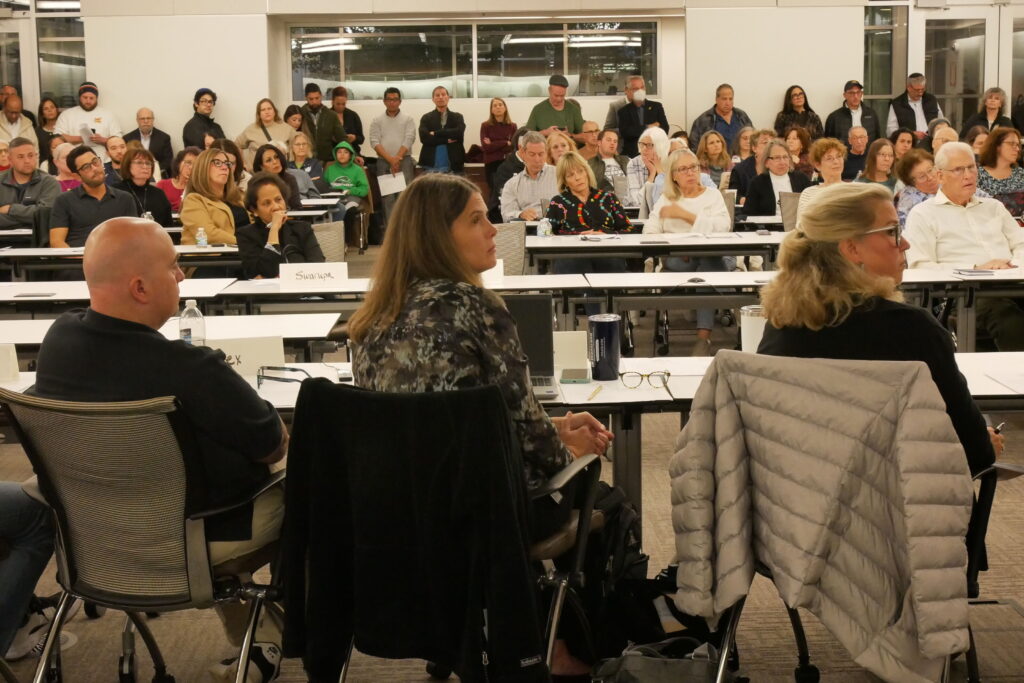
Those measures stuck out during a Skokie Human Relations Commission discussion on Monday evening at the Skokie Police Department as efforts to fight antisemitism in light of a recent hate crime that involved minors on Oct. 7 at Shawnee Park.
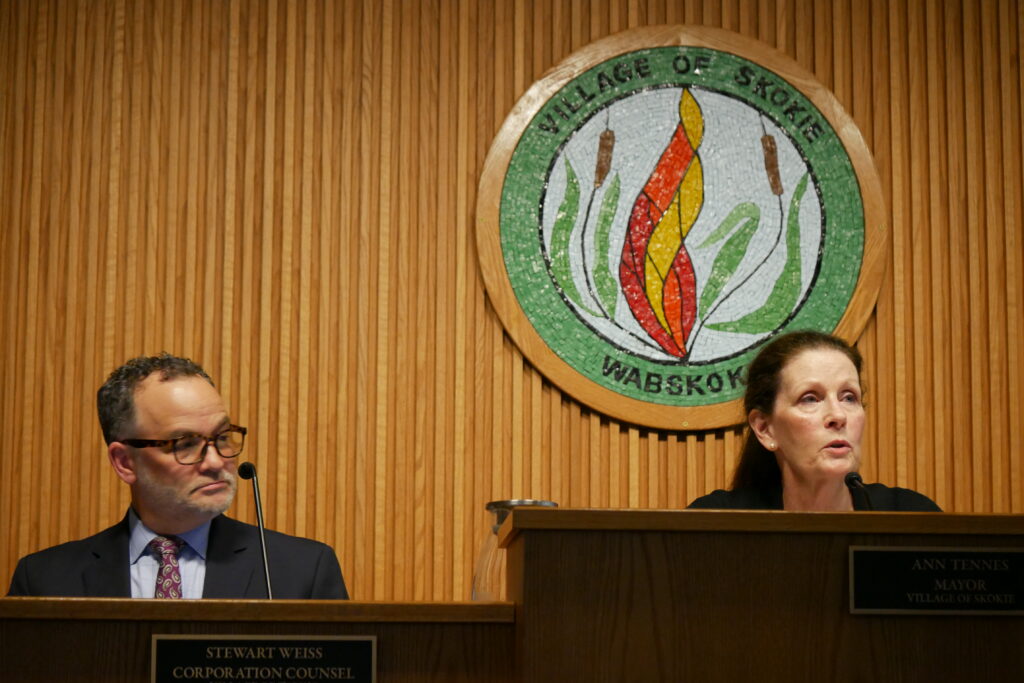
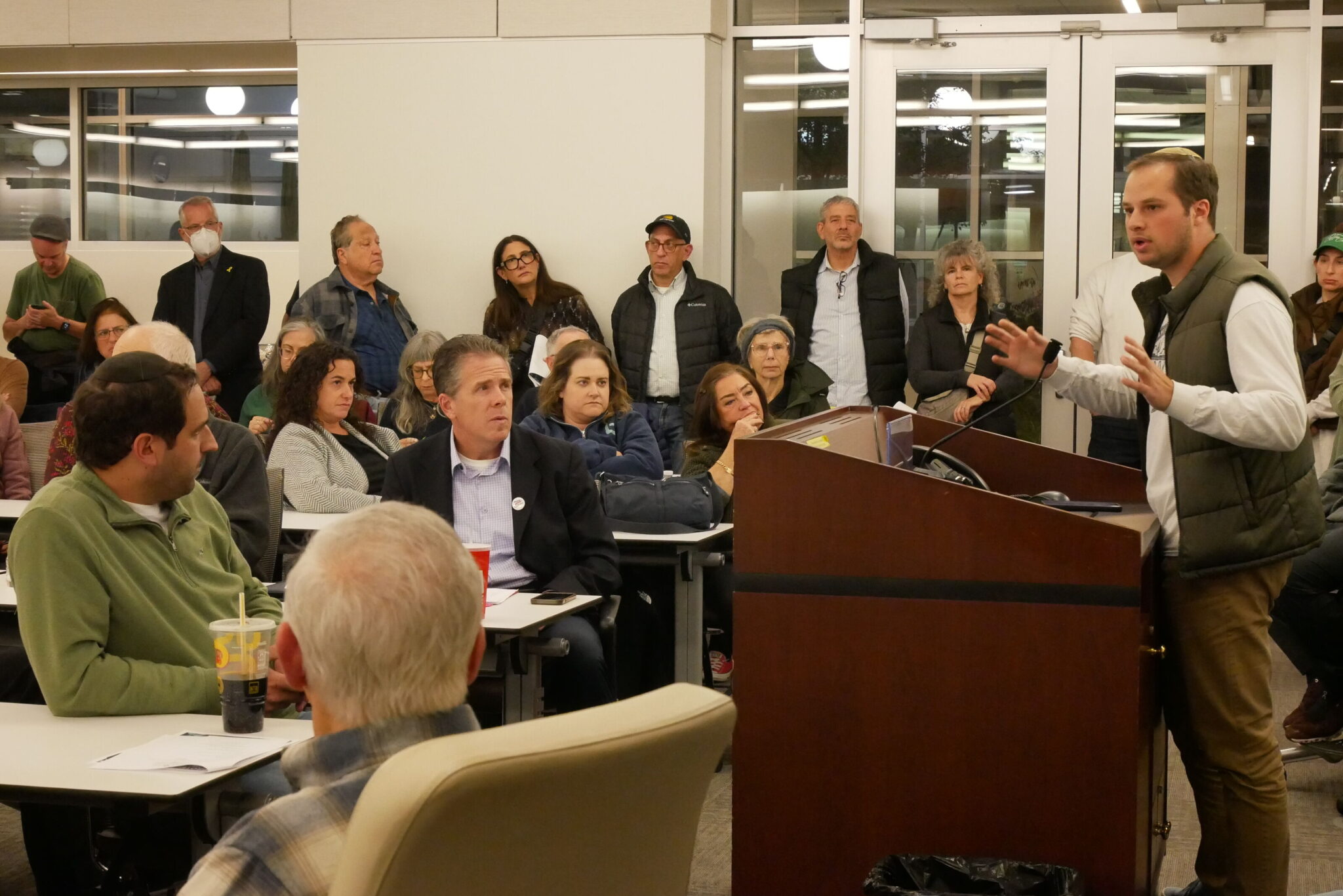
The meeting drew more than 100 people — including State Sen. Laura Fine, Mayor Ann Tennes, Skokie Park District staff, and current and former Village trustees — to the police department’s headquarters at 7300 Niles Center Road.
Village Trustee Alison Pure Slovin addressed frustrations that have circulated over the limited information the village provided so far about the hate crime and cautioned the public to be “very careful about conjecture, rumor and accusations.”
“There was nothing nefarious about the lack of communication from the village,” Slovin said. “It is not the responsibility of the village to notify residents unless there is an actual threat to the community. It is our responsibility to protect those involved, especially when we are talking about minors.”
Police Chief Jesse Barnes outlined what courses of action the juvenile court system may choose for the parties involved, though noted that disposition won’t be shared with the general public.
The Community Engagement Subcommittee of the Human Relations Commission plans to meet on a yet undetermined date to continue the discussion over what measures the Skokie community should take to prevent antisemitic hate crimes.
The subcommittee will likely meet several times before sending their recommendation to the commission for a vote.
‘Accounts conflict’
According to village officials, officers responded to Shawnee Park around 6 p.m. on Oct. 7 after one group of minors “used” antisemitic language at another group of minors. The offending group then chased the other and struck one minor in the leg with a “gel pellet” fired from a toy gun.
The minors were primarily between 13 and 15 years old, officials said.
The exact sequence of events remains “somewhat unclear for certain parts of this investigation” as investigators have received conflicting statements from the more than a dozen youths who were involved, Barnes said.
“Someone at the park said antisemitic and hateful things,” Barnes said. “Accounts conflict as to who said this. Evidence did not establish that the child with the gel blaster made those remarks.”
“Accounts provided within friend groups differ in parts as well, which is not uncommon when dealing with juveniles at this age,” Barnes continued.
In juvenile cases like this, a police department’s investigation into a crime will be forwarded to a juvenile state’s attorney for additional review and offenders may go before a judge or through a “diversionary process” in the court system, Barnes said.
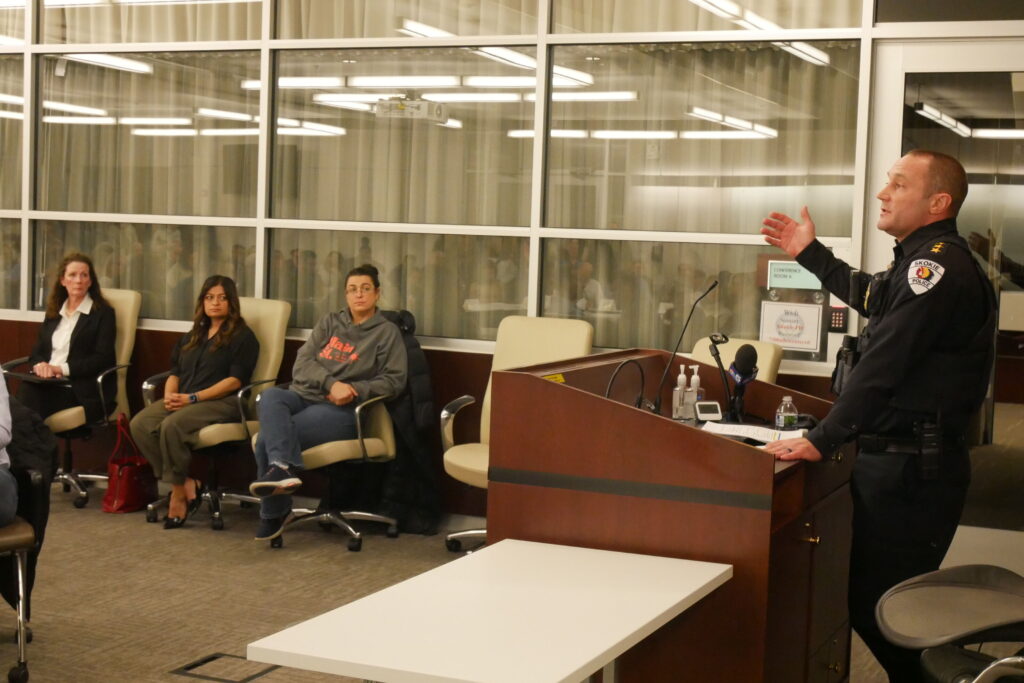
Juveniles involved in a case like this, he said, may also be connected with a youth outreach coordinator within a police department, linked with social services from third-party providers, and asked to complete an act of accountability, like an apology letter.
There are a variety of ways a juvenile case can reach a legal resolution, though that disposition will only be shared with the stakeholders directly involved in the investigation, Barnes said, adding that a number of the kids at Shawnee Park will go to school together for the next several years.
‘How did this happen?’
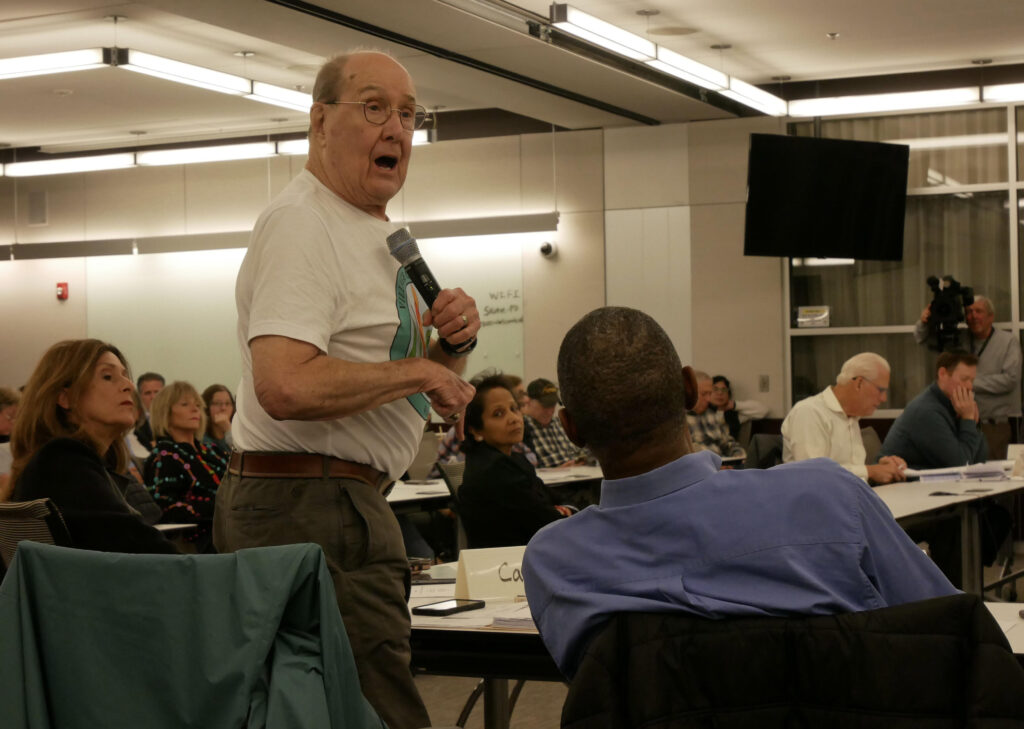
Fourteen different people addressed the commission during Monday’s session, asking questions, offering suggestions about how the village could better respond and voicing concerns about what they saw as a resurgence of antisemitism in Skokie.
Danny Cohn, a Skokie resident, said he was frustrated with the Village’s Oct. 22 news release, which he said did not make clear which group of minors was the instigator or immediately disclose that Skokie police determined the incident a hate crime.
“As a Jew I long understood that there will always be those who hate us. But when our own local government minimizes or sanitizes an antisemitic attack, that is something that we can and must change,” Cohn said.
Adrienne Naumann said she’s lived in Skokie for 50 years but has found the years since Oct. 7, 2023 — the date Hamas violently attacked Israel — “unbearable.” She added she’s not sure people understand how frightened members of the Jewish community are, commenting that many people she knows have signed up for gun lessons.
“I never thought for a million years that in my old age that we would be required to carry guns, that there would be bomb sniffing dogs at synagogue, in addition to hired thugs who are carrying military grade weapons to protect us while we pray,” Naumann said. “How did this happen?”
Mickie Weiss emphasized she’s heard about the hate crime at Shawnee Park from people all over the country, and while she understands the restrictions governed by the Illinois Juvenile Court Act, she wants to know the truth of what happened.
“I get confidentiality, but somehow — how do you stop misinformation if you can’t give correct information?” Weiss asked. “It’s tricky, I understand, but is there any way to do that? And know that this is not just a Skokie issue anymore.”
‘The common theme’
During their discussion, commission members considered various possible measures offered by the public, including creating a third space for teens and publicizing the “Hate Crimes & Bias Motivated Incidents” annual summary report that was presented to the commission in June.
The report noted the Skokie Police Department recorded 28 bias-motivated incidents and one hate crime in 2024. The majority of these incidents, or 66%, were motivated by religious bias. A quarter of these incidents were motivated by race or ethnicity, and 11% by sexual orientation.
The Skokie Police Department classified 12 of the 18 religiously motivated bias incidents as anti-Jewish and six were classified as anti-Muslim.
Brad Sugar, a member of the Human Relations Commission, said he is friends with two of the families whose children were attacked in Shawnee Park. In the conversations he’s had with the families, Sugar said they have emphasized a desire for education.
“The common theme was that they were very interested in the opportunity to educate these children and that they weren’t looking for opportunities to permanently harm them in their lives and their careers or seek particular damage,” Sugar said.
“What was important to them was the children, and they are children, involved in this understand the repercussions of their actions and the fact that words have consequences, especially hateful words and hateful acts in a crime like this.”
Yosef Meyers, a commission member, said authorities need to pay attention less to what offensive things children are saying than why they’re saying it, and Gurjot Bilkhu, another commission member, asked the community to care for the victims, as well.
Commissioner Sidney Freitag-Fey said any measure the commission takes needs to be done clearly.
“I also just want to call witness that the sense of safety has been shattered for many community members and families,” Freitag-Fey said. “So when we think about communications strategies, having that visibility behind what is done is crucial in my opinion.”
Ari Hart, a rabbi at Skokie Valley Agudath Jacob synagogue, told The Record that he has communicated with the families harmed in the hate crime as they are all affiliated with the synagogue.
“They want people to know that this happened,” Hart said. “They want people to know that this is not the Skokie that they hoped for.”
“We want Skokie to be a place that welcomes everyone and this was the opposite of that,” Hart said. “So they’re encouraging us as a community to make sure things like this don’t happen again in Skokie.”
The Record is a nonprofit, nonpartisan community newsroom that relies on reader support to fuel its independent local journalism.
Become a member of The Record to fund responsible news coverage for your community.
Already a member? You can make a tax-deductible donation at any time.

Samuel Lisec
Samuel Lisec is a Chicago native and Knox College alumnus with years of experience reporting on community and criminal justice issues in Illinois. Passionate about in-depth local journalism that serves its readers, he has been recognized for his investigative work by the state press association.
The Record is a nonprofit, community news site from former editors of 22nd Century Media
Our daily coverage of your government, schools, businesses and neighbors is not possible without your support.
Latest

The Record: Shortcut
Related Stories