
‘Work Still To Be Done’: Highland Park council likes plan for Solo Cup land but says more is needed for approval
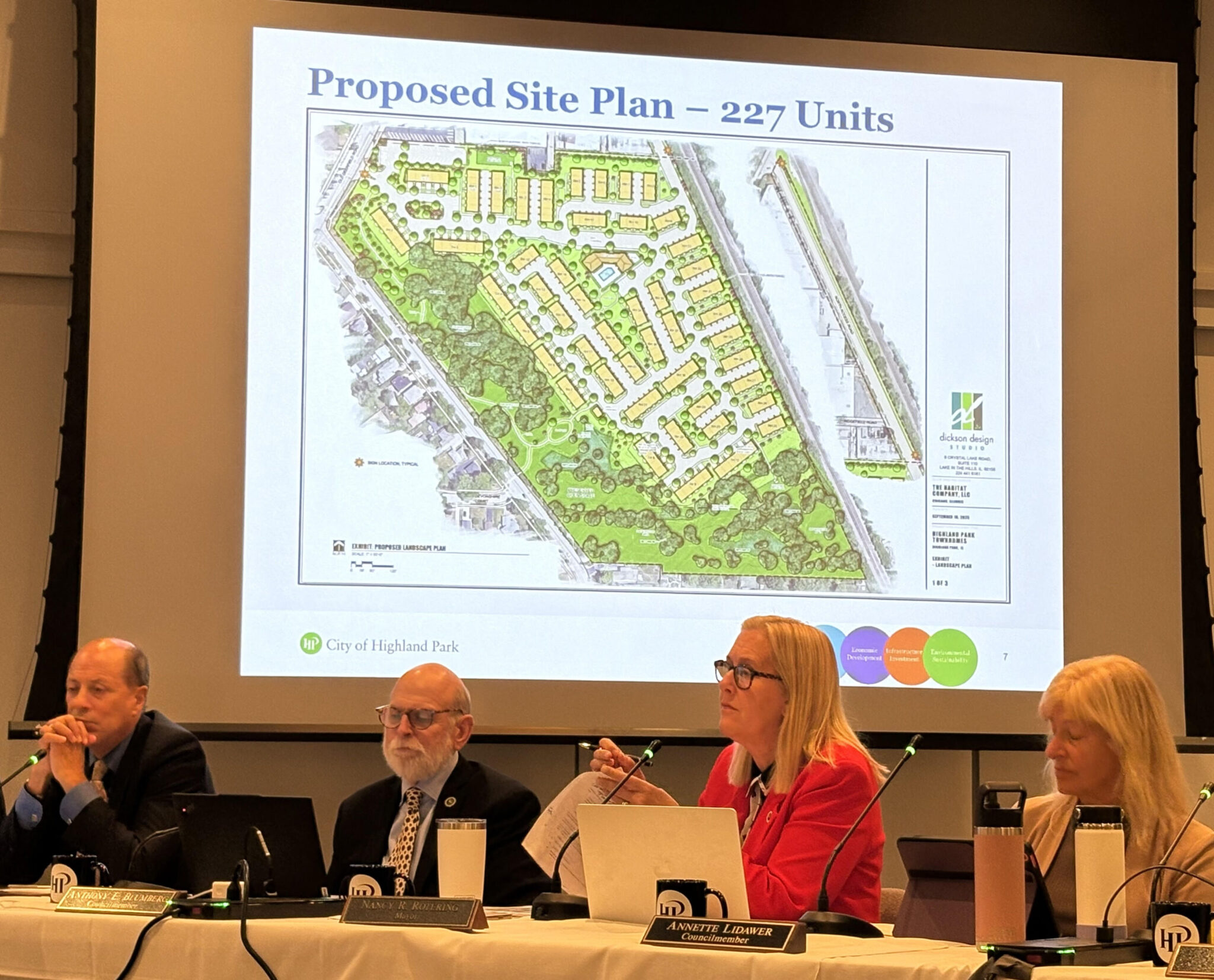
Highland Park City Council got its first chance on Monday to review plans for a 227-townhome community in the former Solo Cup property and set up a second chance.
The council determined the proposal is progressing in the right direction but still needs further tweaks before final consideration. Councilmembers unanimously voted for city staff to draft documents for a preliminary approval of The Habitat Company’s request to rezone approximately 28 acres of land at 1700 Deerfield from industrial to residential in order to make way for the development.
The City Council will consider that preliminary approval at a yet undetermined date, and a final round of engineering work will be completed for the site plan if council members vote in favor of it. The group would then vote on final approval of the development at another future meeting.
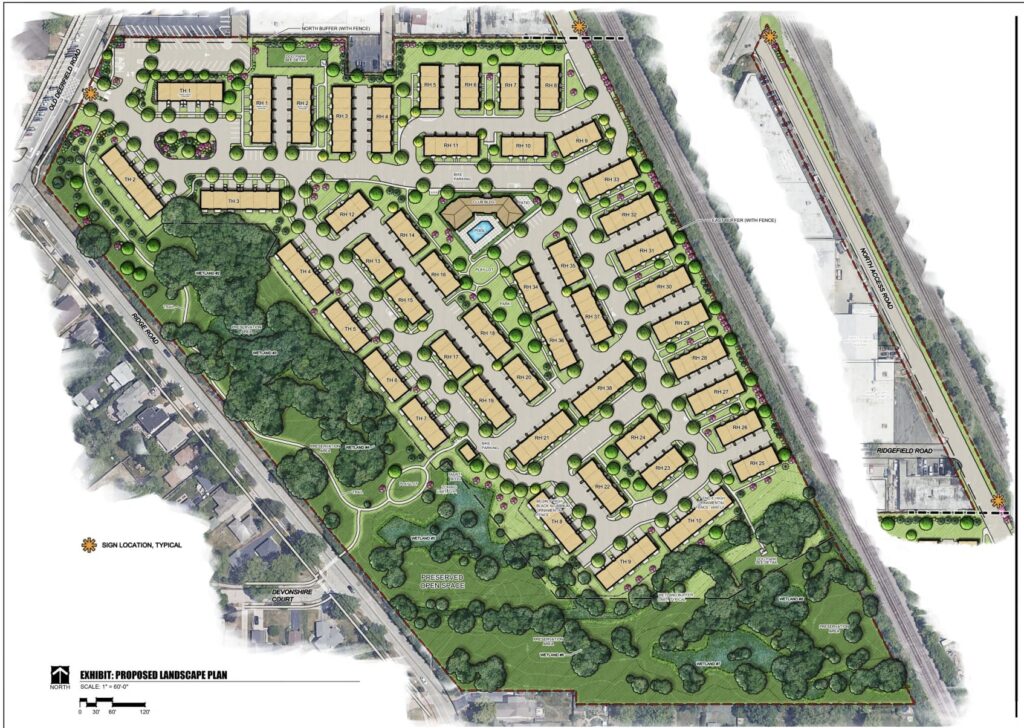
The project would create a 48-building community built around a clubhouse and beside nine acres of green space on one of the largest lots of undeveloped land left in the city. Thirty-four of the units would be reserved for the area’s median income as part of the city’s Inclusionary Housing Plan.
If approved, The Habitat Company, a Chicago-based developer working on behalf of Red Cup Land Company, would likely begin construction of the development this spring, said Zack Zalar, vice president of investments at The Habitat Company. Construction reportedly would take 18-24 months.
The council’s discussion of the development’s plans came after the Highland Park Plan and Design Commission spent 17 hours reviewing the project across six different public meetings this year. The commission eventually voted 5-2 on Sept. 9 to recommend the project for City Council approval.
Highland Park City Council’s review also came after The Habitat Company made numerous revisions to the site plan to address a range of concerns voiced by the commissioners and members of the public.
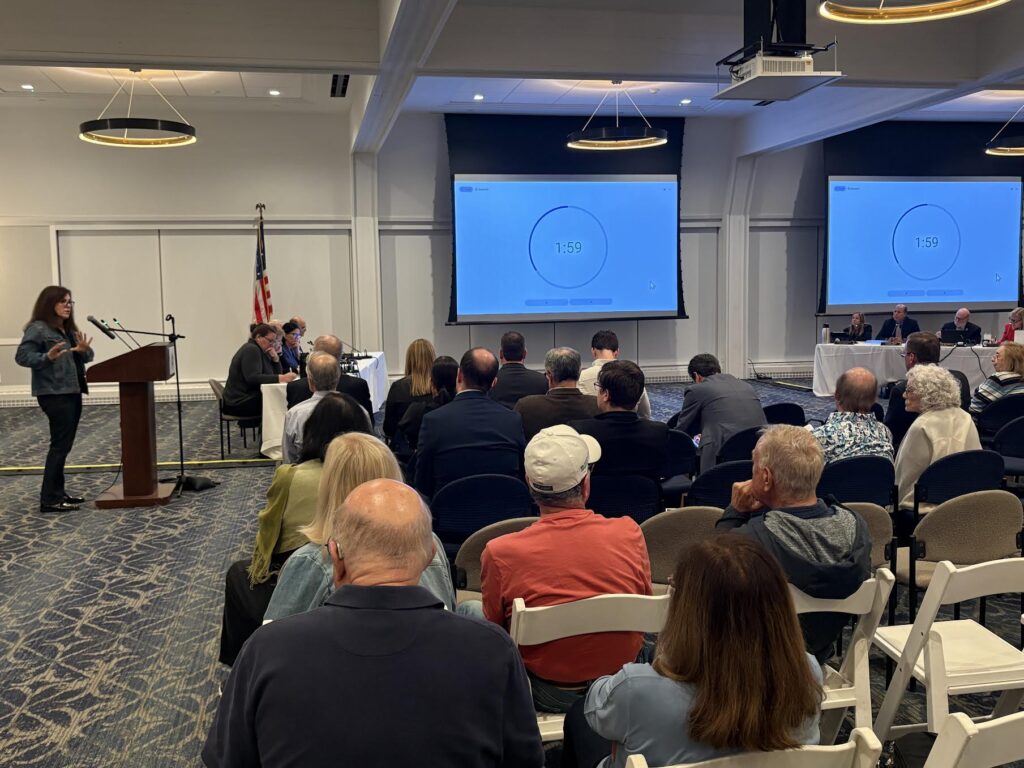
A number of those concerns, including density and impact on local traffic, were discussed again on Monday during the four-hour special meeting in front of more than 50 attendees on Sept. 29 at The Moraine, 101 Park Ave.
“I do think there are certain asks that you’ve heard from the community and us tonight and I’d like to see what we come up with, because I think it’s got the bones for a very good plan,” Councilmember Annette Lidawer said to The Habitat Company’s representatives.
“I think this is what our community wants, which is residential in a mixed area, but there’s a lot of work still to be done, both by you and all of us,” Lidawer said.
Among other provisions, councilmembers requested guarantees the work will be completed (in case of construction slowdowns) and a review from the Illinois Environmental Protection to ensure hazardous materials from the former industrial site are mitigated.
Councilmembers also asked the developer to make the 1,430-foot walking trail accessible, for electrical vehicle chargers to be added, and for an agreement that a second traffic study be completed once the homes reach full occupancy to ensure traffic projections were accurate.
From the gallery
Residents repeated during the meeting’s public comment that they disliked the project’s density and the townhomes’ height in comparison to the surrounding neighborhood. Some also argued their daily experiences driving in the area indicated the project will add too much traffic.
Zalar said The Habitat Company is not willing to reduce the project to any fewer buildings. The developer has already shrunk the project four times from the original proposal of 262 townhomes.
While this may not be perfect equilibrium … it is a pretty darn good landing given the complexity of the stakeholders involved.”
Andrés Tapia, Highland Park councilmember
Because of proposed improvements to area intersections and projected traffic volumes for year 2031, The Habitat Company’s traffic study, which was reviewed by the city’s independent contractor CivilTech, determined the area roads have “sufficient reserve capacity” to accommodate growth.
“I received numerous emails from residents discussing many anecdotal experiences; these are very powerful experiences. I’ve lived in Highland Park for more than 16 years, I’ve had a variety of anecdotal experiences that suggest various traffic issues,” Councilmember Tony Blumberg said Monday.
“Often, our anecdotal experiences conflict with the reports and recommendations of traffic studies which often do not seem fundamentally intuitive. My experience on commissions and council is that the traffic studies, although not intuitive, do historically tend to be fairly accurate.”
Highland Park Police Chief Lou Jogmen said the police department has reviewed the traffic plan and he is comfortable the department will “persevere and be fine with response times.”
Some councilmembers and individuals from the public also argued this could be the best version of a development for the former Red Solo site the city can hope for, and the council should not reject the plan as the owner could develop it in a less desirable direction.
A 500-unit housing development was first proposed for the site in 2018 from another developer. Red Cup Land Company then proposed turning the lot into an industrial center with 300,000 square feet of warehouse and distribution space. Both plans were rejected by the city
“Change is always difficult. We get used to certain things and we love our streets and the way things move, we get used to them,” Councilmember Andrés Tapia said. “So the question is how do we find the right balance because as a city we do desire more residents. A declining city is one of fewer people.
“We’ve read everything and we’re really trying to find that thing. While this may not be perfect equilibrium in terms of number units and what may feel like overcrowding, it is a pretty darn good landing given the complexity of the stakeholders involved.”
The Record is a nonprofit, nonpartisan community newsroom that relies on reader support to fuel its independent local journalism.
Become a member of The Record to fund responsible news coverage for your community.
Already a member? You can make a tax-deductible donation at any time.

Samuel Lisec
Samuel Lisec is a Chicago native and Knox College alumnus with years of experience reporting on community and criminal justice issues in Illinois. Passionate about in-depth local journalism that serves its readers, he has been recognized for his investigative work by the state press association.
The Record is a nonprofit, community news site from former editors of 22nd Century Media
Our daily coverage of your government, schools, businesses and neighbors is not possible without your support.
Latest

The Record: Shortcut
Related Stories