Glencoe weighs options to encourage preservation, discourage teardowns
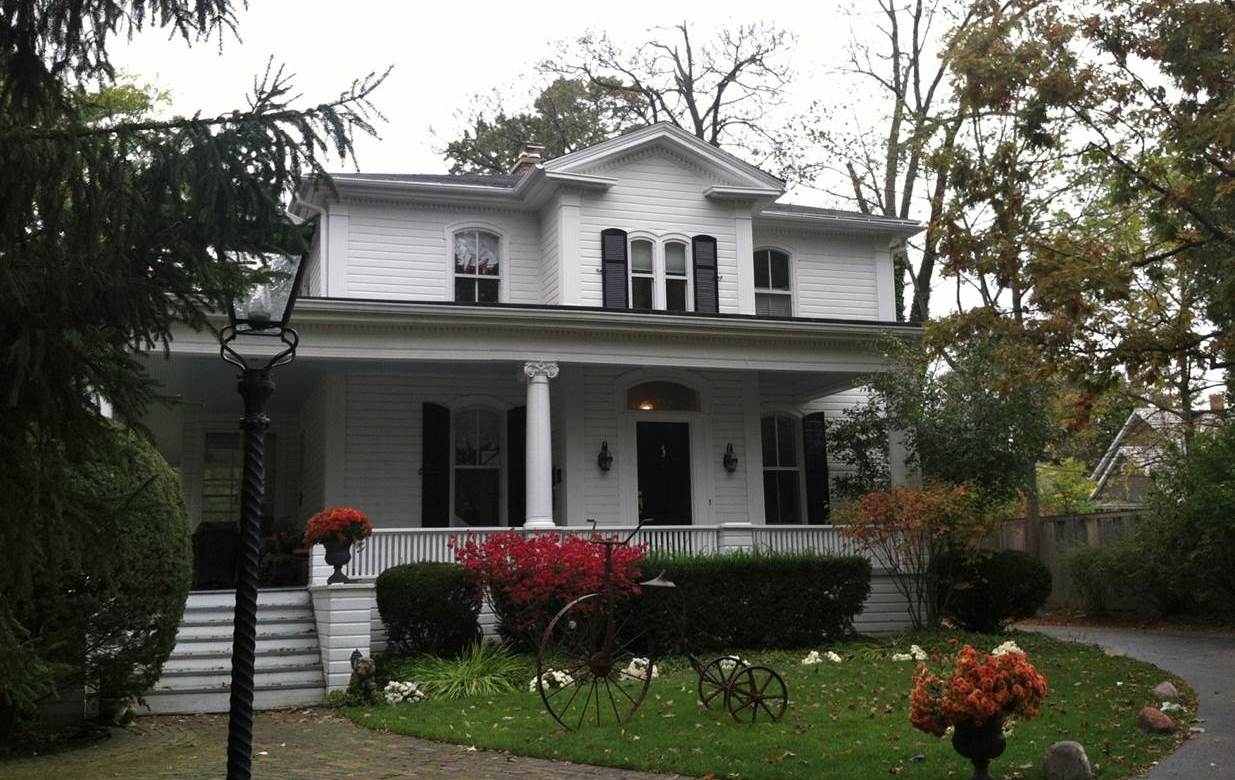
Discussions are underway in Glencoe about how to support the preservation of historic homes in town.
Peter Van Vechten, chair of Glencoe’s Preservation Commission, and Adam Hall, assistant village manager and staff liaison for the commission, presented a plan to the Village Board’s Committee of the Whole session on Wednesday, Aug. 20, with procedural changes and homeowner incentives.
While trustees acknowledged the importance of preservation, its members did not fully support the proposals.
“This is one of the hardest, most complicated projects,” Village President Howard Roin said to Van Vechten. “We appreciate all the hard work.”
The Village of Glencoe classifies historic houses into three categories, according to village documents:
- Certified landmark: “A property formally designated by the Village for its historic significance. Subject to full regulatory oversight by the Preservation Commission.”
- Honorary landmark: “A recognized property with historic value subject to demolition delay and advisory review by the Preservation Commission, but not subject to full regulatory oversight.”
- Historically significant: “An internal Preservation Commission classification for properties of interest, not eligible for incentives, not subject to regulatory oversight or recognized formally.”
Unlike houses in the latter two categories, property owners cannot alter, demolish or physically modify the exterior of a certified landmark, according to the village website.
Wednesday’s meeting focused only on the first two designations.
Since 1990, the Village has designated 95 houses as “honorary” and 12, plus one pending, as “certified.” Yet, the rate of honorary landmark designations has declined since an ordinance modification passed in 2013.
Until 2013, both honorary and certified landmarks were eligible for the State of Illinois Property Tax Assessment Freeze, which provided a financial incentive to apply for landmark status. But in 2013, legislation was changed such that only certified landmarks became eligible.
As a result, the Village has designated only three homes as honorary landmarks between 2013 and 2025. In comparison, 92 were named honorary landmarks between 1990 and 2013.
Meanwhile, the rate of demolition of honorary landmarks has increased. Thirteen honorary landmarks were demolished between 1990 and 2013, at an approximate average of one every two years, whereas eight honorary landmarks have been demolished since 2013 with two pending, approaching a rate of one per year.
Currently, Glencoe has 74 honorary landmarks and 12 certified landmarks with one pending.
“When you think about what does it mean to be in a particular place, it’s all about memory of that place. … So when you lose one of those pieces of what’s forming our collective memory, you do feel a loss,” Van Vechten said.
Economic proposals
In his proposal to the board, Van Vechten focused on enhanced protections and incentives, starting with economic ones.
“Tonight, this is all about encouraging investment in long-term stewardship for historic properties through investments that would require (individuals) to only apply to certified and honorary landmarks,” he said.
Homeowners in Glencoe must apply for a permit to renovate, remodel or physically alter their house. Unless otherwise specified, permit fees are 3.5% of the construction cost, which includes the grand total of materials and labor.
The Preservation Committee proposed offering 90% building permit fee rebates for additions/renovations for certified landmarks and 50% building permit fee rebates for additions/renovations for honorary landmarks — both up to $50,000.
This incentive would require a minimum investment of $50,000 in eligible improvements, which would be transferable to future property owners, Hall said. Work that is not considered part of the property’s historical significance, such as fences and AC units, would not qualify.
The commission also proposed a property tax rebate for certified landmarks — $2,000 or the total property tax bill, whichever is less, rebated annually for one 8-year period.
To keep costs for the Village affordable, the commission proposed a cap of funding four certified landmark projects and two honorary landmark projects per year on a first-come-first-serve basis.
Currently, there are no limits for the number of projects awarded in either category.
But these proposals still raised financial concerns for the board.
Roin said that the financial incentive programs seem expensive, and that the cost of the honorary program seemed high for the benefit. He questioned whether having the “honorary” category provides any benefit.
“We have to evaluate how much we’re prepared to pay to make it work,” he said.
Zoning proposals and other changes
The commission also asked the Village Board to refer the matter of zoning incentives, including flexible setback requirements and building height among other considerations, to the Zoning Board.
Such zoning relief, if passed, could offer an alternative to financial incentives, Hall said.
Trustee Hilary Scott supported the idea, calling zoning relief an “essential part” of the package.
Incentives that don’t cost the village any money but preserve the house could be a “useful category,” Trustee Gary Ruben added.
Roin said that the idea could be advantageous, but he feels the idea needs to be fleshed out further.
“I think we are interested, but it’s really complicated,” he said.
Other recommendations included longer demolition delay (from 180 to 360 days), necessary owner consent for an honorary designation, and required owner attendance during commission review of landmarks designations.
A way forward
Before closing the discussion, Roin said that the most difficult part of adopting the Preservation Commission’s recommendations is striking the right balance of financial incentives and fiscal responsibility.
Following the Committee of the Whole, the Village Board requested additional information on some of the incentives, Hall said.
At the next Village Board, on Sept. 18, the board has the option to make a formal recommendation that would refer a review of zoning incentives to the Zoning Board, he added.
“We’re quite sure there are concerns. What we’d like to do is figure out how can we pass the concerns and get to something that is meaningful and starts to support preservation in a stronger way,” Van Vechten said.
The Record is a nonprofit, nonpartisan community newsroom that relies on reader support to fuel its independent local journalism.
Become a member of The Record to fund responsible news coverage for your community.
Already a member? You can make a tax-deductible donation at any time.

Laura Horne
Laura Horne is a rising junior at Northwestern University pursuing majors in Journalism and Psychology and a minor in Legal Studies. Originally from Charlotte, North Carolina, she reports for The Daily Northwestern and has edited for North by Northwestern magazine. She enjoys discovering new music and new coffee shops.
The Record is a nonprofit, community news site from former editors of 22nd Century Media
Our daily coverage of your government, schools, businesses and neighbors is not possible without your support.
Latest

The Record: Shortcut
Related Stories