
Police chief, village attorney rebuff latest proposal to respond to ICE, Border Patrol in Skokie
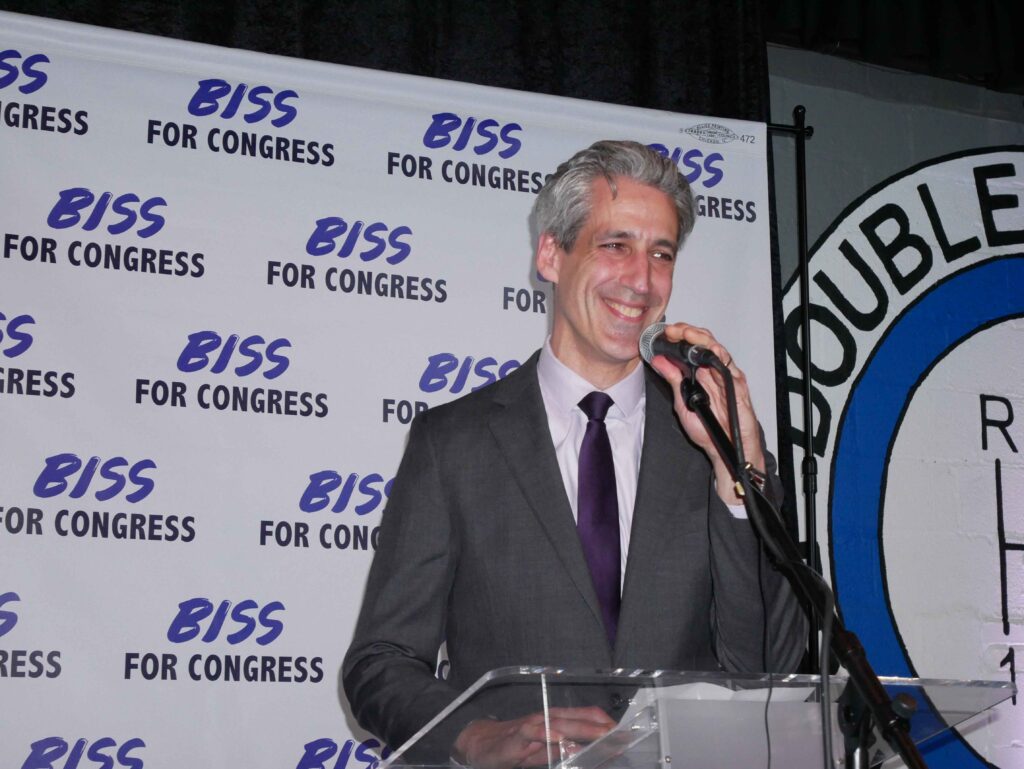
A draft ordinance Skokie Trustee Gail Schechter submitted to village staff earlier this year outlines how Skokie police officers “shall” respond to reports of the actions of federal immigration enforcement.
“If local law enforcement officers arrive after one or more individuals have been seized, said officers shall immediately pursue available information to locate and identify the detaining individuals and detained individual(s) for the purpose of verifying lawful authority,” a portion of the draft law says.
Yet that ordinance will likely never come before the Village Board for consideration after Skokie Police Chief Jesse Barnes and Skokie’s corporation counsel Steven Elrod argued during a recent committee meeting that the law would put Skokie police officers in “jeopardy.”
The draft ordinance was the subject of a March 17 Committee of Whole discussion after Schechter, Trustee Lissa Levy and a handful of local residents urged the village earlier this month to enact measures to protect public safety in the event Immigration and Customs Enforcement or Customs and Border Protection agents return to the North Shore.
Patrick Deignan, Skokie’s communications director, confirmed via email that Schechter’s draft legislation “is not under consideration” and will not be on the agenda for the Village Board’s next meeting, April 6.
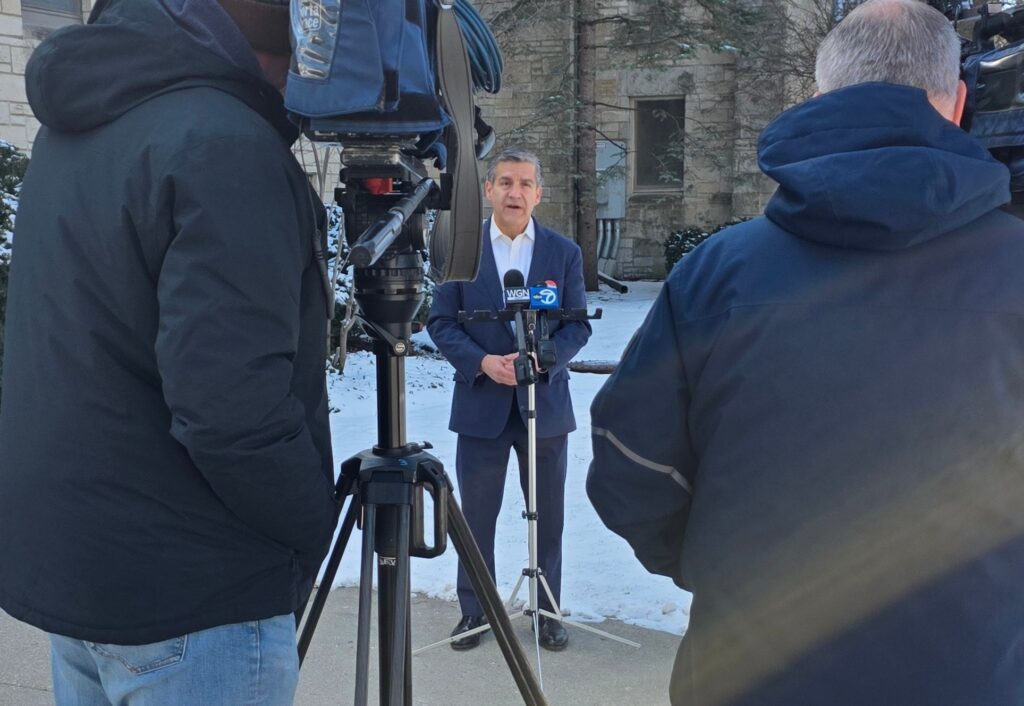
Barnes said the Skokie Police Department is “looking to” send a sworn supervisor to the scene of immigration enforcement activity to attempt to identify and liaison with federal officers. Additionally, Skokie police can document activity they directly observe via body-worn cameras, and they will likely speak with the other civilians on scene to assess any public safety concerns.
But he noted, under the supremacy clause in the U.S. Constitution, local police don’t have the authority to direct federal officers and impeding a federal operation could put a police officer at risk of losing their certification and being charged with a crime.
“One of the things that I think we’re all having tension with — and I mean this in this room, in Skokie, in the country — is we’re trying to maintain lawfulness in the face of lawlessness,” Levy said.
‘Unrealistic expectations’
Seated before the trustees on March 17, Barnes said the Skokie Police Department’s procedure and policy manual is nearly 1,400 pages long and staff completed 31,000 hours of training last year, much of which related to de-escalation.
But the village does not have a policy for how officers “shall” respond to every possible call for service, and Skokie police are trained on the village’s guidelines, not the federal government’s, he said.
For example, Skokie’s use of force guidelines are “more strict” than the federal government’s, Barnes said.
Barnes said he does not support mandating how exactly Skokie police shall respond to federal immigration operations, because officers are trained to respond to the “totality of circumstances” and they are not trained to know if or how federal agents are running afoul of federal policy.
If federal agents are allegedly breaking the law, there is a “high bar” for local police to take enforcement action, Barnes said. Whether federal agents have broken the law is typically determined by state’s attorneys or the attorney general, not police officers on the street, he said.
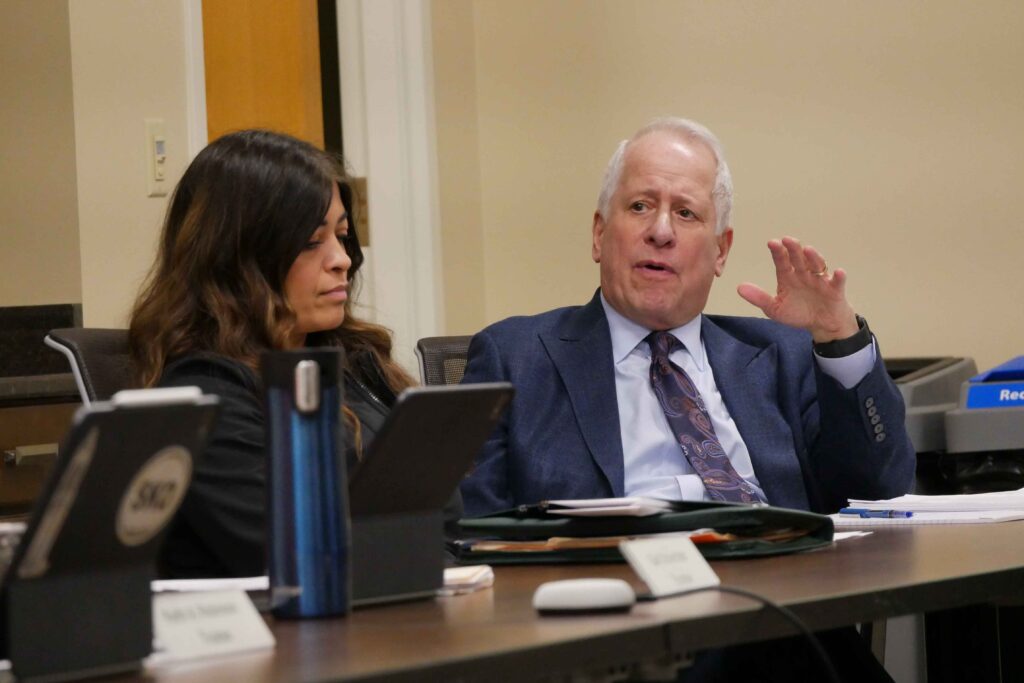
A local police officer, Barnes said, cannot impeded or slow down an agent acting in a federal capacity, as that officer could face criminal consequences.
If Skokie officers make an arrest in another town, or another police department makes an arrest in Skokie, the agencies typically provide information to each other, Barnes said, but federal authorities reportedly are under no obligation to provide information to local police.
Like any other call for service involving another law enforcement agency, Skokie police will attempt to have a conversation with federal agents on scene, but “we’re probably not going to” do that if federal agents are in the middle of an arrest or use of force, Barnes said.
“It’s really difficult to give people concrete answers on hypotheticals because every specific fact we get is going to matter,” Barnes said of fielding questions about how police will respond to ICE.
“We cannot just go stop a car because a resident calls us and says they want us to stop a car,” he went on. “There is a big disconnect often — if we give people unrealistic expectations, we’re going to lose their trust when we cannot apply to those expectations.”
‘Spirit and content’
Elrod reiterated Barnes’ objections to the use of “shall,” “will” or “must” in the proposed ordinance, adding that it is not technically the role of trustees to adopt laws on how village staff conduct day-to-day operations.
He cautioned against urging local police to act unlawfully in response to potentially unlawful actions, and noted a recent U.S. District Court case upheld that it is lawful for municipalities to decline to assist federal operations in accordance with Illinois’ TRUST Act.
Elrod said he reviewed Skokie’s police handbook and related ordinances and, because he represents at least 20 other municipalities, he was “tremendously impressed” with the current guidelines.
Likewise, Mike Charley, Skokie’s director of health and human services, said on March 17 the board has already passed three ordinances amending the Human Relations Chapter of Skokie’s bylaws to strengthen or affirm the village’s support for its immigrant residents.
Levy asked Barnes if it was his contention that the Skokie Police Department’s policies already have the “spirit and content” of Schechter’s proposed ordinance proactively in place, and the absolutist language of the draft law was the issue.
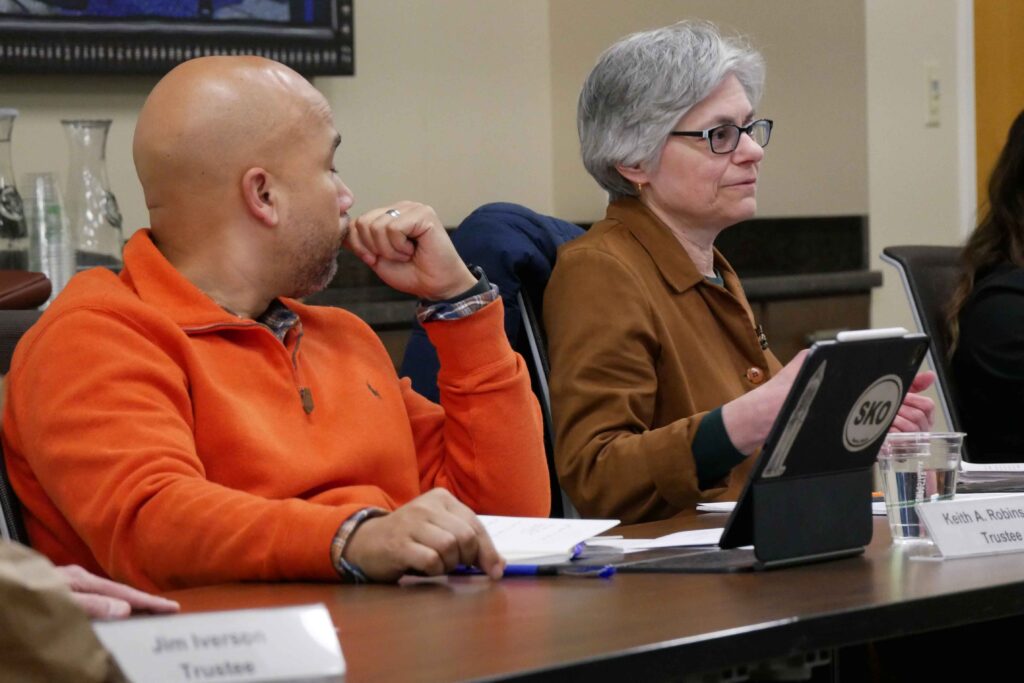
Barnes said a “high percentage of the tenable and lawful parts” of Schechter’s proposed ordinance are already standard operating procedure, only that they’re not phrased in absolute terms and may not specifically address immigration enforcement.
After the board’s discussion, Skokie residents emphasized they want more clarity on what to expect from Skokie police if they respond to incidents of ICE activity or protests.
“I would hate for Skokie to wake up one morning and find out that the years and the efforts the police spent trying to build community partnerships and relationships and neighborhood coffee klatches and everything, have gone equally down the drain,” Skokie resident Emi Yamauchi said.
Mayor Ann Tennes said there is an inherent imbalance in looking to local police to solve a “federal issue,” village staff will work on communication to the public and her office plans on sending letters to its federal partners describing the discussion and “imploring them to step up.”
The Record is a nonprofit, nonpartisan community newsroom that relies on reader support to fuel its independent local journalism.
Become a member of The Record to fund responsible news coverage for your community.
Already a member? You can make a tax-deductible donation at any time.

Samuel Lisec
Samuel Lisec is a Chicago native and Knox College alumnus with years of experience reporting on community and criminal justice issues in Illinois. Passionate about in-depth local journalism that serves its readers, he has been recognized for his investigative work by the state press association.
The Record is a nonprofit, community news site from former editors of 22nd Century Media
Our daily coverage of your government, schools, businesses and neighbors is not possible without your support.
Latest

The Record: Shortcut
Related Stories