
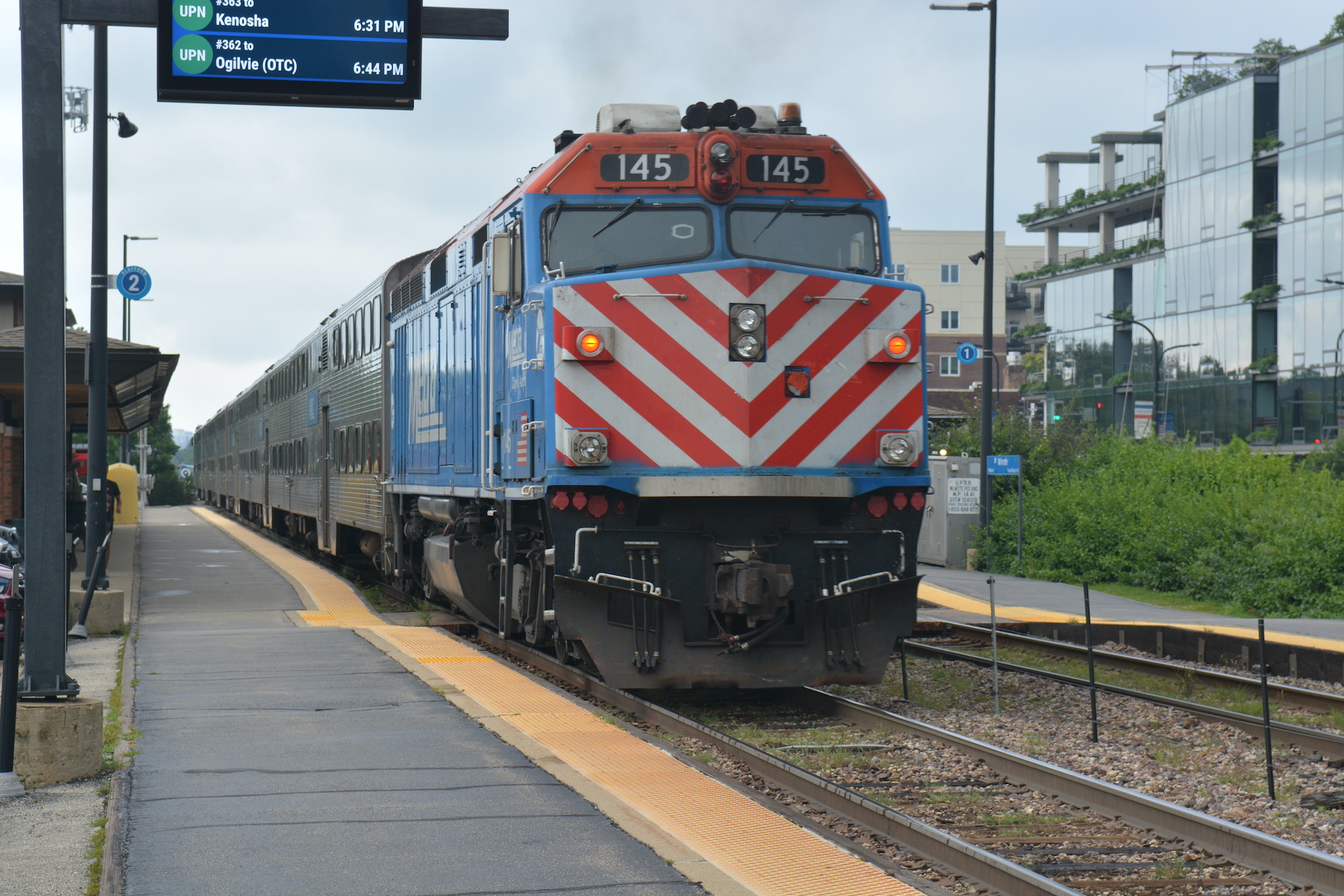
CTA, Metra propose fare increases of 25, 50 cents a ride
(Editor’s Note: This story was reported by Igor Studenkov for the Evanston RoundTable, a neighboring independent newsroom. It was shared with The Record as part of an ongoing collaborative effort.)
The Chicago Transit Authority and Metra still kept any potential service cuts close to their vest as they released their proposed 2026 budgets this month.
The two agencies both face a fiscal cliff as their COVID-19 stimulus funding runs out, but CTA is projected to hit a shortfall first, in mid-2026, while Metra says it will run out of that money in the final quarter of next year.
The Illinois General Assembly’s veto session began on Tuesday, Oct. 14. With funding uncertain, the Regional Transportation Authority, which has the final say over the CTA, Metra and Pace budgets, instructed those three agencies to prepare two budgets: one that assumes a financial bailout from the state to cover funding gaps and one that does not.
For both CTA and Metra, the key difference is that, with help from the state, they would be more proactive about filling vacancies and improving schedules
In any case, though, RTA asked all three transit agencies to raise their fares by at least 10%. While Pace released its new fare proposal back in September, CTA and Metra released them with their respective budgets this month. While riders would pay more no matter what, CTA is proposing an expanded discount program for students who take the bus or the train to their high school.
Pace was scheduled to release its budget on Wednesday, Oct. 15. The state legislature’s veto session takes place through Oct. 16 and Oct. 28-31, and transit is expected to be a top item on the agenda.
All three agencies will finalize their budgets and send them to RTA for approval in November.
CTA
In addition to the budget that assumes that the fiscal cliff will be averted (what it calls the “baseline budget”), CTA developed a “growth budget” outlining what it would do if RTA receives twice as much new state funding as under the baseline budget. That budget goes beyond modest service improvements to call for bus service improvements and extensions (along the lines of the extension of CTA Route 93 California/Dodge to Logan Square).
Both the baseline and growth budgets call for more social services outreach on L trains and more funding for police and other security services.
Under the proposed new fare schedule, CTA bus fares would go up from $2.25 to $2.50, and L fares would go from $2.50 to $2.75. In a notable change, the cost of paying with a debit or credit card (whether physical or virtual) instead of a Ventra card would go up to $3 “to offset additional merchant expenses.”
Both CTA and Pace currently offer discounted fares to high school students on school days between 5:30 a.m. and 8:30 p.m. Pace also lets students buy 30-day reduced fare passes, which currently cost $30 and would cost $33 under the proposed fare increase.
CTA is hoping to remove the time and day restrictions for student discounts “so students can pay the discounted fare to get to extracurricular activities, jobs, internships, and other activities on weekends and non-school days throughout the year, including summer months.”
On top of that, weekly passes for high schoolers would cost $7.50, and 30-day passes would cost $30. In recent years, Pace has agreed to accept most CTA passes, but these passes would be for the CTA only.
Metra
While Metra officials announced in September that fare increases were coming, they didn’t share any figures. The draft budget released last week shows that riders traveling between Chicago and any local station would see one-way tickets rise from $3.75 to $4.25. The fare for riding to any station other than Ogilvie Transportation Center in Chicago, which has been a flat $3.75, would also go up to $4.25.
One-day passes, which are equivalent to the cost of two one-way tickets, will go up accordingly. Monthly passes would increase from $75 to $85, which, as Metra officials noted, puts it in line with the proposed CTA/Pace 30-day pass increase.
One-day weekend/holiday passes would also go up from $7 to $8, and passes that are good for both weekend days would go from $10 to $11.50. The weekend passes are currently unique because they work system-wide.
Add-ons that allow Metra riders to use daily and monthly passes on CTA and Pace would increase as well. The Regional Day Pass would go up from $2.50 to $3, while the monthly Regional Connect Pass would go up from $30 to $45.
Notably, Metra plans to allocate $141 million to 200 new bi-level passenger rail cars to replace the oldest cars currently in service. According to data compiled by the RTA, Metra still uses 339 Budd coach rail cars and 27 Pullman bi-level cars, the oldest of which were built in the 1950s and the newest of which were built in the late 1970s.
Most, but not all, of those cars are assigned to Union Pacific lines, including the Union Pacific North line that runs through the North Shore. The new cars, which are being built by Alstom, a French rolling stock manufacturer, would be more accessible than most rail cars in the existing fleet with doors and lower-level seats at ground level.
While the Metra board didn’t identify any issues with the budget itself, several members expressed concern with the uncertainty of the veto session and potential federal funding freezes.
More budget issues
Metra Director Rodney Craig, who represents the Northwest Cook County suburbs, also said he’s worried about how much the commuter rail agency will ultimately need to pay Union Pacific for the right to use its tracks.
“Where in our budget is that?” he asked.
The budget mentions that operating expenses would increase by 4.7% compared to 2025 in part due to extra “funding for additional access, trackage, rental and legal costs associated with Union Pacific and BNSF agreements.”
One small point of contention was Metra Capital, or MetCap, funds, or money from ticket revenue and sales tax revenue that Metra set aside to help provide matching funds for state and federal capital project grants. The agency paused that practice during the pandemic, but Metra’s executive director lobbied the board to bring it back next year due to a backlog of routine projects, like on aging bridges, for example. The budget proposes setting $60 million aside for MetCap whether the state comes through with a bailout or not.
While the majority of the board favored this proposal, Director Romayne Brown, who represents Cook County at large, said that, given all the uncertainty, it would be better to keep as much money as possible in operations.
“It’s not the time [for it] without certainties from Springfield,” Brown said. “We don’t have any certainty from the federal government about any grants or loans or anything like that. My vote is no.”
Director Mimi Rodman, who represents Evanston and parts of northern and western Cook County, said she hoped the veto session would bring some clarity moving forward.
“We’ve absolutely got to get this bill passed down in Springfield,” she said, “so that we can meet what our riders expect of us and continue that quality of service.”
The Record is a nonprofit, nonpartisan community newsroom that relies on reader support to fuel its independent local journalism.
Become a member of The Record to fund responsible news coverage for your community.
Already a member? You can make a tax-deductible donation at any time.
The Record is a nonprofit, community news site from former editors of 22nd Century Media
Our daily coverage of your government, schools, businesses and neighbors is not possible without your support.
Latest

The Record: Shortcut
Related Stories