
‘A Matter of Survival’: Costs up, spirits down as tariffs take a toll on local businesses
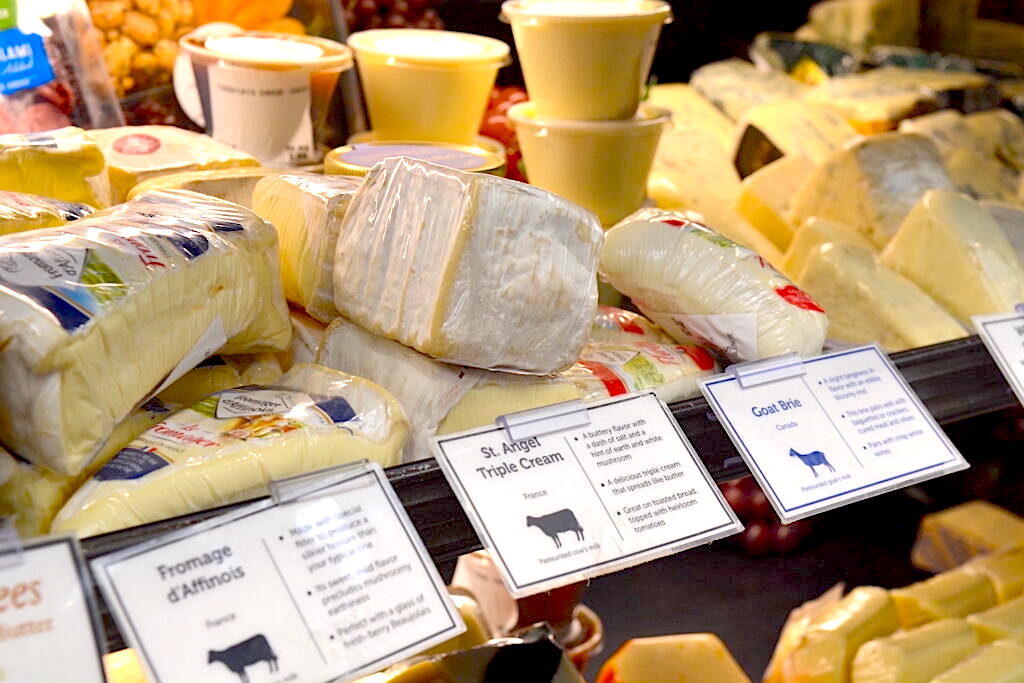
For the first time in 45 years, Convito Café and Market’s Candace Warner does not know the price of her holiday preorders.
Convito’s seasonal selection of Italian desserts — including panettone, torrone and panforte — may not hit the shelves of the market at 1515 Sheridan Road in Wilmette this year, or at least not in quantities as high as years past.
Typically, Warner preorders her Italian holiday goods in late spring at discounted rates. But now, her overseas partners are unsure of their future shipping costs and cannot promise her that.
“They’re like ‘Well, we will let you know,’ and I don’t like to preorder stuff that I don’t know the prices of,” Warner said.
Like other local small businesses, Convito is feeling the trickle-down effects of new, increased and constantly changing tariffs imposed by President Donald Trump’s administration.
The changes began with an executive order to install a 10% tariff on imports from China and a 25% tariff on imports from Mexico and Canada effective Feb. 4, according to PBS. Since then, the president has continued to pursue and pause tariffs. For instance, recently on Aug. 7, he imposed rates of 10% and higher on more than 60 countries and the European Union, according to the Associated Press.

A tariff is a tax that a national government imposes on another country for goods that will be exported to the taxing government.
Tariffs can provide revenue to the taxing body and encourage businesses to buy goods from domestic industries. Often, companies facing the tariffs pass the burden by increasing their prices to account for their increased expenses. In turn, costs go up on imports, making it more difficult for small businesses — which make up 97% of U.S.-based importers, according to an April report by the U.S. Chamber of Commerce — to buy the foreign products they rely on.
For small businesses, switching supplies can be difficult. In order to cover the increased prices on foreign goods, many U.S. small business owners are forced to either shoulder the higher costs or raise their prices to account for them.
For Warner, whose business is a market and a restaurant, holiday items aren’t the only affected goods. The cost of importing tea is up 7% chocolate 10% and butter 13%, she said.
Coupled with the construction in her store’s shopping center, Plaza del Lago, Convito’s sales have decreased while its prices have increased.
“I have so many other business challenges right now that I have to pay attention to,” Warner said. “… We’re going to try to raise prices when we see them coming through our invoices. That’s all we’re doing. I’m not going to preemptively do anything.”
Now, Warner faces the difficult balancing act of responding to rising costs while not pricing Convito out of business. And she is not alone in the struggle.
Combatting tariffs
Mark Salmon, owner of 501 Local at 501 Chestnut St. in Winnetka, said the restaurant tries to keep its prices at 30% food cost, which is standard.
Raising prices, however, is an unfortunate current reality, although a “last resort,” he said.
“I’m very aware of the fact that we can’t price ourselves out of the market,” Salmon said.
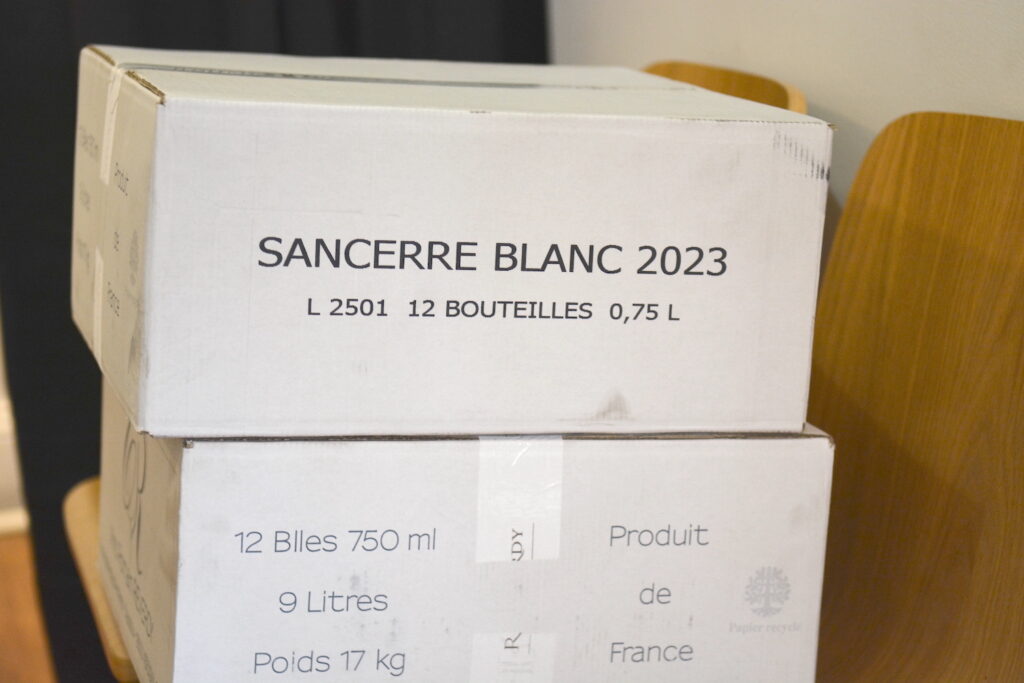
For his needs, Salmon has seen notable price increases on Sancerre, a French sauvignon blanc wine, as well as cocoa powder.
In some instances, Salmon said his restaurant is substituting ingredients to combat tariffs; though, that is not always easy since quality is the priority for 501 Local, Salmon said.
Born out of the COVID-19 pandemic, 501 Local is no stranger to adapting.
“The quality, it cannot be compromised,” Salmon said. “We try to innovate as best we can. We have weekly meetings about introducing more things or more affordable things and stuff like that. Definitely it keeps us on our toes for sure.”
‘Pinched’
Terry’s Toffee, 1853 2nd St. in Highland Park, has had to raise its prices for the first time in three years, said co-owner David Reich.
The company buys its chocolate from manufacturers who import cocoa from around the world. But many cocoa exporters — such as Brazil (50% tariff), Indonesia (19%) and African nations (10-15%) — face U.S. tariffs.
With cocoa already burdened by decreased crop quality, manufacturers are raising their prices, and in turn, Reich said Terry’s Toffee had to impose a price hike too in order to cover their costs and maintain their margins.
It’s not a choice, right? It’s a matter of survival.”
David Reich, co-owner of Terry’s Toffee on having to raise prices
Reich said the company has not passed the entire cost burden on to its customers, but as a small business of limited scale, Terry’s Toffee cannot afford to take the same hits to its margins that bigger retailers may be able to.
“If it cuts too far into margins, we’ll have to raise our prices again,” he said. “It’s not a choice, right? It’s a matter of survival.”
Other products are affected too.
Terry’s Toffee sells trays of goodies for celebrations. They are neatly arranged on wooden trays manufactured in China, another country facing substantial tariffs. Terry’s also sells coffee, for which Brazil is one of the largest growers in the world.
Reich said that he can understand imposing tariffs to encourage the buying of products readily available in the United States (though, he said that can be expensive.). But he said some goods just are not produced domestically.
“If they’re going to do tariffs on something, put it on things that we can actually make here,” he said. “You can’t force anybody to grow cocoa beans in here. We don’t have the climate to do that, same thing with coffee.”
Another small grocer, Foodstuffs, a local chain with four North Shore locations (Glencoe, Evanston, Glenview and Lake Forest), cannot compete against the larger retailers that buy for cheaper, according to Jay Liberman, the company’s president.
He said that leaves Foodstuffs fewer options when faced with higher costs.
“We buy so small amounts that the distributors just basically pinch us so that the larger guys have better margins, and we have no options besides absorbing the costs or passing it onto our customers,” he said.
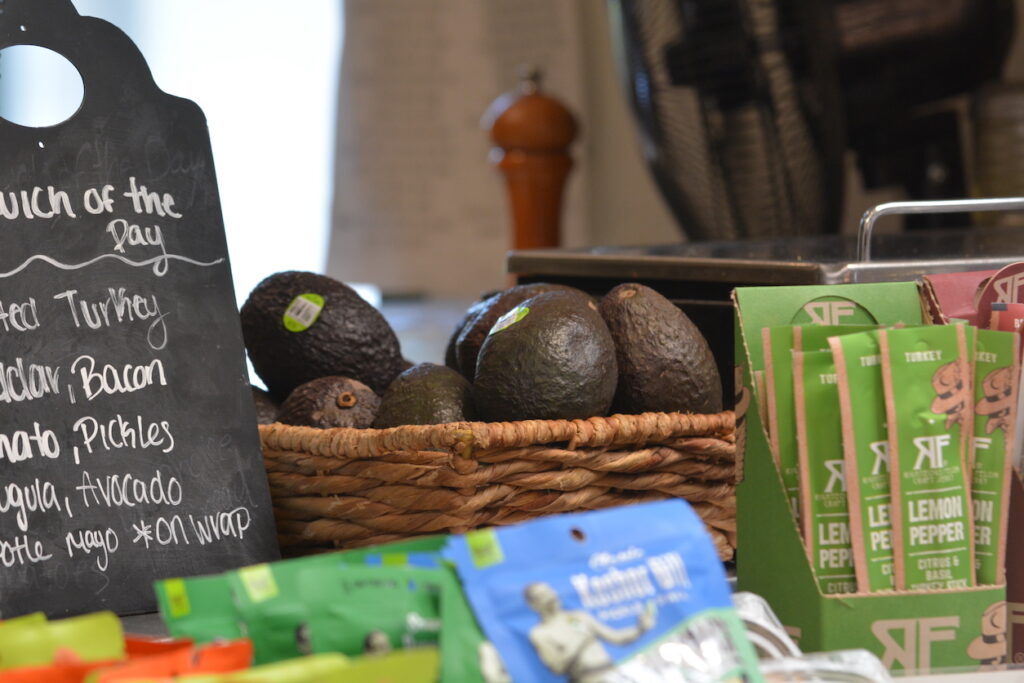
And the costs are steep. The costs of packaging, foil and utensils have recently risen 15% and meats 20-30%, while the price of cheese changes every week, Liberman said. And tuna from Thailand is slowly on the rise as well, he added.
Other imports are in flux, making financial forecasting much more difficult. The Trump administration has placed a 90-day hold on 25% tariff rates on Mexico, according to the Associated Press, Foodstuffs’ largest importer of tomatoes and avocados.
With that in mind, Liberman and company are still holding off on any significant price increases.
“Right now, we don’t want to pass it on to our customers, because our customers have been so good to us for 40 years and they’re also struggling a lot because of this recession,” Liberman said. “We’re trying to absorb as much as possible.”
But if import costs continue to rise, absorbing the effects will not be sustainable, he said, and eventually Foodstuffs will have to “break” and increase retail prices.
While Foodstuffs tries to look for alternative items, Liberman, like Salmon, said the business will not compromise quality.
Having felt the effects of tariffs for approximately two months already, Liberman said he is hopeful, but doubtful, prices will level off or decrease over the coming months. If not, the grocery chain’s bottom line is at risk.
“We’re, right now, pretty much, for lack of better words, screwed,” Liberman said, “waiting to see how this is resolved, but not very optimistic.”
The Record is a nonprofit, nonpartisan community newsroom that relies on reader support to fuel its independent local journalism.
Become a member of The Record to fund responsible news coverage for your community.
Already a member? You can make a tax-deductible donation at any time.

Laura Horne
Laura Horne is a rising junior at Northwestern University pursuing majors in Journalism and Psychology and a minor in Legal Studies. Originally from Charlotte, North Carolina, she reports for The Daily Northwestern and has edited for North by Northwestern magazine. She enjoys discovering new music and new coffee shops.
The Record is a nonprofit, community news site from former editors of 22nd Century Media
Our daily coverage of your government, schools, businesses and neighbors is not possible without your support.
Latest

The Record: Shortcut
Related Stories